Tucson’s Largest Master-Planned Community in Years Launches After Ashton Woods/Starlight Homes Closes $49.3M Camino Verano Phase 1 Acquisition
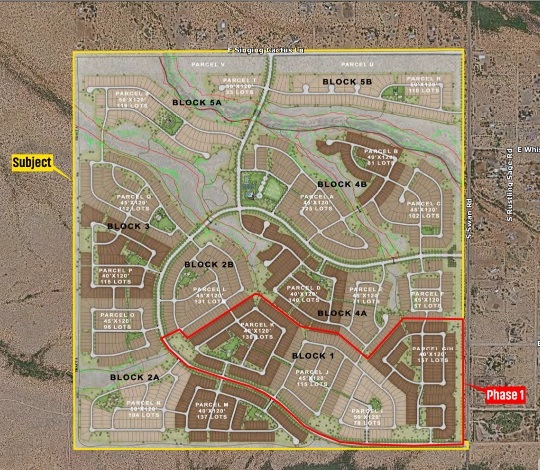
TUCSON, AZ (April 3, 2026) – In what represents Tucson’s largest residential lot transaction of 2026 and the most significant master-planned community launch the market has seen in recent memory, Ashton Woods/Starlight Homes has closed on the Phase 1 acquisition of Camino Verano, marking the debut of Sunbelt Holdings’ transformative 710-acre, 2,000-lot development in Southeast Tucson’s rapidly expanding employment corridor.
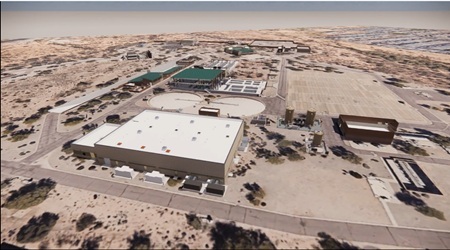
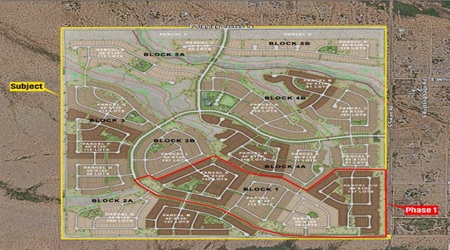
The Phase 1 acquisition encompasses 480 finished residential lots across four strategically planned parcels offering varied product widths (40′, 45′, and 50′), with a combined transaction value of $49,290,890—making it unequivocally the largest single lot acquisition in Tucson for 2026 to date. Construction is scheduled to commence Q2 2026, with model home grand openings anticipated in early 2027. Phase 1 will also include an amenity package to enhance the residential experience and kick off Camino Verano.
The 480-lot Phase 1 closing marks the third partnership between Ashton Woods/Starlight and Sunbelt Holdings in just 12 months—an unprecedented builder commitment that has put over 1,000 lots into play in that timeframe and signals a fundamental shift in how the nation’s largest homebuilders are approaching the Tucson market.
“When a large builder commits to 1,000+ lots with you in a single year across multiple projects, that transcends typical buyer-seller dynamics,” Greg Mohl, vice president and head of Sunbelt’s Tucson operations, commented. “That’s a strategic partnership built on trust, certainty of execution, and shared conviction in Tucson’s long-term trajectory. Ashton Woods/Starlight sees at Camino Verano what we see: a generational opportunity to capture Tucson’s employment-centric housing demand at scale. Phase 1’s 480 lots are just the opening chapter of what will be a decade-long commitment of delivering 2,000+ homes to this market.”
Redefining the Employment-Centric Community at Unprecedented Scale
What fundamentally differentiates Camino Verano from other master-planned communities launched in recent years is its strategic positioning directly within—not adjacent to—the metro’s primary employment and economic growth engine in Tucson. While traditional communities push homebuyers to the metropolitan fringe requiring 30-minute freeway commutes, Camino Verano delivers immediate, freeway-free access to Southeast Tucson’s massive and expanding employment base:
- Raytheon Missile Systems – 8 minutes (10,000+ employees, Tucson’s largest private employer and a cornerstone aerospace/defense employer)
- Tucson International Airport – 10 minutes (2,500 direct employees, Arizona’s second-busiest airport)
- Davis-Monthan Air Force Base – 12 minutes (9,100 military and civilian personnel, permanent federal installation)
- University of Arizona Tech Park – 10 minutes (6,000 employees across multiple technology and research tenants)
- Over 40,000 active jobs within a 10-minute drive radius—no freeway access required
Over $200 million in institutional industrial capital deployed in the past 24 months—creating a self-reinforcing growth cycle, for upwards of 5,000 future jobs, that benefits Verano’s long-term positioning:
Complete Lifestyle Ecosystem Already Operational
In a stark departure from master-planned communities in growing areas where residents endure years waiting for promised retail and amenity infrastructure, Camino Verano launches with Southeast Tucson’s mature, fully operational commercial and lifestyle ecosystem already in place—a critical competitive advantage that eliminates the “pioneer penalty” typical of new community launches:
Comprehensive Retail Infrastructure: Walmart Supercenter, Costco Wholesale, Target, Fry’s Food & Drug, Safeway, complete banking services (Wells Fargo, Bank of America, Chase), full-service healthcare facilities, urgent care, pharmacy chains (CVS, Walgreens), and major restaurant corridors spanning national chains to local favorites—all within a 10-minute drive.
Premier Recreation & Entertainment Destinations:
- Mosaic Quarter (5 minutes) – Pima County’s landmark $100+ million sports and entertainment complex featuring a 175,000 SF ice sports facility (MQ Iceplex), 131,000 SF multi-sport field house (basketball, volleyball, indoor soccer, wrestling, track & field), outdoor sportsplex for tournament play, and event pavilion, with ambitious future phases including hotels, dining, performing arts venues, and sports medicine facilities
- Casino Del Sol (10 minutes) – Full-service resort, gaming, dining, and entertainment complex
- Kino Sports Complex (10-15 minutes) – Pima County’s 300+ acre flagship sports venue featuring Kino Veterans Memorial Stadium (11,000 seats), 7 baseball fields, 8 regulation soccer fields, 20 pickleball courts, and professional clubhouses hosting MLS preseason training, FC Tucson professional soccer, major concerts, and year-round youth sports leagues
Will White and John Carroll of Land Advisors Tucson handled the transaction and represent Sunbelt Holdings at Camino Verano.
“This is a major moment for Tucson’s residential market,” said White “Camino Verano represents a fundamental shift—2,000 lots positioned 8 minutes from the absolute epicenter of Southeast Tucson’s employment corridor, with zero freeway access required. Camino Verano is the convergence of scale, location, and infrastructure maturity. Day one, residents have complete services and 40,000 jobs all within 10 minutes—all accessible without touching I-10. Employment density and lifestyle infrastructure at this proximity, with no freeway dependence, is what makes Camino Verano transformational. Congratulations to the Sunbelt team and everyone at Ashton Woods/Starlight. “
The full Camino Verano development encompasses 710 acres with approximately 2,000 lots planned across five meticulously sequenced phases, leaving roughly 1,500 lots for future releases. At full build-out, Camino Verano will stand as one of Southeast Tucson’s largest residential communities and create a decade-plus inventory pipeline serving the market’s most critically undersupplied segment: well-located, employment-proximate finished lots. Land Advisors has the Marketing assignment for Camino Verano.