ACC Votes Will Enable Future Interconnection of Over 13,000 MW of New Energy Generation
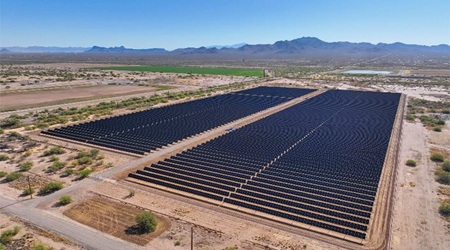
PHOENIX, Ariz. (Nov. 25, 2026) — Since January 2026, the Arizona Corporation Commission has voted on and approved several items that will help Arizona electric utilities continue to meet the ever-increasing projected energy demand. The Commission has approved several applications from developers of energy-related projects that will potentially lead to the expansion of Arizona’s power grid by an estimated 13,074 megawatts (MW) by way of new power generation capacity and critical grid infrastructure expected to be built in the future. The Commission has compiled data since the beginning of the year by tracking Certificate of Environmental Compatibility (CEC) applications and votes. The Commission’s actions empower the future construction of nearly 11,000 MW of new electric generation resources. The Commission votes on CEC applications, which are vetted and forwarded by the Arizona Power Plant and Transmission Line Siting Committee. By approving CEC’s for essential generator interconnection lines (gen-ties) and switchyards, the Commission is helping clear a path for new power to flow to the state’s power grid which will support our steady population and industrial growth. It is important to note that the Commission does not approve or deny energy generation projects as a whole, rather, municipal councils, county boards, and local planning commissions have jurisdiction over energy projects.
“Arizona needs every bit of generation it can get to meet the unprecedented growth we are experiencing across our state,” stated Chairman Nick Myers. “I am incredibly proud that we have helped enable the future connection of more than 13 GW of new generation and storage to connect to the Arizona grid, supporting our state’s continued growth, strengthening reliability, and helping ensure we have the energy resources needed to power Arizona’s future.”
“I appreciate the hard work of our Arizona Power Plant and Transmission Line Siting Committee who volunteer to work with applicants on the many projects that are proposed in Arizona,” said Commissioner Lea Márquez Peterson. “Our state continues to see incredible energy load growth and our process of line siting approval with robust public input via hearings in the communities impacted is one of the most effective in the nation. At the ACC we continue to balance the importance of affordable rates with the investment in infrastructure needed to ensure our grid reliability especially during our hottest summer days.”
Breakdown of Approved CECs for New Energy Generation Projects
| Energy Resource | Total Capacity (MW) | Type |
| Solar & Battery Energy Storage (BESS) | 7,977 MW | Photovoltaic Solar Arrays & Integrated Battery Storage |
| Natural Gas & Coal Conversions | 4,097 MW | Thermal Power Plants & Coal-to-Gas Conversions |
| Wind Energy | 1,000 MW | Utility-Scale Wind Turbines & Facilities |
| Total Generation Portfolio | 13,074 MW | as of November 23, 2026 |
If all the projects associated with the CEC’s approved by the Commission this year enter into service and operate at the assumed capacity, the new additions could produce about 42.3 TWh per year; that is equivalent to the annual electricity use of about 3.3 million Arizona homes. CEC applications for solar projects takes the lead at about 60%, with natural gas projects at a distant second at about 30% of the new energy/converted energy generation resources. Utility-scale solar and integrated battery storage total about 7,977 MW across utility-scale developments. The Commission approved CEC applications for nine new Battery Energy Storage Systems (BESS), as well as for two wind generation projects that could contribute about 1,000 MW of clean energy to Arizona’s energy portfolio, upon completion. Additionally, the Commission approved several major grid infrastructure projects, authorizing approximately 67 miles of new build transmission lines and 121 miles of transmission line upgrades to deliver new generation to load centers.
Arizona ranks #3 nationally in BESS capacity and leads the nation in BESS growth, according to a study by the Solar Energy Industries Association (SEIA) and Benchmark Mineral Intelligence. Arizona has accumulated 19.3 gigawatt-hours (GWh) of utility-scale energy storage capacity. Arizona’s total storage capacity is surpassed only by California (59.8 GWh) and Texas (26.3 GWh). Arizona achieved a 129% year-over-year growth rate in utility-scale energy storage capacity.