Arizona Ranks No. 4 for Interstate Migration as Relocation Surge Slows
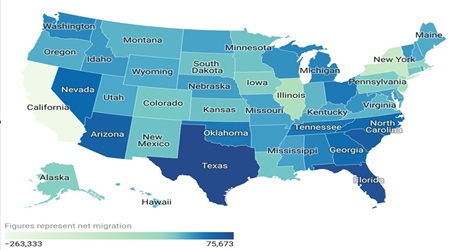
(April 8, 2026) — Arizona continues to rank among the nation’s biggest winners for interstate migration, but the latest data suggests the story is shifting from rapid expansion to relative resilience as the post-pandemic relocation surge slows.
A new StorageCafe analysis of U.S. Census data shows Arizona ranked No. 4 in the country for net domestic migration in 2024, gaining 51,000 more residents from other states than it lost. While inbound migration moderated from the prior year, Arizona’s 10% decline was far less pronounced than in larger migration magnets such as Texas, where net migration fell 45%, and Florida, where it dropped 50%.
For Arizona, that points to continued underlying demand even as relocation activity cools nationally.
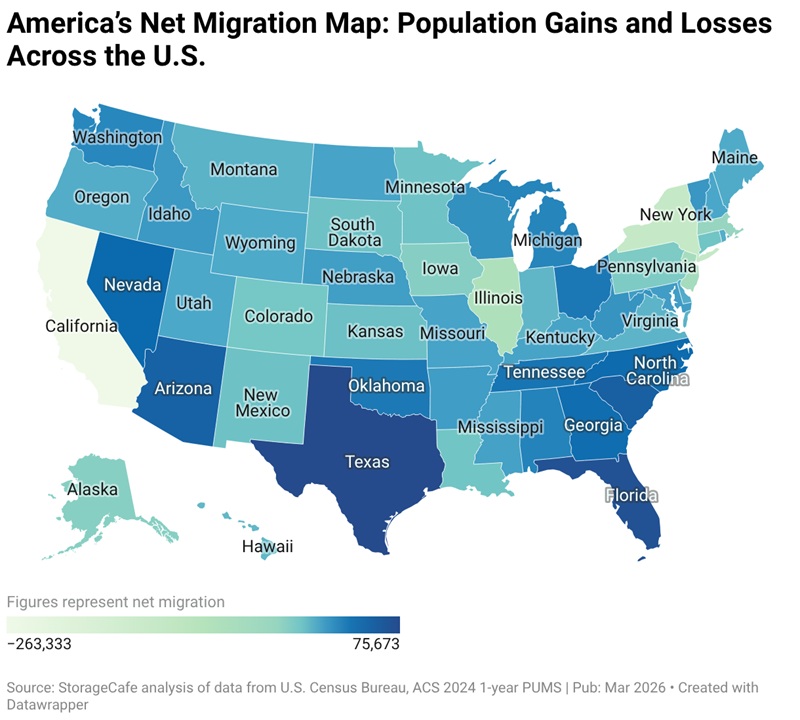
California remained Arizona’s largest feeder state, sending about 51,000 residents in 2024. StorageCafe said the move is still being driven in part by housing economics, with home prices in Arizona roughly 44% lower than in California. Other leading origin states included Washington, Texas, Colorado, and North Carolina.
The report also highlights Arizona’s appeal to younger and more financially established newcomers. Gen Z accounted for about 27% of inbound movers, while new arrivals reported average incomes above $63,000, exceeding both state and national averages. About 46% of newcomers purchased a home within their first year, a sign that many are still making a longer-term commitment to the market rather than treating Arizona as a temporary stop.
Nationally, interstate migration fell to 2.1% of the U.S. population in 2024, down from 2.3% in 2023 and 2.5% in 2022, reflecting a continued slowdown from the height of the pandemic-era moving wave. In Arizona, that softer pace is also showing up in adjacent real estate indicators. Self-storage street rates declined 1.6% year over year, suggesting some easing in migration-related demand.
Even so, Arizona remains firmly in the top tier of states attracting new residents, and the smaller decline compared with other high-growth markets may be the more important takeaway for real estate watchers.
“Arizona is still attracting a steady flow of new residents, but the conditions that once made relocation an easy financial win have changed,” said Emilia Man, senior consumer trends and market analyst at StorageCafe. “As housing costs rise and mortgage rates remain elevated, many movers are becoming more deliberate, prioritizing long-term stability, career opportunities and lifestyle fit over short-term savings.”
For Arizona’s housing market, apartment sector, and migration-driven retail growth, the message is clear: the boom may be cooling, but the state is still capturing demand at a level most markets would welcome.