Ascent Aviation Maintenance Group Opens $70M Marana Facility, Tripling Wide-Body Capacity at Pinal Airpark
Ascent Aviation

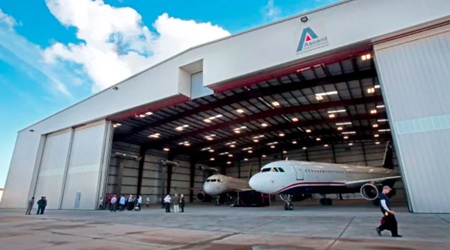
MARANA, AZ (December 12, 2025) — Ascent Aviation Services (“Ascent”) has officially opened two state-of-the-art, 90,000-square-foot wide-body maintenance hangars at its Pinal Airpark (MZJ) campus in Marana, marking one of the largest single capital investments in the company’s history. The new $70 million facilities expand Ascent’s total hangar capacity in Marana by more than 200%, enabling the company to accommodate additional Boeing 777, Airbus A330, and other large-jet platforms for heavy maintenance, overhauls, and special-mission modifications.

The expansion represents a major milestone in Ascent’s long-term partnership with Israel Aerospace Industries (IAI), supporting IAI’s growing Boeing 777-300ER passenger-to-freighter (P2F) conversion program. The P2F initiative is widely viewed as the next generation replacement for aging Boeing 747 and 767 cargo fleets, especially as global e-commerce volumes continue to surge. Industry forecasts project a 4–5% annual increase in global air cargo demand over the next five years, pushing operators toward more fuel-efficient, high-payload wide-body freighters.

Ascent’s Marana facility is now the only non-OEM MRO location in North America certified and equipped to perform the extensive structural modifications required for the 777-300ER freighter conversion — a competitive advantage that positions Southern Arizona as a key hub for the global air-cargo supply chain.

A Major Economic Boost for Marana and Pima County

The new hangars will create more than 300 high-paying technical and engineering jobs, including A&P mechanics, avionics specialists, structural technicians, and program managers. Ascent currently employs more than 1,000 people across Arizona, and this expansion further cements Pinal Airpark as one of the state’s most crucial aerospace employment centers.

Construction on the new hangars began in 2023 and included significant upgrades to airfield infrastructure, specialized tooling, and docking equipment required for wide-body conversions. The hangars were designed to accommodate simultaneous heavy-maintenance lines, long-term storage, and passenger-to-freighter structural work — a strategic fit for Pinal Airpark, which has evolved into a nationally significant aircraft maintenance and storage hub.

Part of a Broader Growth Strategy

Ascent, backed by LongueVue Capital, has been in expansion mode for nearly a decade. The company added its first new Marana hangar in 2015, expanded engineering and storage operations in 2019–2021, and continues to invest heavily in wide-body capability. As global airlines retire older fleets and cargo operators seek more modern platforms, the company expects sustained demand for conversion and heavy-maintenance services through the next cycle.

“These new hangars give us the ability to meet rising global needs while anchoring hundreds of high-skill jobs here in Arizona,” the company stated during the launch.



Santa Rosa Care Center Sells for $30 Million; Ensign Group Acquires Operations

Santa Rosa Care Center

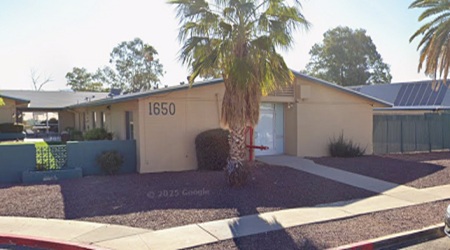
TUCSON, AZ (December 11, 2025) — The 144-bed Santa Rosa Care Center, located at 1650 N. Santa Rosa Avenue in Tucson’s Northeast submarket, sold on December 1, 2025, for $30,000,000, according to Pima County Recorder documents.

The long-established behavioral and medical care facility, built in 1966, totals 39,685 square feet on 2.93 acres, with a price of $755.95 per square foot and $208,333 per bed.

The seller, SR Building LLC, represented by Harvey and Deborah Nevins, transferred the property to Santa Rosa Propco LLC, an entity affiliated with The Ensign Group, Inc. (NasdaqGS: ENSG). Ensign simultaneously acquired the facility’s operations as part of a multi-state portfolio expansion that also included Willow Point Rehabilitation and Nursing Center, The Rehabilitation Center at Sandalwood, and Edgewater Health and Rehabilitation.

Santa Rosa Care Center provides licensed behavioral and rehabilitative services, with off-street parking, an activity center, and a long history of serving Tucson’s medical care community.

“We are excited to add another operation to one of our more mature and thriving markets,” said Barry Port, Ensign’s Chief Executive Officer. “This facility clusters well with other operations in Tucson and we are looking forward to seeing what the future holds,” he continued.

Christie Jones, market leader for Bandera Healthcare LLC, Ensign’s Arizona-based subsidiary, added, “We are excited to work together with the outstanding care team at the facility and combine their expertise with Ensign’s quality of service to provide our residents and their families the care they want and need.”

In a separate transaction on the same day, Ensign announced that it acquired the real estate and operations of “Willow Point Rehabilitation and Nursing Center”, a 45-bed skilled nursing facility located in Kansas City, Kansas. The real estate was purchased by a subsidiary of Standard Bearer Healthcare REIT, Inc., Ensign’s captive real estate company, and the property was leased to an Ensign-affiliated operator under a long-term lease effective as of December 1, 2025.

In another transaction on the same day, Ensign announced that it acquired the operations of two facilities in Colorado (i) “The Rehabilitation Center at Sandalwood”, a 103-bed skilled nursing facility located in Wheat Ridge, Colorado, and (ii) “Edgewater Health and Rehabilitation”, a 69-bed skilled nursing facility located in Lakewood, Colorado. An Ensign-affiliated operator operates both facilities and is subject to a long-term triple-net lease. These acquisitions were effective as of December 1, 2025.

These acquisitions bring Ensign’s growing portfolio to 373 healthcare operations, which include 47 senior living operations across 17 states. Ensign subsidiaries, including Standard Bearer, own 156 real estate assets. Mr. Port reaffirmed that Ensign is actively seeking opportunities to acquire real estate and to lease both well-performing and struggling skilled nursing, senior living, and other healthcare-related businesses throughout the United States.

This transaction continues the trend of major healthcare operators expanding their presence in Southern Arizona through the acquisition of both real estate and operating licenses.

Source: RED Comp #12216


Phoenix Flips to a Renter Market as Tucson’s Longtime Rental Advantage Continues

Renter Market

PHOENIX/TUCSON, AZ (December 11, 2025) — New research shows it is now significantly cheaper to rent a home in the Phoenix metro than to purchase one — marking a dramatic reversal from just four years ago to a renter market.

A study by Virginia-based InvestorsObserver found that Phoenix–Mesa–Chandler now ranks No. 34 out of 39 major U.S. metros that flipped from favoring buyers in 2021 to favoring renters in 2025. The shift mirrors a broad national trend, but the Valley’s change has been particularly sharp.

In 2021, the Phoenix metro posted a buy-rent gap of –7%, meaning average mortgage payments were lower than average rents. By 2025, that gap had widened to +59.3%, far above the national average of +53%. The positive gap indicates that monthly mortgage payments now exceed typical rents by a wide margin.

“This creates an environment where young families who planned to build wealth now face a lifetime of renting, and parents who hoped to pass down property watch that dream slip away,” said Sam Bourgi, senior analyst at InvestorsObserver.

Generational Wealth & Affordability Challenges

The report suggests that the widening affordability gap could have long-term consequences for wealth building, especially among first-time buyers priced out of ownership. A recent Business Journal housing forecast said more homes may reach the market in 2026, but price relief is not expected. Another indicator of strain: ConsumerAffairs estimates it now takes roughly 14.8 years for an Arizonan to save a 10% down payment on a median-priced home.

The renter-leaning environment may continue to push demand toward multifamily housing. Developers such as Phoenix-based Evergreen Devco are already delivering new products, including a $62.5 million, 222-unit community in Mesa.

Tucson Context: Renting Has Been Cheaper for Years

Tucson’s housing market differs from Phoenix’s in one key way: renting has been more affordable for several years, so the region hasn’t experienced the same dramatic flip. Average monthly rents in Tucson have stayed relatively stable — generally in the $1,200–$1,250 range — while median home values remain in the $315,000 to $325,000 range. With ownership carrying additional costs such as taxes, insurance, and maintenance, the effective monthly cost of buying typically exceeds renting by a significant margin. As a result, Tucson entered the 2021–2025 period already leaning renter-friendly, and that gap has persisted. While Phoenix underwent a rapid shift, Tucson’s affordability dynamic has long reflected a market where renting offers a lower monthly outlay and fewer barriers to entry, especially for first-time buyers.

Southwestern Metros Also Shift Toward Renting

The InvestorsObserver study found the change is widespread: all 50 major U.S. metros now have a positive buy-rent gap — meaning renting is cheaper everywhere in 2025.

Several Southwestern metros ranked among the nation’s top 10 for the largest shifts toward renter affordability:

  • San Francisco–Oakland–Berkeley, CA (No. 1)
  • San Jose–Sunnyvale–Santa Clara, CA (No. 2)
  • Denver–Aurora–Lakewood, CO (No. 6)
  • Salt Lake City, UT (No. 7)
  • Dallas–Fort Worth–Arlington, TX (No. 10)

San Francisco–Oakland–Berkeley also stood out as the only Southwestern metro area where mortgage payments increased by more than 100% since 2021.

Even the traditionally affordable markets no longer favor buying. Metros such as Providence, San Antonio, Milwaukee, and Boston now show rent-buy gaps clustering between 0.1% and 0.5%, essentially eliminating any buyer advantage.

Alternative Housing Options Gain Attention

With traditional homeownership becoming increasingly out of reach, alternative models are gaining traction:

  • Modular homes, including units offered through HomeAccess America, start at around $79,000, bringing ownership costs closer to rental prices.
  • Microhomes, typically 400 square feet or less, have seen growing interest in Phoenix, according to StorageCafe analysis.

InvestorsObserver sourced its analysis from Bankrate, Attom Data, Zillow, and Realtor.com.