CBRE Awarded Assignment for Innovation Park

Innovation-park-signCBRE has been awarded the marketing and leasing assignment for Innovation Park (IP) in Oro Valley, AZ. The 535-acre, master-planned business park is situated in the heart of the bio-science region in Oro Valley, AZ. Located at the intersection of Tangerine and Oracle Roads in the town of Oro Valley, AZ, northwest of Tucson, with easy access to Interstate 10.

A collaborative team of brokerage professionals with CBRE’s Tucson office will handle the marketing and leasing of the property for owner/developer, Venture West of Tucson. Tim Healy and Bob DeLaney will focus on the industrial space, David Montijo and Jeff Casper will handle office and medical space and Nancy McClure and Michael Laatsch will oversee retail space.

“Innovation Park is Southern Arizona’s only best in class business park and probably one of the nicest business parks in the western United States,” said Healy. “IP’s great bioscience foundation, with companies like Ventana Medical Systems, Sanofi and Oro Valley Hospital within IP and the U of A Bio5 Institute less than two miles away, combined with one of the most visually stunning settings and a wide selection of recreational options nearby makes this a place where companies’ employees will want to live, work and play.”

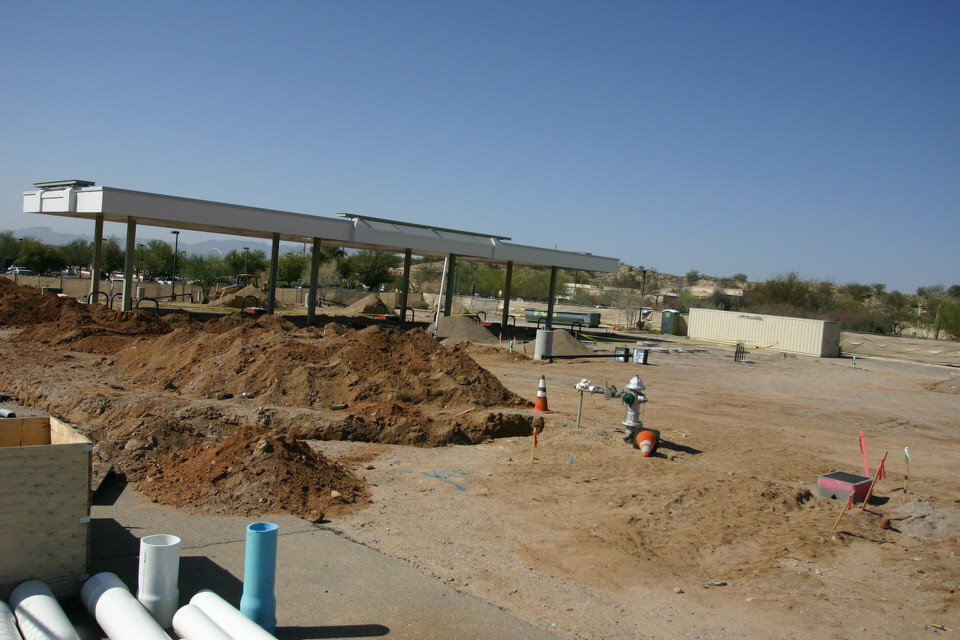
Purchased by Venture West in 2007, Innovation Park is home to world-class technology and science companies, including divisions of two of the world’s largest pharmaceutical companies: Ventana Medical Systems, a member of the Roche Group, and Sanofi. The Western National Parks Association, a nonprofit cooperating association of the National Park Service and the first company to build in Innovation Park, is also located in within the complex. Additionally, Securaplane Technologies, a leading supplier of avionics products for business, commercial and military aircraft, will move into a newly-constructed, 55,000 square-foot build-to-suit space in December 2013. Construction of Securaplane’s new space marks the first project facilitated by the Economic Expansion Zone at Innovation Park.

The Economic Expansion Zone (EEZ), approved by the Town of Oro Valley in October 2012, is an overlay district that covers Innovation Park and is meant to encourage economic development by reducing the time required to establish or expand a business by making the approval process administrative for projects that meet all zoning standards.

Oro Valley, and Innovation Park, has become a major base for biotech firms in recent years, partly fueled by nearby Tucson’s University of Arizona. The U of A is a rich source for area start-ups and provides robust incubator support, and Innovation Park’s proximity to the University’s Biosphere 2 research complex and Bio5 Institute, coupled with a local pro-business government, allow for unique opportunities in the form of private and public partnerships.

In addition to a talented labor force and intellectual assets, Oro Valley was recognized as one of the best places to raise kids in Arizona by Bloomberg Business Week in 2012. Set against a beautiful Santa Catalina Mountain backdrop, Oro Valley boasts excellent schools, medical facilities and golf courses making it a true live, work, play environment.

In addition to world class business amenities, Innovations Park’s 535-acre, master planned campus features 193 acres of natural open space, walking paths and hiking trails and proximity to Catalina State Park.

Contact Tim Healy and Bob DeLaney for industrial, David Montijo and Jeff Casper for office, and Nancy McClure and Michael Laatsch for retail needs at CBRE’s Tucson office main number at (520) 323-5100



Phoenix-area Housing Buyers Have Options in Improving Market as Supply Increases

richmond homeOver the past two years, the tight supply of homes for sale in the Phoenix area has helped to dramatically drive up prices. However, a new report from the W. P. Carey School of Business at Arizona State University shows change on the horizon. The data for Maricopa and Pinal counties, as of August, reveals:

The median single-family-home price is up 28 percent from last August, to $192,000.
However, supply is finally starting to increase to help meet demand, and may be in balance by the end of the year.
The luxury market is powering back, but might be derailed if the economy is pounded by the government shutdown and other events in Washington, D.C.

Phoenix-area home prices have shot up since hitting a low point in September 2011. From last August to this August, the median single-family-home price rose 28% – from $150,000 to $192,000. Realtors will note the average price per square foot went up 22%. The median townhouse/condo price rose 31%.

“We predicted the price-increase slowdown that happened over the summer months,” says the report’s author, Mike Orr, director of the Center for Real Estate Theory and Practice at the W. P. Carey School of Business. “Now that temperatures are cooling, prices will start rising again, at least for the near term. However, they’re likely to go up at a less furious pace than the last two years.”

Orr says increases in the amount of homes for sale are helping to stop the price boom. As of Sept. 1 this year, the area had 29% more active listings (not under contract) than at the same time last year. As supply has been going up, demand has gone down, with sales of single-family homes 12% lower this August than last August.

“Although demand still exceeds supply, they are fast moving toward each other,” says Orr. “If the current pace of change continues, they are likely to be in balance before the end of the year. The seller is no longer holding all the cards in the Greater Phoenix housing market, and if their offers are countered aggressively, some potential buyers may walk away because they now have more alternatives.”

The types of transactions happening in the market are also noticeably shifting. Luxury homes over $500,000 grew their market share from 15 to 21% of the money being spent over the past year, while the lowest-priced homes (below $150,000) fell from 25 to 14% of the market.

“Access to finance at the high end of the market is very good, and we are seeing interest rates for jumbo loans even lower than the rates for conventional loans,” Orr explains. “However, if the stock market is negatively affected by events in Washington, then this will have an impact on the luxury housing market in Arizona.”

Investors continue to lose interest in the Phoenix market, with better bargains available in other parts of the country. The percentage of residential properties purchased by investors fell from the peak activity of 39.7% in July 2012 down to just 23.7% this August. The rates of all-cash buyers and out-of-state buyers are also dropping. In fact, the percentage of Maricopa County residences sold to non-Arizona owners in August was only 17%, the lowest percentage since January 2009.

Prices in all areas of Maricopa County are up over last year, and cheap foreclosures are tough to find. Foreclosure starts – owners receiving notice their lenders may foreclose in 90 days – declined 61% from last August to this August. Completed foreclosures went down an incredible 73%.

Orr’s full report, including statistics, charts and a breakdown by different areas of the Valley, can be viewed and downloaded at www.wpcarey.asu.edu/realtyreports.


AUGUST CONSTRUCTION SPENDING REPORT IS UNKNOWN BECAUSE OF GOVERNMENT SHUTDOWN

IMG_3285 Real Estate Daily NewsTotal construction spending hit an unknown level in August because the Census Bureau was unable to release new data as a result of the federal government shutdown according to the Associated General Contractors of America. Association officials cautioned that the impacts of the shutdown will go beyond data as solicitations for many new construction projects come to a halt.

“It is hard to get a sense of where the industry is heading when basic construction spending data isn’t available,” said Ken Simonson, the association’s chief economist. “Unfortunately, the lack of federal spending data likely foreshadows a decline in federal construction spending until the government reopens.”

Association officials urged members of Congress to quickly resolve the political impasse that resulted in a federal shutdown starting today. They warned that solicitations for new federal construction projects will be delayed until the federal government reopens. In addition, other federal construction projects may be delayed as many federal supervisors will not be available to answer questions, approve change orders.

“Depending on how long the government is closed, construction workers are likely to miss out on new job opportunities,” said Stephen E. Sandherr, the association’s chief executive officer. “This shutdown poses a real risk of undermining the industry’s long-awaited recovery.”

We do know construction employment increased in 194 out of 339 metro areas between August 2012 and August 2013, but only 19 areas topped previous highs for the month. Pascagoula, Miss. and Los Angeles-Long Beach-Glendale, Calif. Top Growth List; Gary, Ind. and Sacramento-Arden-Arcade-Roseville, Calif. Experienced the Largest Declines for the Year.

Construction employment expanded in 194 metro areas, declined in 88 and was stagnant in 57 between August 2012 and August 2013, according to the last analysis of federal employment data released by the Associated General Contractors of America. Association officials added that despite the widespread gains, construction employment reached peak levels for August in only 19 of 339 metro areas.

“It has been a tough decade for much of the construction industry, considering that many areas experienced peak employment levels in the middle of the last decade,” said Stephen Sandherr, the association’s chief executive officer. “More troubling, it will take a lot more growth before significantly more metro areas get back to peak employment levels in construction.”

Los Angeles-Long Beach-Glendale, Calif. added the largest number of construction jobs in the past year (8,900 jobs, 8%); followed by Boston-Cambridge-Quincy, Mass. (8,700 jobs, 16%); Houston-Sugar Land-Baytown (8,200 jobs, 5%) and Atlanta-Sandy Springs-Marietta, Ga. (8,100 jobs, 9%). The largest percentage gains occurred in Pascagoula, Miss. (36%, 1,500 jobs); Eau Claire, Wis. (30%, 1,000 jobs); Fargo, N.D.-Minn. (25%, 2,100 jobs) and Lake Charles, La. (22%, 2,100 jobs).

The largest job losses from August 2012 to August 2013 were in Sacramento-Arden-Arcade-Roseville, Calif. (-4,900 jobs, -12%); followed by Gary, Ind. (-4,100 jobs, -18%); Riverside-San Bernardino-Ontario, Calif. (-3,400 jobs, -5%) and Northern Virginia (-3,300 jobs, -5%). The largest percentage decline for the past year was in Gary, Ind., Rockford, Ill. (-17%, -800 jobs); Modesto, Calif. (-14%, -1,000 jobs); Shreveport-Bossier City, La. (-13%, -1,100 jobs) and South Bend-Mishawaka, Ind.-Mich. (-13%, -600 jobs).

Fargo, N.D.-Minn. experienced the largest percentage increase among the 19 cities that hit a new August construction employment high from the prior 2008 peak (22% higher). Corpus Christi, Texas added the most jobs since reaching its prior August peak in 2012 (3,600 jobs). Phoenix-Mesa-Glendale experienced the largest drop in total construction employment compared to its prior, August 2006, peak (-86,800 jobs) while Lake Havasu City-Kingman, Ariz. experienced the largest percentage decline compared to its August 2005 peak (-74%).

Association officials said construction employment in many areas was getting a boost from growing private sector demand for new residential and energy facilities. They added, however, that declining investments in infrastructure and other public projects was restraining growth, and in some areas, contributing to declining sector employment. “Instead of feast or famine, conditions right now are more akin to moderate snacking or famine depending on the type of work firms perform,” said Sandherr.

View construction employment figures by state and rank.