Whatever Happened to The Villages at Vigneto?
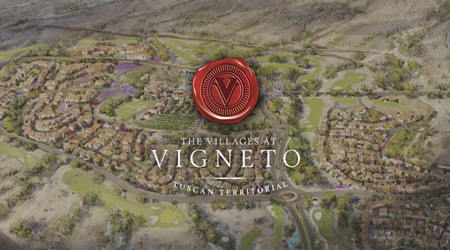
BENSON, ARIZONA (Aug. 14, 2026) — More than a decade after The Villages at Vigneto was expected to transform Benson, the massive master planned community remains unbuilt. But contrary to appearances, the project has not disappeared, we found.
The 12,400-acre development was planned for as many as 28,000 homes and a future population approaching 70,000 retirement residents. At the time, Benson officials viewed Vigneto as an economic engine that could reshape the community, bring new jobs and commercial development, and support expanded healthcare services.
Benson Hospital was among those anticipating growth. In 2015, then hospital CEO Richard Polheber said Vigneto developer El Dorado Holdings had reserved 50 acres for a future healthcare campus. The hospital was looking ahead to the population growth Vigneto was expected to bring to the region.
Those expectations were not based on an untested developer.
El Dorado Holdings, led by Mike Ingram, had already played a significant role in the transformation of Maricopa through Rancho El Dorado and other large-scale development. The company has assembled and developed major land holdings throughout Arizona and today describes itself as one of the state’s largest private landholders.
Vigneto, however, encountered years of federal permitting disputes and litigation involving environmental groups concerned about groundwater, the San Pedro River, and endangered species.
A key Clean Water Act permit issued by the U.S. Army Corps of Engineers was suspended, reinstated, and challenged repeatedly before being suspended again in 2021. Development subsequently stalled.
There is still no construction underway at Vigneto.
But activity beginning in 2025 shows that El Dorado and the City of Benson have not walked away from the project.
In April 2025, El Dorado Benson LLC asked the Benson City Council to revisit the agreements governing Vigneto’s seven revitalization districts. The Council unanimously approved the amended and restated agreements, which preserved the district structure and extended its life.
The agreement also provided El Dorado Benson with potentially assigned portions of the project to Vigneto Capital Group LLC and, in one district, Northpoint Holdings LLC.
Vigneto Capital Group does not appear to represent an unrelated developer taking over the project. The Arizona company formed in 2022 is associated with Michael Reinbold, a longtime participant in the Vigneto development.
The activity appears instead to represent a restructuring of the entities associated with the project and an effort to preserve the mechanisms that would eventually help finance and develop it.
The Vigneto revitalization and community facilities districts also resumed formal meetings and budget activity in 2025 after years with little or no activity.
Yet one major hurdle remained: money.
In August 2025, Benson City Manager Gregory Volker said the development was awaiting the foundational funding needed to begin. That distinction is important. El Dorado Holdings is a substantial Arizona land developer, so the funding issue should not necessarily be interpreted as financial distress at the parent company. A project the size of Vigneto requires an enormous upfront investment in infrastructure before the first house can be delivered.
At the same time, the project faced another water-related challenge.
Environmental groups filed suit in 2025 seeking to force the Arizona Department of Water Resources to reconsider Benson’s long-standing adequate water supply designation. That designation is important to future residential development and has become another front in the lengthy dispute over growth in the San Pedro Valley.
A Different Political Climate in Benson
Vigneto would also return to a Benson that is politically different from the community that welcomed the project a decade ago.
A bitter 2025 dispute over a proposed 200-acre Aluminum Dynamics facility produced thousands of petition signatures, a citizen-led recall campaign and, in May 2026, the removal of three Benson City Council members. Derrick Fenn, Ross Kaplowitch, and Mark Boyle replaced Patrick Boyle, Darren Hayes, and Vice Mayor Levi Johnson.
The controversy centered not simply on development, but on the type of development being proposed and how the city handled its approval. Within days of the new council members taking office in June, Aluminum Dynamics announced it would abandon its Benson plans and pursue another location.
It may therefore be an overstatement to characterize the new council as opposed to growth altogether. But Benson voters have clearly demonstrated a willingness to challenge major projects they believe are inconsistent with the community’s future.
That creates another unknown for The Villages at Vigneto.
Benson leaders embraced the massive residential development enthusiastically when it was approved more than a decade ago. Whether today’s elected officials and today’s residents would view a 28,000-home master planned community with the same enthusiasm remains an unanswered question.
As of August 2026, there is no evidence that Vigneto has begun construction or that a groundbreaking is imminent.
What is clear is that the project remains very alive on paper.
El Dorado has preserved its development rights. Benson has extended and amended the public financing districts. Entities affiliated with the project remain active. And the city continues to maintain the framework necessary for development should financing, water, and federal permitting issues be resolved.
That leaves Vigneto in an unusual position.
More than ten years after Benson expected the first wave of residents to arrive, the land remains unchanged. A development that once promised to dramatically expand the community has spent much of the past decade in courtrooms, regulatory proceedings, and government meetings rather than under construction.
But given El Dorado Holdings’ long history of patiently assembling and developing large Arizona land projects, it may be premature to write Vigneto’s obituary.
For now, The Villages at Vigneto remains what it has been for years: one of Southern Arizona’s largest approved master planned communities waiting for the obstacles between entitlement and development to finally clear.
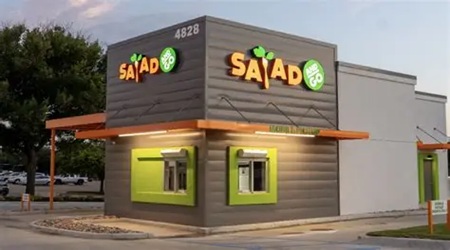 (August 13, 2026) — Salad and Go’s bankruptcy has created an unexpected expansion opportunity for two of the country’s fastest-growing drive-thru beverage operators.