Larsen Baker Partnership Acquires Rancho Vistoso Center in Oro Valley for $10.6 Million

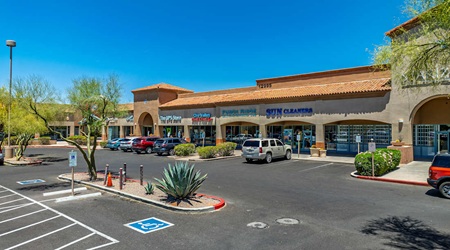
Rancho Vistoso Center

ORO VALLEY, ARIZONA (June 5, 2026) — Larsen Baker, through its affiliate Vistoso Investment Partners, LLC, in partnership with Vistoso People, LLC as tenants in common, has acquired Rancho Vistoso Center, an 83,464-square-foot retail shopping center located at 12925–13005 N. Oracle Road in Oro Valley.

The property sold for $10.6 million, or approximately $127 per square foot, at an 8% cap rate based on the existing net operating income. The center is located on approximately 10.96 acres at the northeast area of Oracle Road and Rancho Vistoso Boulevard in Oro Valley’s northwest submarket. The property was built in 1995 and is zoned PAD, Planned Area Development.

Rancho Vistoso Center is anchored by Harbor Freight, Chase Bank, and Walgreens, along with a mix of national and local tenants. The center includes addresses at 12925, 12985, 12995, 13005, and 13023 N. Oracle Road.

The project also includes 18,000 square feet of available junior anchor space with a 22-foot clear height. The space may be leased as a single junior anchor space or divided into smaller shop spaces.

The seller was WCP Rancho Vistoso, LLC, c/o West Coast Capital Partners of Scottsdale. The buyer was Vistoso Investment Partners, LLC and Vistoso People, LLC, c/o Larsen Baker, LLC of Tucson.

Isaac Figueroa, CCIM, SIOR, with Larsen Baker represented the buyer. Pat Dempsey with JLL represented the seller.

For leasing information, contact Isaac Figueroa of Larsen Baker at 520.296.0200 ext. 218.

The sale closed June 1, 2026.

Source: RED Comp #12525.


Cohen & Steers REIT Acquires Sprouts-Anchored Oracle Crossings in Oro Valley for Combined $54.35 Million

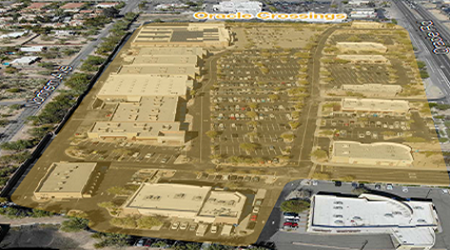
Oracle Crossings
Oracle Crossings

ORO VALLEY, ARIZ. (June 4, 2026) — Cohen & Steers Income Opportunities REIT, Inc. has acquired Oracle Crossings, a Sprouts Farmers Market-anchored open-air shopping center at Oracle and Magee roads in Oro Valley, in a combined transaction totaling $54.35 million.

The acquisition included the main Oracle Crossings Shopping Center and the adjacent O’Reilly Auto Parts / Entrada del Oro Plaza property along North Oracle Road. Together, the properties total approximately 267,046 square feet of retail improvements on approximately 18.86 acres.

The buyers were Oracle Station LLC and Oracle Station I LLC of Cincinnati, Ohio. The sellers were Oracle Crossings LLC and Oracle & Magee LLC. The sales closed on May 29, 2026.

JLL Capital Markets represented the sellers in the transaction. The JLL Capital Markets Investment Sales and Advisory team was led by Managing Director Patrick Dempsey, Senior Analyst Quin Madden and Analyst Ross Jorgensen.

Cohen & Steers announced the acquisition through Cohen & Steers Income Opportunities REIT, Inc., known as CNSREIT. The purchase was completed through CNSREIT’s programmatic joint venture with Phillips Edison & Company, a publicly traded owner and operator of grocery-anchored neighborhood shopping centers.

Oracle Crossings is a grocery-anchored, open-air retail center anchored by Sprouts Farmers Market and HomeGoods, with Kohl’s on a ground lease. The center was reported to be 96% leased at the time of acquisition and benefits from its high-visibility location at Oracle Road and Magee Road, with traffic counts reported at more than 68,000 vehicles per day.

The property serves two of Tucson’s most affluent communities, Oro Valley and the Catalina Foothills. Within a three-mile radius, the average household income exceeds $107,721, and the population within five miles totals approximately 147,603.

Built in 2006, Oracle Crossings includes a diverse tenant roster of internet-resistant shop and pad tenants, including El Charro Café, Pacific Dental, Dunkin’ Donuts, Carbon Health, Brake Max, O’Reilly Automotive and Smashburger. Sprouts Farmers Market generated $664 per square foot in sales in 2024, according to JLL. Major tenants over 8,000 square feet have occupied the property since it was built.

The larger Oracle Crossings transaction was recorded at $49.65 million for approximately 252,710 square feet of retail space. The adjacent O’Reilly Auto Parts / Entrada del Oro Plaza property sold for $4.7 million and included approximately 14,336 square feet.

Ben Craney and Jayme Fabe of NAI Horizon Tucson handle leasing at Oracle Crossings.

“Oracle Crossings is exactly the type of necessity-anchored, high-quality retail asset we seek to own in CNSREIT,” said James S. Corl, Chief Executive Officer of CNSREIT and Head of the Private Real Estate Group at Cohen & Steers. “Tenants demonstrate strong performance, and the property’s location in one of Tucson’s most affluent and supply-constrained submarkets provides a compelling foundation for durable income and long-term growth.”

Patrick Dempsey of JLL said the buyer was attracted to the center’s location and tenant mix.

“The Buyer believed in the long-term potential of the shopping center due to its outstanding location and strong tenancy,” Dempsey said. “Finding a property like Oracle Crossings for sale is quite rare in today’s retail market.”

CNSREIT said the acquisition reflects its focus on high-quality, income-producing, necessity-driven shopping centers in strong markets. Cohen & Steers cited the broader Tucson metro area’s population and income growth, along with major economic drivers including the University of Arizona, Raytheon, Davis-Monthan Air Force Base, and Banner Health.

Phillips Edison & Company, CNSREIT’s joint venture partner, is one of the nation’s largest owners and operators of grocery-anchored neighborhood shopping centers. As of March 31, 2026, PECO managed 326 shopping centers, including 299 wholly owned centers totaling 33.7 million square feet across 31 states.

Sources: Cohen & Steers Income Opportunities REIT and JLL press releases and RED Comps #12523 and #12522. This post was updated 6/11/2026.


Major Federal Housing Bill Would Target Supply, Affordability, and Institutional Home Buying

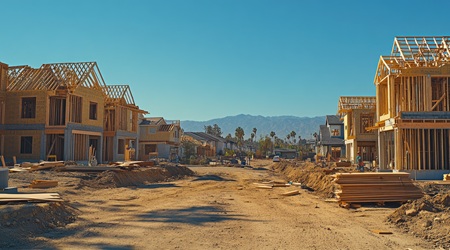
Federal Housing Bill

(June 2, 2026) — A major federal housing bill moving through Congress could reshape the national housing debate by targeting three issues affecting markets across the country, including Southern Arizona: limited housing supply, affordability pressures, and the growing role of large institutional investors in the single-family housing market.

The proposal, known as the 21st Century ROAD to Housing Act, is a broad bipartisan housing package aimed at increasing housing supply, modernizing federal housing programs, and improving access to homeownership. The Senate passed the bill in March by a vote of 89–10, but the legislation is not final. The Senate version substantially amended the earlier House-passed bill, meaning the measure still requires additional action in the House or reconciliation before becoming law.

One of the most closely watched provisions is titled “Homes are for People, Not Corporations.” It would restrict large institutional investors that directly or indirectly control at least 350 single-family homes from purchasing additional single-family homes, subject to exemptions. The restriction is intended to prevent large investors from competing directly with individual homebuyers for entry-level and family housing.

The institutional-investor provision has drawn attention because single-family rental ownership has become a flashpoint in fast-growing Sun Belt markets. While large investors own a relatively small share of homes nationally, their buying activity can be more concentrated in specific metros and neighborhoods, where it may affect competition for available homes and entry-level ownership opportunities.

The bill also includes an important build-to-rent wrinkle. The Senate version allows certain newly constructed build-to-rent homes to be purchased as an exemption, but would require those homes to be sold to an individual homebuyer after seven years. Housing-industry observers have warned that this provision could affect build-to-rent investment and rental supply, especially in high-growth markets where single-family rentals have become part of the housing mix.

For Arizona, that distinction matters. Institutional capital is not limited to investors buying existing houses out from under individual buyers. It also plays a role in land banking, finished-lot financing, and build-to-rent development. In growth corridors such as Marana, Sahuarita, Casa Grande, Buckeye, and Queen Creek, outside capital has become part of the development ecosystem. Those structures can help deliver new supply, but they also raise questions about who ultimately controls housing inventory in fast-growing markets.

For Tucson, the issue is especially relevant because the region continues to face a shortage of attainable housing, rising development costs and limited finished lots in some submarkets. Homebuilders remain active in areas such as Marana, Vail, Sahuarita, Oro Valley, and Tucson’s eastside, but new supply often faces challenges related to land availability, infrastructure capacity, entitlement timing, construction costs, and affordability constraints.

The bill’s broader housing-supply provisions are designed to address some of those pressures by supporting production and reducing barriers to new housing. The package includes provisions affecting manufactured housing, rural housing, homelessness programs, affordable housing finance, and federal housing program modernization.

The proposal also follows a federal executive order directing agencies to limit the sale of certain federally controlled single-family homes to large institutional investors and to prioritize families, individuals, and smaller buyers when those homes are disposed of.

Supporters argue the legislation could help restore balance to the for-sale housing market by making it harder for large corporate buyers to outbid owner-occupants while also encouraging more housing production. Critics and industry observers caution that the details matter, particularly exemptions for build-to-rent housing, land banking, foreclosure purchases, and new construction. Some housing groups have warned that restrictions on build-to-rent ownership could reduce rental supply or discourage capital from funding new housing.

For Southern Arizona, the policy challenge is separating investor activity that competes with homebuyers from capital that helps bring new homes, lots, and rental options to market. A final version of the bill would need to distinguish between investors purchasing existing homes for long-term rental ownership and financing structures that support new housing production.

The legislation remains subject to further congressional action. The House passed a revised housing bill in May that reportedly removed the Senate’s controversial seven-year build-to-rent sale requirement, underscoring that the legislation’s final form remains unsettled.

For Southern Arizona, the bill underscores a broader point already evident in the local market: housing affordability cannot be solved by a single policy. More supply, faster entitlement timelines, infrastructure investment, attainable price points, and careful attention to investor activity are all part of the equation.

As Tucson and surrounding communities continue to compete for jobs, residents, and investment, the availability of attainable housing remains as much an economic development issue as a residential real estate issue. Federal housing policy may not solve local supply constraints on its own, but the debate shows that housing production and affordability are now central to the national economic conversation.