Editor’s Insight: Office isn’t coming back – it’s being remade

Office

TUCSON, AZ (Sept. 21, 2026) – The Office Trends issue of Trend Report is out this morning and from the looks of it, office isn’t coming back – it’s being remade. The office market is not returning to what it was before the pandemic. It is being remade.

After several difficult years, the numbers are finally moving in a more encouraging direction. National office demand has posted nine consecutive quarters of positive absorption, vacancies are declining, and both Tucson and Phoenix recorded improving conditions during the second quarter. Yet the recovery is not reaching every building equally.

Tenants are choosing quality, location and experience. Newer and well-maintained properties are capturing most of the demand, while older buildings without modern amenities continue to struggle. As Dave Volk explains in this issue, a traditional Class A designation is no longer enough. Buildings must continually reinvest to remain competitive, and even an older property can become a trophy asset when it offers the environment tenants now want.

Our cover story on 5151 E. Broadway illustrates that point particularly well. Tucson’s tallest office building outside downtown has maintained its position in the market by creating more than a place to work. Its tenants describe a community built around convenience, relationships and the small touches that make employees want to come to the office.

At the same time, the supply of office space is shrinking. Very little new construction is underway, while obsolete buildings are being demolished or converted to apartments, hotels, industrial uses and other purposes. The planned transformation of a Phoenix office tower into a 340-room JW Marriott is one example of how properties that no longer work as offices can begin a productive new chapter.

The reports throughout this issue point to the same conclusion. The office sector is recovering, but it is also becoming more selective. The strongest buildings are commanding higher rents and attracting tenants, while outdated properties face difficult decisions about renovation, conversion or redevelopment.

That divide will create challenges, but it will also create opportunities. The office market may be smaller than it once was, but the space that survives will be better suited to how companies and employees want to work today.

Special thanks to Cathy Jahnke for taking us inside the culture and community of 5151 E. Broadway, and to Dave Volk for placing Tucson’s changing office market within the larger national recovery. Ajay Madhvani returns with an updated comparison of Tucson, Albuquerque and El Paso, while Scott Whipple examines how professional communication continues to shape the modern workplace. We also appreciate the market research provided by PICOR, CBRE, Cushman & Wakefield and Colliers.

Thank you as well to our production team—Patti van Leer, Michael Rossmann and Jack Paddock—for their consistent support and meticulous attention to detail.

Looking ahead, you won’t want to miss our November issue exploring Development & Infrastructure Trends! As always, we welcome your feedback, ideas and contributions. Visit TrendReportAZ.com and click “Connect” to get in touch.


Karen M. Schutte
Managing Editor, TREND report


D.R. Horton Acquires 47 Additional Lots at Entrada Del Toro in Rancho Sahuarita

Entrada Del Toro

SAHUARITA, ARIZONA (Sept. 18, 2026) — D.R. Horton purchased 47 finished residential lots in the Entrada Del Toro neighborhood at Rancho Sahuarita for $4.79 million, continuing the homebuilder’s expansion within the master-planned community.

The sale closed Sept. 10 for $4,785,300, or approximately $101,814 per lot. The lots encompass approximately 7.66 acres near 698 W. Calle Manolette in Sahuarita.

RSMC VIII LLC, an affiliate of Rancho Sahuarita represented by President Jeremy Sharpe, sold the property. D.R. Horton Inc. of Scottsdale was represented by Sam Mills, division vice president of land.

The acquisition includes lots located throughout Entrada Del Toro, a developing neighborhood within Rancho Sahuarita. The lots are finished and ready for home construction, eliminating much of the infrastructure work typically required before vertical development can begin.

The transaction builds upon D.R. Horton’s earlier investment in Entrada Del Toro. In November 2025, the homebuilder purchased its first 30 finished lots in the neighborhood for $2,825,625, or approximately $94,188 per lot.

With the latest acquisition, D.R. Horton has purchased at least 77 finished lots at Entrada Del Toro for a combined investment of approximately $7.61 million. The per-lot price in the September transaction was about 8% higher than the price paid in the November acquisition.

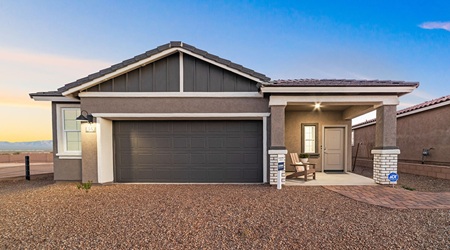
D.R. Horton is already marketing new homes in Entrada Del Toro, with single-story floor plans offered within the Rancho Sahuarita master-planned community. The neighborhood provides access to Rancho Sahuarita’s established recreational facilities, parks, trails and other community amenities.

The acquisition reflects continued builder demand for finished lots in Sahuarita, where existing infrastructure and master-planned amenities allow homebuilders to bring new inventory to market more quickly. It also represents another phase of residential growth at Rancho Sahuarita as development continues in the community’s newer neighborhoods.

Source: RED Comp #12714


Inflation and rising borrowing costs temper commercial real estate momentum

Inflation

(September 18, 2026) — Inflation remained stubborn in August as rising energy and transportation costs added new pressure to the economy and complicated the outlook for commercial real estate, according to research from Marcus & Millichap.

The Consumer Price Index increased 3.4% from a year earlier and 0.4% from July. Core inflation, which excludes food and energy, rose 2.4% annually and 0.3% for the month. Both monthly readings were the highest since May.

Energy prices were a major contributor to the increase. Gasoline accounted for more than one-third of the monthly rise in headline inflation, while higher airline fares contributed to growth in core services costs. The energy index increased 2.1% in August after declining during the previous two months, and transportation services rose 0.5%, its largest monthly increase since March.

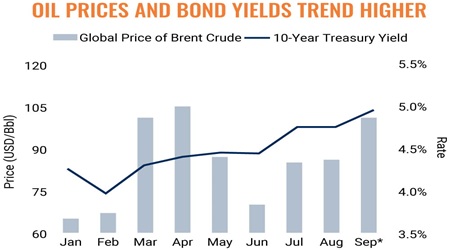
Those pressures have intensified amid hostilities in the Persian Gulf. Brent crude oil recently climbed above $100 per barrel, while the national average price of diesel exceeded $6 per gallon in September for the first time.

Higher energy costs are not the only inflationary concern. Elevated and frequently changing tariffs could further increase the cost of imported consumer goods, construction materials and business equipment. At the same time, substantial federal borrowing requirements are creating additional competition for investor capital.

Together, those factors have placed upward pressure on long-term interest rates. The yield on the 10-year Treasury briefly reached 5% on Sept. 14, returning to a level last touched in 2023 and otherwise unseen since 2007.

For commercial real estate, persistently high long-term rates could delay the recovery in transaction activity. Borrowers continue to face expensive financing, refinancing challenges and reduced leverage. The higher cost of debt also makes it more difficult for buyers and sellers to agree on property values.

Lender liquidity remains relatively strong, according to Marcus & Millichap, providing some support for acquisitions. However, prolonged inflation and elevated Treasury yields could limit the pace of transaction growth as investors adjust their return expectations and underwriting assumptions.

Development is also becoming more difficult to justify. Higher financing, construction material and operating costs are reducing project feasibility across several property sectors. While that could limit new construction in the near term, slower development may eventually benefit existing properties by restricting future supply.

The industrial sector faces additional pressure from rising fuel and transportation expenses. Distribution and logistics tenants operating truck-intensive networks are particularly exposed to higher diesel and freight costs, which could affect margins and decisions about warehouse locations and space requirements.

Industrial net absorption during the first half of the year roughly kept pace with new supply, holding the national vacancy rate at 7.8% in June. Vacancy has remained unchanged since September 2025 but is still at its highest level in more than a decade.

Construction activity is now slowing, which should ease competitive supply pressures and provide some protection against further vacancy increases. Existing industrial properties could benefit over the medium term as fewer new projects reach completion, although softer tenant demand and rising distribution expenses remain near-term concerns.

Overall, the August inflation report points to continued uncertainty for commercial real estate. Higher energy costs, tariffs and federal borrowing needs could keep interest rates above previous norms, prolonging financing challenges and limiting transaction momentum. At the same time, reduced construction could help rebalance property markets once current economic pressures begin to ease.

Sources: Marcus & Millichap Research Services, Bureau of Labor Statistics, Federal Reserve and AAA. Data as of Sept. 14, 2026.