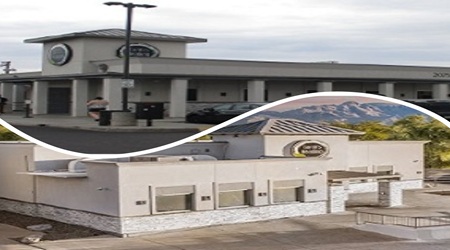
Tucson Lease Report, August 22-26, 2025

Tucson Lease Report

TUCSON, AZ (September 2, 2025) – This week’s lease activity totaled 62,483 square feet across three property types:

  • Industrial: 55,800 square feet
  • Retail: 5,079 square feet
  • Medical Office: 1,645 square feet

The following leases were reported to the Real Estate Daily News for the week of August 22 – 26, 2025.

INDUSTRIAL – 3191 E 44th St., Tucson, AZ 85713 – South Submarket
Papa John Properties LLC leased 10,678 square feet of industrial space. CBRE’s Tim Healy represented the landlord in this new lease.

INDUSTRIAL – Town Central Business Park, 5037 & 5041 E. 29th St., Tucson, AZ 85711 – East Submarket
22 Home Solutions, LLC leased 2,800 square feet of industrial space from Pegasus Tucson Owner LLC. Paul Hooker, SIOR, Principal, and Andrew Keim, Industrial Specialists with Cushman & Wakefield | PICOR, represented the landlord.

RETAIL – 6383 E Grant Rd., Suite 115, Tucson, AZ 85715 – Northeast Submarket
TVI, Inc. dba Green Drop leased 2,135 square feet of retail space. The premises will be used to accept donated items for the nonprofit partner. Isaac Figueroa, CCIM, SIOR with Larsen Baker represented the landlord, and Trent McCullough with LevRose represented the tenant.

RETAIL – La Plaza Shoppes, 6540 E Tanque Verde Rd., Tucson, AZ 85715 – Northeast Tucson Submarket
Jimmy’s Pita & Poke leased 1,500 square feet of retail space in a former Savaya Coffee location. Isaac Figueroa, CCIM, SIOR, and Frank Arrotta with Larsen Baker represented the landlord and tenant, respectively.

RETAIL – Rancho Center, 3400 E Speedway Blvd., Suite 108, Tucson, AZ 85716 – Central Submarket
Cycle Nation, LLC dba Pima Street Bicycle leased 1,444 square feet of retail space. Isaac Figueroa, CCIM, SIOR, with Larsen Baker represented the landlord. Jennie Silverthorn of Jason Mitchell Real Estate represented the tenant.

INDUSTRIAL – Town Central Business Park, 5027 E. 29th St., Tucson, AZ 85711 – East Submarket
Borderlands Theater Teatro Fronterizo, Inc. leased 1,185 square feet of industrial space from Pegasus Tucson Owner LLC. Paul Hooker, SIOR, Principal, and Andrew Keim, Industrial Specialists with Cushman & Wakefield | PICOR, represented the landlord.

INDUSTRIAL – Ruthrauff Commerce Center, 2430 W Ruthrauff Rd., Suite 120, Tucson, AZ 85705 – Central Submarket
Painting Green Inc. leased 859 square feet of industrial space from Pegasus Tucson Owner LLC. Paul Hooker, SIOR, Principal, and Andrew Keim, Industrial Specialists with Cushman & Wakefield | PICOR, represented the landlord.

RENEWALS

INDUSTRIAL – 2700 E Executive Dr., Tucson, AZ 85756 – Central Tucson/Airport Submarket
Nolato GW Inc. renewed 28,971 square feet of industrial space. CBRE’s Tim Healy represented the tenant, while Stephen Cohen of Cushman & Wakefield | PICOR represented the landlord, 2700 Executive Properties, LLC.

INDUSTRIAL – 3925 N Benan Venture Dr., Suite 101, Tucson, AZ 85705 – Central Submarket
Lennox Industries Inc. renewed 11,166 square feet of industrial space. CBRE’s Tim Healy and Jackson Kraft represented the tenant, while Rob Glaser of Cushman & Wakefield | PICOR represented the landlord, EastGroup Properties L.P.

MEDICAL OFFICE – Tucson Medical Park, 2121 N Beverly Ave., Suite 103, Tucson, AZ 85712 – Northeast Submarket
Birth Tissue Recovery, LLC renewed 1,645 square feet of medical office space with TMC Holdings, Inc. Richard M. Kleiner, MBA, Principal, and Alexis Corona, Office Specialists with Cushman & Wakefield | PICOR, represented the landlord.

Submit sales and leases to [email protected]


Project Blue Faces Legal Scrutiny as Pima County Revisits $20.8M Land Sale Amid Rising Debate on Energy, Water, and Microgrid Solutions

Project BLue

TUCSON, Ariz. (September 2, 2025) – The fate of “Project Blue,” a massive data center once billed as a transformative economic opportunity for Southern Arizona, remains in limbo as Pima County Supervisors prepare to revisit the county’s $20.8 million land sale agreement with developer Beale Infrastructure.

Here’s what we know to date: the Board of Supervisors’ agenda for September 2 includes an executive session to determine whether the contract is still binding in light of the Tucson City Council’s August rejection of annexation.

The proposed campus, slated for 290 acres north of the Pima County Fairgrounds, was approved for sale by the county in July. However, the agreement required both annexation into the City of Tucson and access to city water service. Dozens of residents filled City Hall chambers to oppose those conditions, citing water scarcity and unprecedented power demand. The Council voted against annexation, effectively stalling the project.

“In addition to the water use, this was a problem because of the energy use,” Councilmember Kevin Dahl said during the decisive August 6 meeting.

Contract Conditions and Legal Questions

With annexation denied, county supervisors now want their attorneys to advise whether those conditions void the land deal or if Beale can waive them and force the county to proceed. Supervisor Matt Heinz, who voted for the sale, has acknowledged the agreement was structured so the county “had no choice but to proceed” if the developer pushes forward.

Supervisor Andres Cano, however, has called the latest maneuvering “corporate collusion” between Beale and Tucson Electric Power (TEP). He says unanswered questions about water, grid stability, and promised jobs continue to plague the project.

Beale and TEP File Energy Agreement

After three years of planning and despite the city’s rejection, Beale has pressed forward. The company filed an energy supply agreement with the Arizona Corporation Commission in partnership with TEP on August 25th and planned to begin service by 2027. The filing calls for 286 megawatts of power by May 2028 — an unprecedented load for Southern Arizona.

TEP spokesperson Joe Barrios said the utility can meet the demand with existing and planned clean-energy projects. He stressed that no subsidies are included: “That ensures residential customers and other retail customers aren’t subsidizing the project.”

Amazon Connection and Community Distrust

Local reporting has linked Project Blue to Amazon Web Services (AWS), although the company denies any such commitment. “We do not have any commitments or agreements in place to develop this project,” AWS said in a statement.

Beale countered that Tucson missed a significant economic opportunity. The company claimed that the project would generate $250 million in tax revenue, create 3,000 construction jobs, and result in 180 permanent jobs, averaging $64,000 per year.

But residents and council members remained unconvinced. A Tucson Sentinel analysis found the project would consume more water than four golf courses. Councilmember Nikki Lee called Project Blue a lightning rod for broader anxieties:

“It’s a distrust in government. It’s a distrust in corporations. It’s a very large distrust in tech companies, a distrust in technology and privacy in general, and a fear of artificial intelligence and how fast things are moving and how little control we have.”

Industry Innovation: Cooling Labs and Microgrids

The controversy comes as other Arizona data center developers have been investing heavily in sustainability research. Aligned Data Centers, a technology infrastructure firm, recently opened its Advanced Cooling Lab at its North Phoenix campus. In partnership with Texas-based DivCon Controls, the one-megawatt facility is designed to test hybrid cooling systems that blend Aligned’s patented Delta Cube™ air-cooled technology with its DeltaFlow~™ liquid-cooled platform.

“Aligned has been innovating data center cooling for more than a decade,” said CTO Michael Welch. “The Advanced Cooling Lab is a testament to our commitment to delivering cutting-edge data center solutions and our passion for innovation.”

This innovation reflects a broader shift in the industry, as rack power densities rise with the increasing use of AI and GPU workloads. Liquid cooling — whether direct-to-chip or hybrid — is increasingly seen as essential. All of Aligned’s campuses are now “liquid cooling ready.”

Microgrids as a Potential Solution

Beyond cooling, energy resilience is becoming central to the debate. According to R&D World, microgrids may hold the key to addressing the energy challenge in data centers. While Virginia remains the national leader with more than 300 facilities, Arizona is quickly becoming a magnet due to low operating costs and plentiful land.

But challenges loom. A 2024 Electric Power Research Institute report projected that data centers could consume up to 16.5% of Arizona’s electricity in the coming years. Arizona Public Service (APS) has already reported that demand from data centers is growing 100 times faster than from all other customer classes combined — a trajectory that could lead to higher utility bills and grid instability.

Researchers are exploring solutions that marry reliability with sustainability. On the Hopi Reservation, where communities frequently experience power outages and rely on diesel generators, a team from Arizona State University, BoxPower, and the Hopi Utilities Corporation is constructing a solar-powered microgrid, supported by a $9 million grant from the Department of Energy.

The microgrid will include a 1.25-megawatt solar array, battery storage, and backup diesel generators, creating a replicable model for rural energy sovereignty.

“We’re trying to demonstrate how hybridizing and updating an older, fossil fuel-based type of system can work and be repeatable for other sites — whether tribal, domestic, or international,” said James Nelson, director of ASU’s LEAPS lab.

Water Use and Alternative Cooling

Water scarcity compounds the challenge. Bluefield Research estimates Arizona data centers will consume 905 million gallons of water in 2025, enough to supply nearly 10,000 homes annually. Between 2025 and 2030, consumption is expected to reach 150.4 billion gallons, equivalent to approximately 4.6 million U.S. households.

Some operators are already moving away from water cooling. CyrusOne, which operates eight facilities in Chandler, utilizes liquid-to-chip cooling, rear-door heat exchangers, and immersion cooling — all designed to minimize water consumption. Microsoft is piloting closed-loop water cooling systems in Phoenix, while OpenAI’s Stargate data center in Texas will debut similar designs.

What Comes Next

The contrast is striking. While Aligned and others push for advanced cooling labs and microgrids to reduce strain on Arizona’s grid and water supply, Beale’s Project Blue faces mounting distrust, questions about secrecy, and legal uncertainty.

This week’s Pima County executive session could determine whether the annexation conditions void the $20.8 million sale, or whether Beale can still compel the county to close. Meanwhile, the Arizona Corporation Commission will review the TEP energy agreement.

For now, Project Blue remains a flashpoint — a test of whether Southern Arizona can host mega-scale data centers without sacrificing transparency, water security, and grid resilience.


Ventana Plaza in Catalina Foothills Sells for $10.25 Million

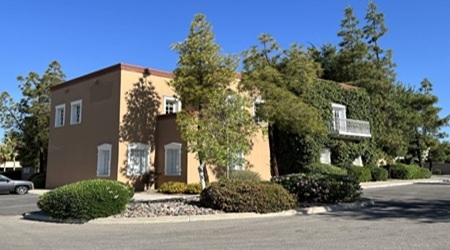
Ventana Plaza

TUCSON, Ariz. (August 29, 2025) – Ventana Plaza, a prominent retail and office center located at 5414–5455 N. Kolb Road in Tucson’s Catalina Foothills, has sold for $10,250,000 ($317 PSF). The buyer was Lynn Morrison, LLC of Scottsdale, while the seller was WH Group #2, LLC of Tucson.

Sanford Burstyn and Sam Wilson of Arrow Real Estate Investment Services (ARROW REIS) represented the seller in the transaction. The buyer was self-represented.

Developed in 2001 by the seller, who also built the surrounding subdivision, Ventana Plaza, a 32,300-square-foot property, has long served the affluent Foothills community. Strategically positioned at the gateway to Ventana Canyon Country Club and Resort, the property benefits from exceptional demographics. ZIP codes within a one-mile radius report average household incomes exceeding $144,000, placing the center within one of the region’s highest-performing retail corridors.

According to Placer.ai, Ventana Plaza attracts approximately 15,300 visits annually from 10,100 unique visitors, with an average visit frequency of 1.52. These visitation metrics highlight the property’s strong draw in a more affluent, but smaller, trade area that supports consistent traffic.

This transaction demonstrates lasting investor confidence in Southern Arizona’s luxury retail sector, particularly in supply-constrained Foothills submarkets where quality assets are limited and demographic trends remain favorable.

For more information, Burstyn and Wilson can be reached at 602.625.5151.

Source: RED Comp #12059.