North Campbell Site Sells for $2.475 Million, Planned for Apartment Development
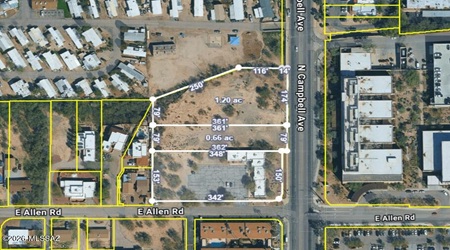
TUCSON, AZ (March 18, 2026) — A 3.06-acre commercial land site at 3801 N. Campbell Avenue in Tucson sold for $2.475 million on March 3, 2026, for a planned apartment development estimated at about 120 units, though the unit count remains preliminary pending formal plan approvals. The property is located at the northwest corner of Allen Rd and Campbell Ave.
A big influence on that corner is the Banner/UMC North medical campus at Campbell and Allen at the northeast corner, which has long anchored the area with outpatient and specialty medical uses. The former Tucson General Hospital site at Campbell and Allen is now UMC North Medical Park, with the University of Arizona’s Banner North Campus/clinic operations.
The property, zoned O-3, includes roughly 133,294 square feet of land and traded at approximately $18.57 per square foot.
Rob Lamb of Long Realty represented both sides in the transaction. The seller was 3801 N Campbell Ave LLC c/o Thomas and Susanne Lavoie, and the buyer was Elena Sotelo.
For more information, contact Rob Lamb at 520.444.4411.
Source: RED Comp #12373
Copper World State Land Sale Heads to Auction Under Protest
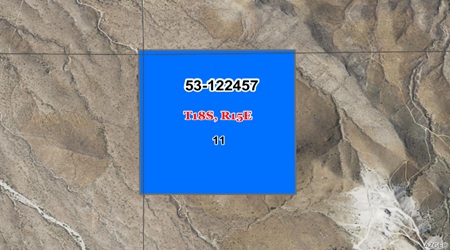
TUCSON, AZ (March 18, 2026) — A proposed 160-acre Arizona State Trust land sale tied to Copper World’s planned mining operation in the Santa Rita Mountains is drawing renewed scrutiny ahead of a public auction scheduled for April 29, 2026. The parcel is being pursued for the disposal of mine tailings, and the Arizona State Land Department is moving forward with the sale following earlier administrative approval.
New detail in the public record comes from a February 6, 2026, memo from Pima County Administrator Jan Lesher to the Board of Supervisors, titled “Update on State Land Auction for Proposed Copper World Mine.” In that memo, Lesher wrote that State Land Commissioner Robyn Sahid notified the county that the state was proceeding with the auction, with required public notices to follow, and said the county remained concerned that moving ahead before completion of Copper World’s final feasibility study could facilitate development of the proposed mine. Lesher also urged Gov. Katie Hobbs to defer the sale until that study is completed and reviewed.
The February memo builds on an earlier September 11, 2025, memo from Lesher to the Board, in which she told supervisors that the State Land Department’s Board of Appeals had approved the sale of 160 acres of State Trust land to Copper World, Inc. for mine tailings. In that letter, Lesher said Pima County opposed the sale and reiterated concerns about groundwater use, impacts on surrounding residential areas, and the loss of natural and cultural resources.
The land sale has become a flashpoint because opponents argue the parcel is more than a routine state land disposition. Pima County, the Tohono O’odham Nation, and environmental groups have objected, saying the tract could play a strategic role in the long-term buildout of the mine and should be evaluated in that broader context. Recent challenges to the auction have also argued that the land has been undervalued and that the transaction carries implications beyond the 160 acres itself.
State officials have framed the issue differently. According to recent reports, the state’s position is that the sale would generate revenue for State Trust beneficiaries, including schools, and allow tailings to be placed farther from nearby homes and schools than at another possible location. Hobbs’ office has said the mine would move forward with or without the auction and described the sale as the state’s best available option for balancing trust obligations with impacts on nearby communities.
“The reality is that this mine was going to move forward with or without this state land auction,” a spokesperson for Hobbs’ office said. “This project has been in motion for decades and, because it is primarily on private land, will proceed with or without the state’s involvement, but we are committed to ensuring the mine is a responsible neighbor and invests in surrounding communities.”
The debate also highlights the difference between historic and modern mining. Earlier mining operations often faced fewer requirements for waste containment, water protection, and reclamation, while modern projects such as Copper World are typically shaped by engineered tailings facilities, detailed feasibility work, extensive permitting, environmental monitoring, long-lead infrastructure planning, and closer scrutiny of community impacts.
Copper World is being designed under modern mining standards, including engineered tailings storage, detailed feasibility work, long-lead infrastructure planning, and today’s permitting and environmental review requirements.
The proposed sale is not yet a closed transaction. It remains an auction process, and opponents are still trying to stop or delay it before the April 29 sale date. For Southern Arizona, the dispute sits at the intersection of land use, public-land trust policy, mining economics, and regional growth management, making it both a consequential public-land decision and a mining story.
Southern Arizona, Southern Taiwan Deepen Semiconductor, Optics Ties
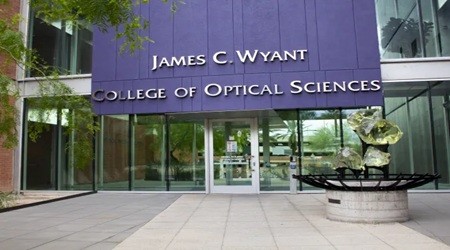
The original Optical Sciences Center building at the University of Arizona opened in 1969; the college was later renamed the James C. Wyant College of Optical Sciences in 2019.
TUCSON, AZ (March 17, 2026) — Leaders from Southern Arizona and Southern Taiwan signed a six-party Memorandum of Understanding on March 13 in Tucson to strengthen collaboration across the semiconductor supply chain and expand joint work in optics, photonics, advanced manufacturing, research, and workforce development.
The agreement brings together the Arizona Commerce Authority, Pima County, the City of Tucson, the University of Arizona, the Kaohsiung City Government, and National Sun Yat-sen University.
The partnership connects two regions that are of growing importance in the global semiconductor ecosystem. Southern Arizona is known for its strengths in optics and photonics, anchored by the University of Arizona’s James C. Wyant College of Optical Sciences and Tucson’s “Optics Valley” cluster, while Southern Taiwan plays a major role in semiconductor manufacturing and industrial production.
Under the agreement, the partners will focus on three areas: industrial resilience, talent development, and institutional exchange. That includes sharing best practices related to industrial policy, innovation, natural resource stewardship, and ecosystem development, while also creating new opportunities for academic exchange, joint research, and workforce training between the University of Arizona and National Sun Yat-sen University.
The agreement also reflects Arizona’s deepening economic relationship with Taiwan, which became the state’s second-largest trading partner in 2025 with more than $21.2 billion in total trade. Arizona exported $4.5 billion in goods to Taiwan last year and imported $16.7 billion.
Arizona Commerce Authority President and CEO Sandra Watson said the agreement marks an important milestone in Arizona’s partnership with Taiwan and expands opportunities for collaboration in workforce development, research, and semiconductor supply chains.
University of Arizona President Suresh Garimella said international collaboration is critical to advancing research and innovation, particularly in semiconductor-related fields that are important to Arizona’s economic future.
Kaohsiung Mayor Chen Chi-mai said the partnership moves beyond general policy support toward deeper integration among government, academia, and research institutions. He said the long-term competitiveness of the semiconductor industry depends on talent and ecosystem strength, and that the agreement is intended to help build a stable international pipeline of highly trained workers and researchers.
National Sun Yat-sen University President Li Chih-peng said the new agreement builds on a 2023 memorandum between his university and the University of Arizona. He said future efforts will focus on joint research, faculty and student exchanges, and industry-academic collaboration in semiconductors, optoelectronics, artificial intelligence, and health technology.
Tucson Mayor Regina Romero said the agreement links Southern Taiwan’s semiconductor manufacturing leadership with Tucson’s strengths in optics and photonics, while also supporting the region’s broader goals around sustainable economic development. She added that Taiwan’s expertise in water treatment and recycling technologies used in semiconductor manufacturing is especially relevant to a desert community like Tucson.
Pima County Board of Supervisors Chair Jennifer Allen said the signing gives local government, academic, economic development, and workforce partners an opportunity to work together on growth that supports communities while protecting land, air, and water resources.
For Southern Arizona, the agreement builds on the University of Arizona’s internationally recognized leadership in optical sciences, led by the James C. Wyant College of Optical Sciences, along with Tucson’s broader network of companies and institutions involved in imaging, sensors, precision manufacturing, and other advanced technologies that support semiconductor production.
For Arizona leaders, the agreement is another sign that the state’s relationship with Taiwan is expanding beyond large-scale chip investments to include research collaboration, talent development, and regional partnerships that could shape the next generation of semiconductor innovation.