EDITOR’S OPINION: RTA Next Victory for Regionalism Tuesday Night

RTA Next

TUCSON, AZ (March 12, 2026) Pima County voters appear to have approved a regional transportation plan on March 10, while also rejecting a campaign too often shaped by exaggeration, conspiracy-flavored rhetoric, and lazy accusations masquerading as taxpayer advocacy. Pima County’s latest unofficial results show 197,293 ballots cast, with Proposition 418 leading 119,252 to 76,087, or 61.05%, and Proposition 419 ahead 114,416 to 80,107, or 58.82%.

So the margin is not close.

There were fair arguments against RTA Next. Voters could reasonably question the project list, the tax extension, oversight, timelines, or whether this was the best possible package. Those were legitimate debates.

But too much of the opposition was not built on a serious challenge to the plan. It was built on noise.

Voters were told transportation money was funding immigration-related spending. It was not. They were told that high public salaries alone proved corruption. They do not. They were told that if a project benefits a growth area, it must be an insider scam. It is not. They were told wildlife crossings were absurd luxuries, as if infrastructure planning could only be understood through resentment and ridicule.

Apparently, enough voters were not buying it.

This result says something larger about the electorate. Voters were able to sort through the fog and make a decision based on the reality that regions do not function on outrage alone. Roads, freight mobility, transit funding, and long-range planning are not imaginary needs. They exist whether Facebook commenters like them or not.

And let’s say the quiet part out loud: some of the anti-RTA messaging was embarrassingly unserious.

Calling everything corruption is not accountability. It is intellectual laziness. Dumping every grievance about Tucson, growth, development, and politics into one transportation vote is not insight. It is grievance recycling. Mocking projects out of context is not analysis. It is political theater. Pretending every public investment outside your own neighborhood is theft is not taxpayer vigilance. It is not a principle. It is provincialism.

For all the fury, what was the serious alternative? What was the replacement plan equal to the scale of the region’s transportation needs?

There wasn’t one.

There was rejection. There were accusations. There was drama. But there was no coherent alternative matching the size of a 20-year regional transportation pay-as-you-go program.

RTA Next won. That was not just a victory for a project package. It was also a rejection of reflexive distrust, apocalyptic rhetoric, and weaponized misinformation. It was voters saying that while government deserves scrutiny, scrutiny still requires facts.

Now the burden shifts to the people who asked for this yes vote.

Deliver. Be transparent. Communicate clearly. Prove the promises were real. Because passing the measure is only the beginning. On election day, voters chose regionalism, cooperation, and a shared future over noise.


University of Arizona Launches Bear Down 100 Campaign to Celebrate a Century of Tradition and Impact

Bear Down

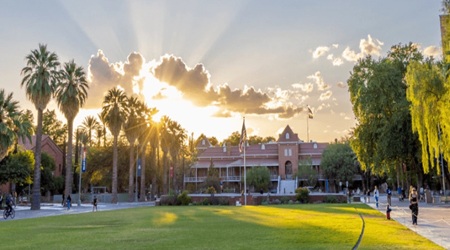
TUCSON, Ariz. (March 12, 2026) — The University of Arizona has launched Bear Down 100, a campaign celebrating the 100th anniversary of the university’s iconic rallying cry while highlighting a century of excellence in research, academics, student success, community impact, and athletics.

Timed to coincide with a major moment in college sports, the campaign will be featured during the Big 12 and NCAA Tournaments, showcasing the University of Arizona to a national audience while reinforcing the power of a message that has defined the institution for generations.

More than a slogan, “Bear Down” is presented in the campaign as a lasting expression of perseverance, ambition, and resilience. Through a blend of historic milestones and modern achievements, Bear Down 100 connects the university’s storied past with its continued leadership in innovation, discovery, and service.

The phrase traces back to John Byrd “Button” Salmon, the University of Arizona student body president and quarterback whose final words following a 1926 car accident — “Tell them … tell the team to bear down” — became one of the most enduring mottos in college athletics and a defining part of the university’s identity.

As part of the initiative, the university is also highlighting “A Century of Bear Down Moments,” a collection of 100 stories that reflect the spirit of Bear Down across research, the arts, medicine, athletics, and student achievement.

The campaign underscores the University of Arizona’s role in shaping discoveries and ideas with global impact. Among the achievements featured are the founding of the Laboratory of Tree-Ring Research in 1937, which helped pioneer dendrochronology and expand understanding of Earth’s environmental history; the university’s lunar mapping work led by Gerard P. Kuiper that supported NASA’s Apollo-era moon missions; and the establishment of the Center for Creative Photography in 1975 by President John Schaefer and Ansel Adams, helping elevate photography as a fine art.

The initiative also points to major advances in medicine and science, including the university’s role in pioneering chest-compression-only CPR, development of the first FDA-approved total artificial heart, stewardship of Biosphere 2, and leadership in space exploration through the OSIRIS-REx mission, which successfully returned samples from asteroid Bennu to Earth.

Athletics remains a central part of the campaign’s story, including the Arizona Wildcats’ 1997 NCAA men’s basketball national championship run and the 2025 national title won by Arizona’s men’s wheelchair basketball team.

With Bear Down 100, the University of Arizona is celebrating not only a century-old tradition, but also the enduring values behind it — determination, excellence, and the drive to keep pushing forward.

The campaign page is here: Bear Down 100 | The University of Arizona


Mattamy Tucson Buys 44 P&E Stone House Phase II Lots in Sahuarita for $1.2 Million

Stone House

SAHUARITA, AZ (March 11, 2026) — Mattamy Tucson, LLC acquired 44 platted and engineered lots, along with Common Areas A and B, in Stone House Phase II in Sahuarita for $1.2 million. The sale closed Feb. 24, 2026, and included approximately 68.21 acres at 2059 E. Range View Court in Sahuarita’s Extended South submarket. The transaction equates to about $17,593 per acre, or roughly $27,272 per lot.

The seller was Stone House Development Inc., an affiliate of Diamond Ventures, c/o David Goldstein, director. The buyer was Mattamy Tucson, LLC, an affiliate of Mattamy Homes, Inc., c/o Briana Rader, director of land acquisitions. Shannon Murphy with CBRE represented Stone House Development, the seller.

The property consists of Lots 64 through 88, Lots 91 through 109, and Common Areas A and B within Stone House Phase II. The land is designated for residential use, with the lots already platted and engineered. The minimum lot size reported is 18,733 square feet.

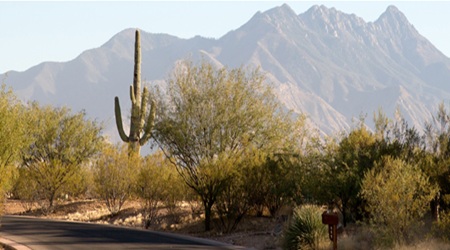
Stone House is a 253-acre gated homesite community near the Santa Rita Mountains, adjacent to Quail Creek and just south of Rancho Sahuarita in the Sahuarita area. The project was designed around existing wash areas to help preserve wildlife corridors, with interior walking trails connecting the community and taking advantage of the surrounding desert and mountain views.

The community is near shopping, medical facilities, restaurants, schools, golf courses, and other services in Sahuarita, with additional access to southern Arizona cultural and historic destinations such as Tumacácori, San Xavier del Bac Mission, and Tubac.

For Mattamy, the acquisition adds 44 platted lots to its local pipeline in a community positioned for detached single-family residential development.

Source: RED Comp #12362