Costco incentive advances as Sam’s Club lines up second Tucson location
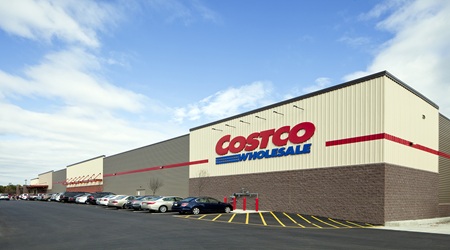
Costco incentive

TUCSON, AZ (March 6, 2026) — The Tucson City Council approved the next step toward a site-specific sales tax development agreement with Costco Wholesale for a new retail warehouse and fuel station planned at 9748 E. Old Vail Road on Tucson’s southeast side, which would add a fourth Costco warehouse in the greater Tucson area. While a separate big-box project — a proposed Sam’s Club near Swan Road and East 29th Street — continues moving through the early development pipeline.

Costco: five-year reimbursement tied to “unrestricted” city sales tax

City materials describe the Costco project as a 158,000-square-foot warehouse with an associated fuel facility on a roughly 22-acre vacant site near the Rita Ranch area. The project is tied to an incentive structure that reimburses Costco for eligible costs associated with public infrastructure and related improvements needed to develop the site.

According to the city-commissioned economic analysis, the proposed incentive would run for five years and reimburse Costco 45% of the City’s unrestricted sales tax revenues generated by the project (excluding construction sales tax). The analysis estimates the incentive value at about $7.3 million over the term.

The same analysis projects the project would generate about $22.7 million in city taxes over five years, while the City would retain the remaining share of retail sales tax plus one-time construction sales tax — estimated at about $15.2 million over the same period.

Jobs, payroll, and site activity

The economic analysis projects the store could employ up to 320 workers with a combined annual payroll of about $13.5 million.

On the planning side, the City of Tucson’s development tracking system shows a completed pre-application entry for the site referencing “New Costco coming to the Area” at the Old Vail Road address.
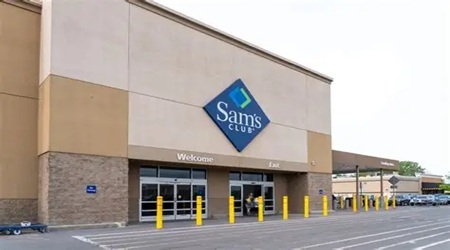
Sam’s Club: land deal signals new southeast-side big-box push

Separately, a Sam’s Club affiliate has purchased about 27 acres near the southeast corner of Swan Road and East 29th Street, a location just north of Davis-Monthan Air Force Base, positioning the site for a potential second Sam’s Club in Tucson. Reporting on the transaction places the purchase price at about $21.75 million.

Incentive watch: Unlike the Costco item advanced by the Council, public reporting to date has not indicated a City of Tucson tax incentive connected to the Sam’s Club site.

What happens next

For Costco, the notice of intent sets the stage for final negotiations and formalization of the development agreement, which typically defines eligible reimbursable costs and the mechanics for verifying revenue and reimbursements during the term.

For Sam’s Club’s site, the next public milestone would likely include submitted development plans, any rezoning or PAD actions as needed, and a traffic/infrastructure review tied to site design at Swan and 29th.

This report is based primarily on the Tucson Mayor and Council study session on March 3, 2026, along with related City staff presentations and public comments.


Tucson Council Maps Public Power Options as TEP Franchise Talks Near

Public Power OptionsTUCSON, AZ (March 6, 2026) — Tucson Mayor Regina Romero and the City Council used a Tuesday study session this week to lay out what “public power” could look like in Tucson, framing the discussion as part of the City’s long-running climate strategy and as a parallel track to upcoming franchise negotiations with Tucson Electric Power (TEP).
Romero said the City’s interest in public power stems from work on the Tucson Resilient Together Climate Action and Adaptation Plan, which directed staff to explore whether Tucson could pursue a public-power pathway. She emphasized the City has hired consultants to review feasibility, but said cost remains a central consideration.

At the same time, Romero highlighted a second, more immediate track: the impending renewal of the City’s TEP franchise agreement, and the community’s push to pair that renewal with an Energy Collaboration Agreement (ECA)—a framework intended to align utility investment with Tucson’s climate goals and resilience priorities. City officials said draft versions of the ECA and franchise agreement are expected to be released for public comment, with additional community meetings coordinated by TEP.

Four models outlined

Chief Resilience Officer Fatima Luna and City Energy Manager Michael Catanzaro/Canaro (as introduced at the meeting) presented a “landscape overview,” not a recommendation, organized around four distinct models that vary widely in scale, cost, risk, and timeline:

  1. Community Choice Aggregation (CCA) — A model used in some states where a city procures power on behalf of residents while the incumbent utility continues operating the grid. Staff noted CCA is not currently authorized in Arizona, making it a longer-term legislative effort rather than an immediate option.
  2. Municipal utility serving City-owned sites — A low-risk pilot concept using existing municipal facilities (such as a recreation center) to test utility functions like procurement and billing in a controlled environment, potentially paired with on-site generation and storage to support resilience.
  3. Municipal utility serving new development — A city-run utility created specifically for a new subdivision, district, or campus, built “from the ground up,” avoiding acquisition of existing assets but requiring upfront capital and careful navigation of service territory issues.
  4. Full municipalization within city limits — A full takeover of electric distribution within Tucson. City discussion referenced prior analysis placing acquisition value in the multi-billion-dollar range, with additional legal, operational, and timeline complexity.

Where Council landed on next steps

While public commenters urged the City to move faster, multiple council members expressed concern about the scale and cost of full municipalization, as well as the staffing and legal burden of building a regulated utility. Reporting on the meeting indicates the Council ultimately directed the Commission on Climate, Energy, and Sustainability to take a lead role in continuing the work and mapping long-term options, with staff providing periodic updates as the resilience hub and related concepts develop.

Why this matters now

City officials reported they have already received more than 1,600 letters and 4,000 signatures on several petitions supporting public power, and council members referenced ongoing concerns about high electric bills—particularly for low-income and elderly residents. The discussion is happening under a tight calendar: Tucson’s franchise agreement with TEP is nearing expiration, and the City is weighing how to secure climate-aligned investment, affordability tools, and resilience measures while it evaluates whether any public-power pathway is realistic over the long term.

This report is based primarily on the Tucson Mayor and Council study session on March 3, 2026, along with related City staff presentations and public comments.


Wespac Launches Charity Arm to Deepen Its Commitment to Community Impact

Wespac
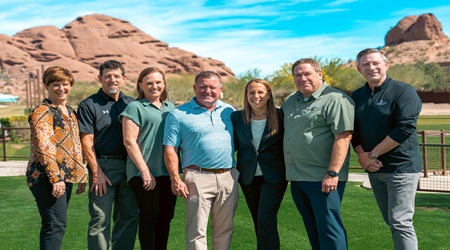
Wespac Charities Committee members (left to right) Heather Rogers, Perry Gordon, Sara Bartlo, Garrett Nybo, Stacy Gilbert, John Newman, and David Hreha.

Phoenix, AZ (March 6, 2026) – Wespac is proud to announce the launch of Wespac Charities, a new philanthropic initiative created to formalize and expand the company’s long-standing commitment to community, culture, and giving back.

Wespac Charities was established with a singular purpose: to make a genuine, measurable impact within the communities that have supported Wespac throughout its growth. The initiative will focus on supporting local, smaller nonprofit organizations where targeted funding, transparency, and hands-on involvement can create a meaningful difference.

“Our community has been incredibly good to Wespac,” said Wespac CEO Garrett Nybo. “Wespac Charities is our avenue to give back in a way that is intentional, personal, and impactful. There’s only one reason we’re doing this – to truly impact the community. I know this is a real differentiator for our team.”

The organization’s strategy emphasizes local impact, accountability, and alignment with causes that reflect Wespac’s values. In addition to financial contributions, Wespac Charities will provide employees with volunteer opportunities and community-driven initiatives, reinforcing a culture of service both inside and outside the company.

With an ambitious goal of donating $1 million annually, Wespac Charities aims to provide sustained support to organizations that are making a difference on the ground, helping people, families, and communities where the need is greatest.

To guide its charitable partnerships, Wespac Charities has established core pillars that serve as a framework for selecting organizations. These pillars ensure that Wespac’s efforts extend across multiple areas of community need, maximizing overall impact:

  • Animal Rescue
  • Arts
  • Children
  • Education
  • Environment & Recycling
  • Family Services
  • Mental Health, Recovery & Medical Support
  • Housing & Homelessness
  • Food & Nourishment

By aligning with organizations aligned with these pillars, Wespac Charities seeks to support causes that strengthen communities holistically, addressing immediate needs while contributing to long-term stability and well-being.

Wespac Charities represents a natural extension of Wespac’s culture and values, transforming the company’s commitment to community into a structured, mission-driven effort focused on lasting change.

More information about Wespac Charities, a registered 501©3 organization, including upcoming initiatives and opportunities to get involved, will be announced in the coming weeks.

PHOTO CAPTION: Wespac Charities Committee members (left to right) Heather Rogers, Perry Gordon, Sara Bartlo, Garrett Nybo, Stacy Gilbert, John Newman, and David Hreha.