U of A innovation drives $459.7M in annual economic impact Tech Launch Arizona
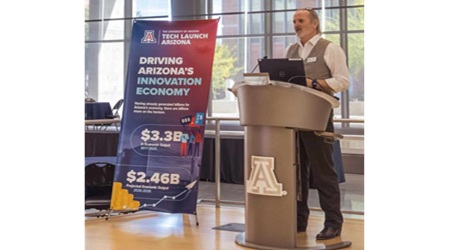
Tech Launch ArizonaTUCSON, AZ (May 19, 2026) — A new independent economic impact analysis finds that Tech Launch Arizona, the University of Arizona’s office for commercialization and innovation, generated $459.7 million in economic output and supported 3,070 jobs statewide in fiscal year 2025, underscoring the university’s growing role as an engine of Arizona’s economy.

According to the report, in fiscal year 2025, running from July 1, 2024, to June 30, 2025, Tech Launch Arizona and TLA-linked activities generated $159.8 million in labor income and $16.8 million in state, county, and municipal tax revenues. Compared with fiscal year 2021, TLA’s economic impact grew by approximately 20% across all measured categories, including jobs, labor income, economic output, and tax revenue.

TLA is a unit of the U of A Office for Research and Partnerships charged with translating university research into real-world impact. The office works with faculty, staff, and researchers to protect intellectual property, license technologies to industry partners, and launch startups that bring university innovations to market, ranging from medical devices and cancer therapies to optics, cybersecurity, and advanced software.

“We work with innovations across the university, drawing from every research area and discipline,” said Doug Hockstad, associate vice president of TLA. “With the expansive research portfolio of the U of A, it’s a huge, rewarding job.”

Hockstad says that TLA’s ultimate goal is to make the U of A one of the top universities in the nation for technology commercialization, also known as “tech transfer,” which can impact economies and improve lives.

“Achieving that takes a strong and connected ecosystem that brings together university innovators, a community of technology and business experts, and entrepreneurs and investors to help us map out the best pathway forward for each invention,” he said. “This report is evidence that the ecosystem we’re growing is strong and we’re on our way toward our goals of impact and leadership.”

“At the University of Arizona, we measure the success of our billion-dollar research enterprise not just by the discoveries made in our labs, but by the tangible benefits that translating those discoveries into innovations brings to the people of Arizona,” said Tomás Díaz de la Rubia, senior vice president for research and partnerships. “This report confirms that our commitment to innovation and partnerships is a powerful economic driver. By translating world-class research into new companies and high-wage jobs, we are ensuring that Arizona remains a leader in the global innovation economy.”

Over a decade of growing impact

In addition to last year’s impact numbers, the report compares TLA’s impact across two extended time periods. It looks back over the nine fiscal years spanning July 1, 2017, through June 30, 2025, and ahead to the projected impact for the next five fiscal years from 2026 through 2030.

The top findings for the past nine years show that TLA activities generated:

  • $3.3 billion in economic output
  • $1.2 billion in labor income
  • $122.2 million in tax revenues

Over the upcoming five years, those numbers are projected to be:

  • $2.46 billion in economic output
  • $855.5 million in labor income
  • $90 million in tax revenues

In addition to the dollar-value impacts, the report describes how TLA’s activities indirectly stimulate demand for supporting products and services.

“We’ve studied the impact of TLA’s commercialization activities for many years, and the impact is clear and undeniable – these efforts are having a huge impact on our community and will continue to do so well into the future,” said Jim Rounds, president of Rounds Consulting Group, who co-authored the report.

Understanding the calculations

The analysis, conducted by Rounds Consulting Group, examines the direct, indirect, and induced economic effects of Tech Launch Arizona’s activities, including startup formation, technology licensing, and office operations. These effects measure not only jobs and revenue generated directly through commercialization, but also broader ripple effects across Arizona’s economy. View the report for a complete methodology breakdown.

“We’re excited to be able to share this news with the people of Arizona,” Hockstad said. “We want everyone to share the understanding that the research and development going on here is truly benefiting people everywhere. The more we tell that story, the more fuel we’ll have to power Arizona innovation and impact.”


Military Drone Maker Knightwerx Relocates Headquarters from California to Scottsdale

Knightwerx
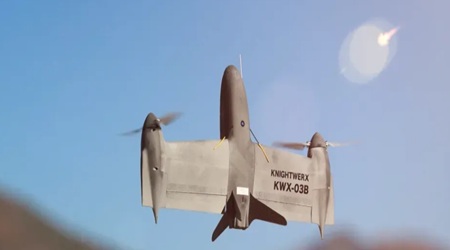
Knightwerx Drone

SCOTTSDALE, ARIZ. (May 18, 2026) — Knightwerx, a defense technology company specializing in unmanned aerial systems and sensor technology, has relocated its headquarters from Camarillo, California, to Scottsdale as it prepares to expand hiring and scale production.

The company develops AI-enabled, dual-use drone and sensor systems for military, defense, and security applications. Its flagship platform, Sandman, is a high-speed, modular autonomous drone system designed for frontline operators, while its Darqmatter technology provides precision atmospheric sensing for applications requiring small size, weight, and power.

Knightwerx founder and CEO Daniel Baumgartner said Arizona’s growing position as a defense technology hub influenced the company’s move.

“I recognized this early on and decided to ensure that the next growth phase of Knightwerx would happen in the great state of Arizona,” Baumgartner said. “We have received incredible support from the Fuse Accelerator community, the Defense Innovation Unit, the local business community, and leading government organizations, such as the Air Force, National Guard, and local law enforcement units since relocating.”

The company currently has 15 employees and has added four workers since moving to Scottsdale in March. Knightwerx plans to hire 15 additional employees over the next 12 months, including engineers, as it moves from research and development toward production.

Knightwerx Chief Operating Officer Erinn Valencich said the company intends to establish a drone manufacturing facility in the Valley in the future, though no site has been selected yet. In the interim, future assembly of the company’s products is expected to take place at its Scottsdale headquarters, with additional production capacity available through partners.

The relocation comes as demand for unmanned aerial systems continues to grow across defense and security markets. Knightwerx said Sandman is designed to provide faster, lighter, and more flexible tactical drone capabilities for operators in the field.

“The drone is really our star product,” Valencich said. “It’s more of a timely product, in the sense that the Department of War is requesting more tactical drones.”

Knightwerx expects to begin production in the fourth quarter and start shipping to select customers in the first quarter of 2027. The company is also raising an $8 million seed round and plans to launch a Series A round later in the year. According to company information, Knightwerx has raised $11 million to date.

Baumgartner founded Knightwerx in 2019 after serving in Swiss special operations. The company said its products were developed around field-based needs, including tactical drone systems and atmospheric sensor technology for defense and aerospace applications.

“Our priorities for the next 12 months are growing the team, moving from research and development into production of our drone and continuing to collaborate with great partners in local law and security forces,” Baumgartner said.


ADOT Shifts I-10 Traffic Onto New Pavement as $600M Tucson Freeway Project Reaches Milestone

Tucson Freeway ProjectTUCSON, AZ (May 18, 2026) — Motorists began driving on a newly constructed section of Interstate 10 over the weekend as the Arizona Department of Transportation made major progress on the Tucson Freeway Project, a project to widen 3 miles of the freeway southeast of downtown Tucson.
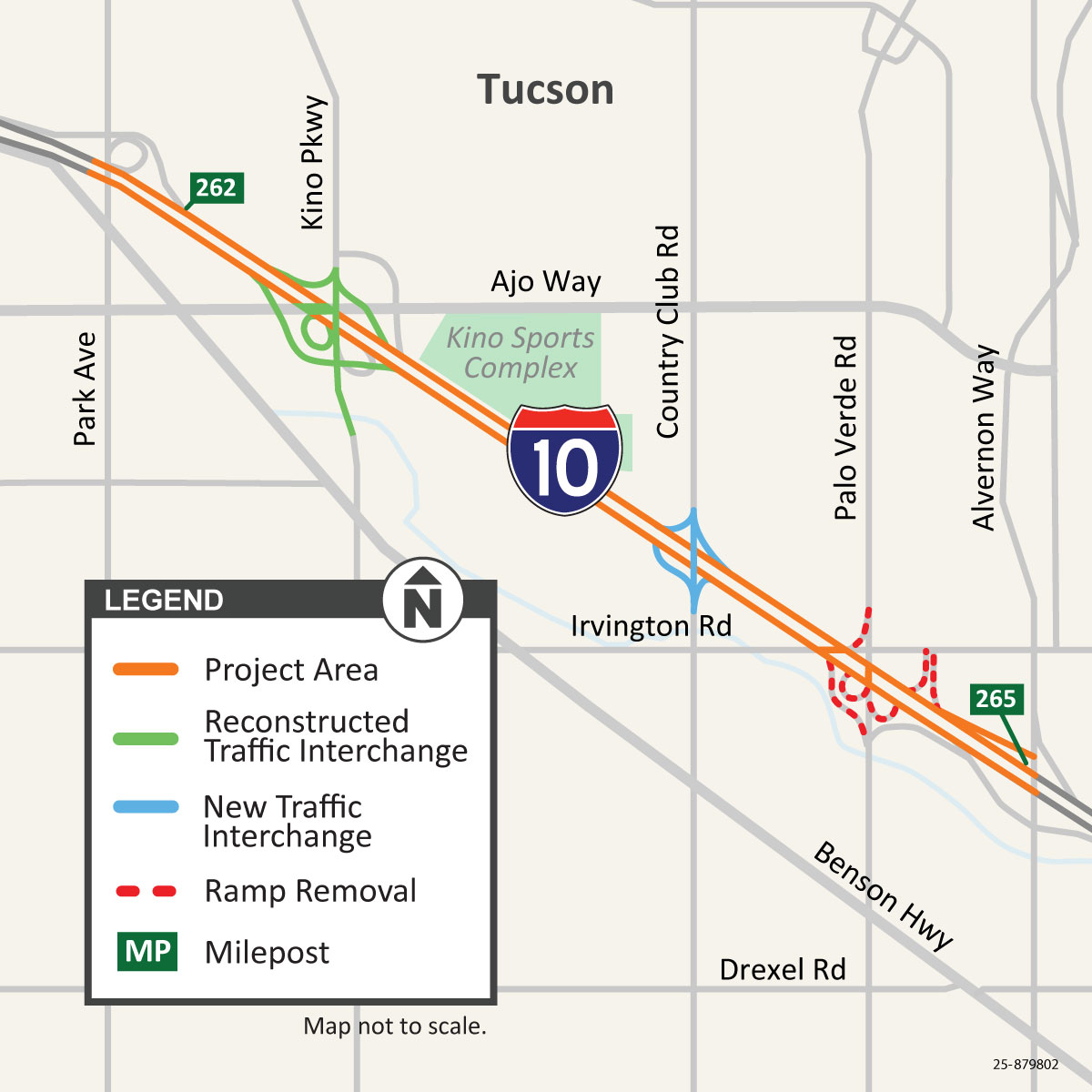
Interstate 10: Kino to Country Club Project map
Map courtesy of ADOT

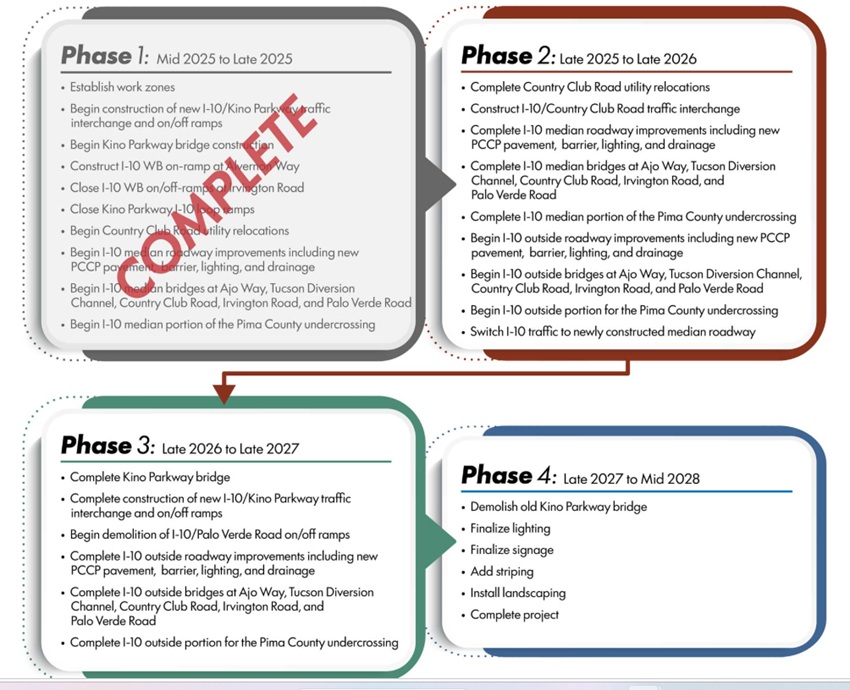
Traffic was shifted onto 1.3 miles of new concrete pavement from Park Avenue to Country Club Road, marking a milestone in the $600 million project to reconstruct and widen I-10 from Kino Parkway to Alvernon Way.

The project was 40% complete at the time of the traffic shift. Major work completed so far included installing 82 bridge girders at five locations through the project area, constructing abutments for the new Kino Parkway bridge over I-10, and beginning work on a new interchange at Country Club Road.

Along with the traffic shift, ADOT advised motorists to be aware of other changes in the work zone that began Friday night:

The westbound I-10 off-ramp to Park Avenue closed for up to 90 days.

The eastbound I-10 on-ramp at Park Avenue closed for up to 90 days.

The westbound I-10 on-ramp at Palo Verde Road closed permanently.

Work began in June 2025 with the goals of reducing delays and enhancing safety. Major project features included adding a third lane in each direction of I-10 and building two interchanges.

Considered the largest highway construction project in Southern Arizona history, the improvement will:

Widen I-10 to three lanes in each direction between Kino Parkway and Alvernon Way with auxiliary lanes;

Reconstruct the interchange at Kino Parkway;

Construct a new interchange at Country Club Road to provide access for traffic that previously used the Palo Verde Road interchange and allow for safer traffic movements to and from I-10;

Remove the existing interchange at Palo Verde Road;

Construct a new westbound on-ramp at the Alvernon Way interchange; and

Construct an I-10 undercrossing to connect the North and South Kino Sports Complex.

Throughout the project, ADOT will maintain two lanes of travel in each direction on I-10 during peak travel times while maintaining access to businesses. Construction is expected to continue through 2028.

The project was the first to result from a study completed in 2020 that recommended how to best improve mobility along a roughly 10-mile stretch of I-10 from I-19 to Kolb Road. The study also identified an alignment for an extension of State Route 210, also known as Barraza-Aviation Parkway, along Alvernon Way that will connect I-10 to downtown Tucson.

For more information, visit I-10KinotoCountryClub.