Carmine DeBonis Named Pima County’s New County Administrator
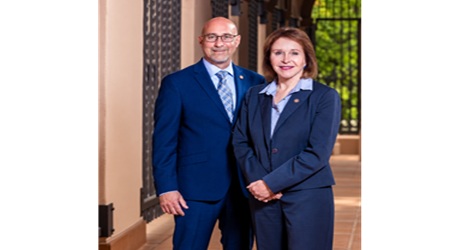
Carmine DeBonis
Carmine DeBonis and Jan Lesher

PIMA COUNTY (Oct. 29, 2026) – A lifetime dedicated to Pima County has led Carmine DeBonis Jr. to the job of jobs for County employees – Pima County Administrator.

The Board of Supervisors at its Oct. 27 meeting voted 5-0 to hire DeBonis, replacing Jan Lesher, who is retiring Jan. 7, 2027. The Administrator is a contract employee reporting directly to the Board. His first day as Administrator will be Jan. 8, 2027.

DeBonis, 59, started work for the County in 1991 as an aide to then District 3 Supervisor Ed Moore, and worked his way up to Deputy County Administrator in 2016. As a Deputy Administrator, he has provided administrative oversight to15 of the 34 County departments, many of which were part of the Public Works division.

Lesher in February announced her intent to retire at the end of 2026, and the Board began a national search in April, eventually receiving more than 70 applications.

“The Administrator is the most-important appointed official in the County. The Administrator is the fulcrum upon which the entire County balances,” Board of Supervisors Chair Jennifer Allen said. “We spent nearly a year searching for an experienced, thoughtful, and skilled person who will continue to move this County forward; who will continue to protect our most vulnerable lands; who will ensure safety and stability for our most vulnerable people; and who’ll protect our taxpayers by seeking innovations to make our government as efficient and accessible as possible.

“Today’s vote is a validation of that search. Carmine DeBonis was the best candidate, and received unanimous support from the Board of Supervisors and that’s why he is the next County Administrator. I look forward to working with him in the years ahead,” she said.

The Board last week selected DeBonis after interviewing three finalists picked by a citizen search committee – DeBonis, an applicant from Olympia, Wash., and an assistant Town Manager from Gilbert. The Board is expected to vote on his employment contract at its Nov. 10 meeting.

“I am grateful to the Board of Supervisors for the trust they’ve shown in me to provide stability and continuity in County governance and to fulfill the responsibilities of an immense and diverse County,” DeBonis said. “I’ve had a masterful mentor in Jan Lesher and others at the County, and I’m excited to apply what I’ve learned from them and bring new ideas for helping the Board of Supervisors achieve the goals of the County as reflected in our Strategic Plan and the Prosperity, Affordable Housing, and One Pima initiatives.”

Innovation, fiscal prudence, and a constant search for operational efficiencies have been a hallmark of DeBonis’ career with Pima County. While director of the Development Services Department, DeBonis streamlined the application review and project inspection processes, shortening application response times to just a few days, and introducing the use of cellphone cameras and streaming video to implement virtual inspections, thereby reducing wait times for inspections.

As Deputy County Administrator, among his achievements are championing and shepherding the agreement that led to the Mosaic Quarter project on the south section of the sprawling Kino Sports Complex. Mosaic Quarter once built out will be one of the finest sports tournament sites in the country and an economic generator featuring a three-sheet ice complex, a field house, and other similar amenities, along with hotels, restaurants, and retail.

DeBonis also is a driving force behind the County’s 10-year plan to repair all unincorporated County roads and keep them repaired. Started in fiscal year 2019, the effort has repaired more than 1,000 miles of road and is on pace for a successful finish.

Other Board members echoed Allen’s praise for DeBonis.

“The Board engaged in a full-blown search process for a county administrator, our most important employee, for the first time in almost 40 years. It speaks to the breadth of his many qualifications that Carmine DeBonis emerged from this process as our choice,” said District 1 Supervisor Rex Scott. “Mr. DeBonis showed his extensive knowledge of the county’s structure and operations while also laying out a powerful vision for all he wants to do for our constituents. He also committed to being a collaborative and inclusive leader who will encourage others to bring forth their own good ideas. I am proud and happy to work alongside Mr. DeBonis and am excited to see all he will accomplish in this role.”

“Carmine brings not only his years of experience with Pima County and a deep understanding of how our county government works, but also a cool, calm demeanor in the face of any challenge,” said District 2 Supervisor and Board Vice Chair Matt Heinz. “He’ll be able to hit the ground running, and just as importantly, is committed to putting the people of Pima County first. We’re lucky to have him leading our community into the future.”

“Carmine has the knowledge and vision to lead and carry Pima County into its next chapter. His lifelong experience will benefit the entire region, and I look forward to working with him on behalf of County employees and residents,” District 5 Supervisor Andrés Cano said.

Lesher’s contract ends Jan. 7, bringing to a close a long career of government service. A third-generation Tucsonan and graduate of Tucson Magnet High School and the University of Arizona, she worked for the City of Tucson, the state of Arizona, and the federal government before joining the County in 2010. Longtime County Administrator Chuck Huckelberry promoted her to Deputy County Administrator in 2011, and Chief Deputy County Administrator in 2017. The Board asked her to serve as interim County Administrator in October 2021 after Huckelberry was severely injured in a car accident. She became County Administrator in April 2022 after Huckelberry retired due to his injuries.

Lesher said since she and DeBonis have worked together in County Administration for more than a decade, she expects there will be a smooth transition.

“Carmine has dedicated his entire adult life to the service of the people of Pima County. I am overjoyed that his faithful service and deep, unrivaled knowledge of this County and its governance have culminated in his appointment as the 10th Pima County Administrator,” Lesher said. “I would not have been successful in this job without Carmine’s wise advice, coolness under fire, and unwavering support as Deputy County Administrator.”

As DeBonis comes in, the Supervisors offered praise for Lesher as she goes out.

“I’m not a big crier, but on Jan’s last day, I’m going to cry my eyes out,” said Chair Allen. “I know I’m one of her five bosses, but she has been a mentor to me over the past two years as I’ve learned the ropes of public office and County governance. She is smart, wise, caring and so hardworking. She is a model of conscientious public service for the Board and all County employees.

“I know she’s looking forward to no more late night text messages or six hour Board meetings, but I’m going to miss her immensely. I hope I speak for all County residents and employees when I say, ‘Thank you, Jan. Thank you for a life dedicated to serving the public, our state, our country, this County and this Board.’”

“Reflecting on her unparalleled record of service to Pima County, it is no exaggeration to say that Ms. Lesher’s influence on County government will endure well beyond her tenure,” said Supervisor Scott. “Her commitment to making the County a place where people want to work has strengthened the delivery of essential services to our constituents.

“Ms. Lesher led the development and implementation of the County’s first strategic plan, prioritized public health and safety, and struck the right balance between environmental stewardship and economic growth. Born and raised in Pima County, she is among the few in its history who have done so much to make this a better place to live and work. Throughout her extraordinary career, Jan Lesher has shown us how to lead with both purpose and heart.”

“Jan Lesher didn’t just lead Pima County; she left it stronger than when she arrived,” said Supervisor Heinz. “She built an exceptional leadership team, helped keep our County on solid financial footing and turned ambitious ideas like PEEPS and the Affordable Housing Fund into realities that make a meaningful difference in people’s lives every day. I’ll miss working alongside Jan, but I’m excited for her as she begins this next chapter!”

“I extend my heartfelt gratitude to Jan Lesher for her extraordinary dedication as our County Administrator,” said Supervisor Cano. “Throughout her public service, Jan has led with dignity and devotion. Pima County residents have been fortunate to benefit from her compassion and tireless work ethic.”

Past County Administrators

    • 1971 – Joseph C. Herrick
    • 1972 – Kenneth Scharman
    • 1979 – Craig McDowell
    • 1986 – Jane Verner, Interim
    • 1986 – James Riley
    • 1989 – Enrique Serna
    • 1993 – Manoj Vyas
    • 1993 – Chuck Huckelberry
    • 2022 – Jan Lesher
    • 2026 – Carmine DeBonis Jr.


The new starter home: How two BTR communities are reshaping housing opportunities in South Phoenix

South PhoenixLeasing activity at Rockefeller Group’s Corsica Villas communities highlights the rise of three-bedroom rentals, BTR living, and South Phoenix’s transformation.

PHOENIX, Ariz. (Oct. 29, 2026) – As homeownership becomes less attainable for many Americans, professionally managed build-to-rent communities are redefining what “home” looks like for a new generation of renters.

This shift is visible in South Phoenix, where Rockefeller Group’s Corsica Villas communities are seeing strong demand for three-bedroom townhomes. Today’s renters – including remote professionals seeking dedicated workspaces, families needing room to grow, and residents prioritizing wellness, convenience, and mobility – are choosing housing that fits how they live, work, and plan for the future.

Together, Corsica Villas at 20th Street (8181 S. 20th St.) and Corsica Villas at Euclid (825 E. Euclid Ave.) offer 152 two-story townhomes, including 139 three-bedroom floor plans, a housing product that industry observers increasingly describe as filling the gap between traditional apartment living and homeownership.

“As we approach 50 percent occupancy at our Corsica Villas communities, this marks an exciting milestone as we bring this new housing option to South Phoenix,” said Mark Singerman, Vice President Regional Director Southwest Development at Rockefeller Group overseeing the assets. “We anticipated demand for what is essentially a new housing option in this market, allowing for more space, privacy and flexibility than traditional rentals or homeownership. We’ve sustained interest, which shows the demand for well-designed, professionally managed homes in South Phoenix.”

The appeal is reflected not only in occupancy and leasing activity, but also in the breadth of housing options available. Across Corsica Villas at Euclid and Corsica Villas at 20th Street, residents can choose from thoughtfully designed floor plans for the three-bedroom models: 1,525 SF units at 20th Street and 1,430 SF units at Euclid.

Monthly rents for three-bedroom townhomes at 20th Street start at $2,275 on select homes; three-bedroom townhomes at Euclid Avenue start at $1,999 base rent on select homes, creating opportunities for renters seeking everything from a low-maintenance lifestyle to the increasingly sought-after three-bedroom townhome experience.

The popularity of three-bedroom rental homes reflects a broader shift in how residents are defining housing needs in today’s market. What was once considered extra space has become essential space.

For some residents, the third bedroom serves as a dedicated home office. Others have transformed the space into fitness rooms, children’s playrooms, hobby studios, guest suites, or accommodations for visiting family members. Multi-generational living

arrangements have also increased demand for larger rental floor plans that provide flexibility without requiring a home purchase.

“Moving to Corsica Villas has truly given my family the feeling of home. The spacious floor plan, beautiful primary suite, and flexible loft space make everyday living comfortable and convenient, while the additional bedrooms and fenced backyard give my children room to grow, play, and thrive,” said Angel Brodehl-Nunez, a resident at Corsica Villas at 20th Street. “I love having access to community amenities like the pool and outdoor grilling area, and being just minutes from South Mountain makes it easy to enjoy the outdoors. From the attached two-car garage to the thoughtfully designed living spaces, everything about this community makes life easier, more enjoyable, and perfectly suited to our family’s needs. I’m proud to call Corsica Villas home.”

The demand comes as South Phoenix continues to emerge as one of the Valley’s fastest-evolving submarkets. The area is attracting increasing attention because of transportation improvements, employment growth, retail investment and new housing opportunities in recent years.

Expanded regional connectivity, including light rail expansion and improvements throughout the South Mountain corridor, has contributed to growing interest among renters seeking convenient access to employment centers while remaining connected to outdoor recreation and neighborhood amenities.

Residents of Corsica Villas at 20th Street enjoy direct access to the High Line Lateral Canal Path offering miles of safe hiking and biking, while both communities benefit from proximity to South Mountain Park and Preserve, one of the nation’s largest municipal park systems. The preserve encompasses more than 16,000 acres and offers extensive trails, recreation opportunities and panoramic views that continue to attract residents seeking an active outdoor lifestyle.

At the same time, the success of Corsica Villas reflects another significant trend shaping Arizona’s housing market: the rapid maturation of the build-to-rent sector.

Five years ago, build-to-rent was largely unfamiliar to many consumers. Today, it has become one of the fastest-growing segments of the housing industry as renters seek the benefits of a low-density community lifestyle combined with access to amenities, professional management and maintenance.

Corsica Villas features many of the amenities traditionally associated with ownership, including private backyards, attached garages, smart-home technology, heated pool and spa facilities, dog parks, individual doggie doors in every residence, and EV chargers.

Industry experts say the appeal lies in offering residents greater flexibility while eliminating many of the costs and responsibilities associated with homeownership.

“We are seeing a transition in how our residents utilize their space,” said Jared Dicino, Community Manager at RPM Living. “These three-bedroom residences provide the perfect footprint for renters who’ve expressed that they want a dedicated home office, a private fitness studio, a children’s playroom, or a sophisticated guest suite for friends and family. It is no longer about just filling an extra room. For them it’s more about investing in the space they want or need to enhance their lifestyle.”

For Rockefeller Group, the strong leasing activity reinforces a broader conclusion about where the market is heading.

Today’s renters are not necessarily choosing less housing. In many cases, they are choosing more housing, more amenities, and more flexibility. Communities such as Corsica Villas demonstrate that consumers increasingly want room to work, exercise, entertain, and grow, even if they are not ready or interested in buying a home now.

As South Phoenix continues its transformation and housing preferences evolve, build-to-rent communities are expected to play an increasingly important role in meeting demand from residents seeking a new definition of home. For more information, visit corsicavillasat20thst.com for the 20th Street community or corsicavillaseuclidave.com for the Euclid community.


Craig Krumwiede named to global ULI Foundation Board of Directors

Craig KrumwiedeHarvard Investments Executive Chairman joins 15-member board supporting Urban Land Institute’s mission worldwide.

SCOTTSDALE, Ariz. (Oct. 29, 2026) – Craig Krumwiede, Executive Chairman of Harvard Investments, has been appointed to the 15-member Board of Directors of the ULI Foundation, the philanthropic arm of the Urban Land Institute (ULI) dedicated to advancing sustainable, equitable, and transformative community development around the world.

Krumwiede joins a distinguished group of industry leaders from across the globe responsible for guiding the ULI Foundation’s efforts to secure and manage philanthropic investments that support ULI’s mission to shape the future of the built environment for transformative impact in communities worldwide.

The ULI Foundation fuels research, educational initiatives, leadership development and signature programs that connect professionals across disciplines, inspire best practices in land use, and help solve complex real estate and community challenges through collective expertise and philanthropic engagement.

“I’m honored to be on the board of the ULI Foundation,” Krumwiede said. “ULI has had a huge impact on my career and on our company. This is an opportunity to pay it forward in some small way to support the mission of ULI.”

Krumwiede recently transitioned from CEO to Executive Chairman of Harvard Investments, where he continues to lead the company’s investment and development activities while helping set its strategic direction.

During more than four decades with the company, he has overseen Harvard Investments’ evolution into one of the Southwest’s most respected real estate investment and development organizations, guiding the firm through multiple economic cycles while maintaining a focus on long-term value creation and responsible growth.

A longtime leader within ULI, Krumwiede serves as a ULI Governor, mentors ULI Young Leaders, and serves on the executive committee of the ULI Arizona District Council. His appointment to the ULI Foundation Board further expands his role within one of the world’s most influential real estate organizations, which includes more than 40,000 members dedicated to advancing responsible land use.

Beyond ULI, Krumwiede remains deeply engaged in civic, educational and philanthropic initiatives. He serves on Arizona State University’s W. P. Carey School of Business Dean’s Council and Real Estate Advisory Board and was inducted into the W. P. Carey Alumni Hall of Fame. He was also recognized by the Sandra Day O’Connor College of Law as one of its “50 Star Graduates” during the college’s 50th anniversary celebration.

Krumwiede is active in numerous charitable organizations and community causes, including the C4 Foundation, which provides support and resources to active-duty Navy SEALs and their families. He also played a leadership role in advancing Arizona’s landmark “Ag to Urban” groundwater legislation, helping establish a framework for sustainable residential development and water conservation.

His appointment to the ULI Foundation Board reflects both his professional accomplishments and his longstanding commitment to creating positive outcomes through thoughtful development, civic engagement and industry collaboration.

The ULI Foundation is dedicated to advancing the Urban Land Institute’s mission to shape the future of the built environment for transformative impact in communities worldwide. Through philanthropic support, the Foundation funds ULI research, centers and initiatives, educational programs, district councils, leadership development and other efforts that help create more sustainable, equitable and resilient communities around the globe.