
Gantry Arranges $21.4M in Financing for Park 10 Retail Development in Avondale, Including Main Event Refi and New Construction Phase

Gantry

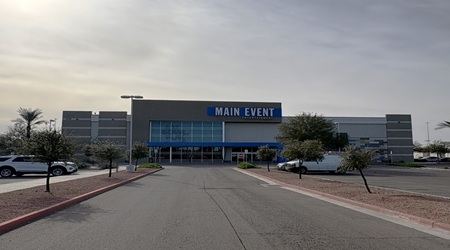
PHOENIX, Ariz. (March 5, 2026) — Gantry, the nation’s largest independent commercial mortgage banking firm, has arranged $21.4 million in financing tied to the continued buildout of Park 10, a master-planned retail development in Avondale, including an $8 million permanent loan to refinance a single-tenant Main Event property and a $13.4 million construction loan for the project’s newest multi-tenant phase.

The $8 million permanent loan refinances maturing debt secured by a 58,000-square-foot freestanding building occupied by Main Event, an experiential family entertainment venue featuring bowling, laser tag, an obstacle course, and interactive games and attractions. Gantry Principal Adam Parker, Senior Associate Chad Metzger, and Associate Andrew Christopherson of the firm’s Phoenix production office represented the borrower, a private real estate investor. The five-year, fixed-rate loan was provided by an insurance company lender from Gantry’s correspondent network and includes a 20-year amortization schedule. Gantry will service the loan on behalf of the lender.

“Gantry originated the original permanent construction takeout financing for this asset 10 years ago, providing us with deep familiarity with the property and its performance,” Parker said. He added that strong site-level sales, experienced sponsorship, and favorable local retail fundamentals supported lender confidence and enabled a fixed-rate structure with no loan covenants, while ongoing insurance company demand allowed Gantry to structure the transaction as a cash-out refinance.

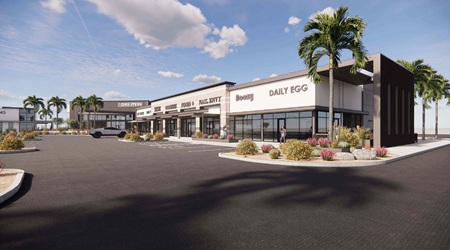
In a separate transaction, Gantry secured a $13.4 million construction loan to support the next phase of development at Park 10. Loan proceeds will fund the construction of three multi-tenant retail buildings totaling approximately 27,700 square feet, along with related carry costs. Gantry’s Parker, Metzger, and Christopherson also represented the borrower on this financing. The floating-rate construction loan was provided by a regional bank from Gantry’s vetted lender network, with terms structured to maximize sponsor proceeds and provide flexibility for extension.

“Strong retail fundamentals in the Avondale market support the continued buildout at Park 10,” Parker said, noting Gantry worked closely with the sponsor on development and capital strategy to identify a lender aligned with the project’s timing and execution plan. He added the team navigated underwriting complexities to structure a solution that maximized loan proceeds for the sponsor.

Park 10 is located in Avondale, a growing West Valley suburb of the Phoenix metropolitan area, where the development continues to add new retail inventory alongside destination users such as Main Event.


FinCEN’s March 1 Rule: What REALTORS® Need to Know About the New “Real Estate Report”

FinCEN

(March 4, 2026) — On March 1, 2026, the federal government quietly added a new compliance layer to a narrow—but important—slice of residential transactions: certain non-financed transfers of residential real estate to legal entities or trusts must now be reported to the U.S. Treasury’s Financial Crimes Enforcement Network (FinCEN). The goal is straightforward: reduce the ability to use shell ownership and opaque structures to park illicit money in U.S. housing.

For most traditional home deals, nothing changes. For REALTORS® who routinely work with investors, second-home buyers, estate planning attorneys, and trust/LLC purchasers, this rule will show up in a very practical way: more questions from escrow/title, earlier in the process, and a higher likelihood of last-minute friction if the buyer isn’t prepared.

Why is this happening?

FinCEN has long argued that residential real estate can be an attractive vehicle for money laundering because property can be purchased without bank financing, and when buyers use entities or trusts, the “real person” behind the transaction can be hard to identify. The new rule is intended to increase transparency and help law enforcement identify high-risk transfers.

As part of the transition, FinCEN also confirmed that its Residential Real Estate Geographic Targeting Orders (GTOs)—which required reporting in certain markets—expire February 28, 2026, as the nationwide rule takes over.

The fast “should I care?” test for REALTORS®

A FinCEN report is only required when all of these are true:

  1. The property is residential real estate (FinCEN materials describe the rule as focused on residential transfers),
  2. The transfer is non-financed,
  3. The buyer is a legal entity or a trust, and
  4. No exception applies.

The key sentence REALTORS® should remember: the rule does not apply to transfers to individuals.

So, if it’s a cash buyer who is “just buying it in their own name,” this is usually not your issue. But if you hear “LLC” or “trust” and the deal is cash / non-traditional financing, plan for added steps.

Who actually files—and why you still get pulled into it

FinCEN’s framework generally places the obligation on the closing/settlement side (often the settlement agent), with a “line of succession” if a settlement agent isn’t involved. That means most REALTORS® won’t be the reporting party. But your deal can still feel the impact because the reporting person must collect the required information from the parties in order to file.

In other words, you may not “do the filing,” but you will often be the one managing expectations when a buyer who wanted privacy hears, “We need more information for a federal report.”

What changes in the transaction flow

This is where the rule becomes real in the field: escrow/title will request additional information when the buyer is an entity or trust and the transaction is non-financed.

FinCEN’s materials describe reporting that is designed to capture who is behind the buyer entity/trust and key transaction details.

Practical expectation: your closing team may add documents, questionnaires, or certifications to the package for qualifying deals—especially in investor-heavy segments.

Timing: the deadline is after closing, but the work is before closing

FinCEN’s filing instructions state the Real Estate Report is due by the later of:

  • 30 days after closing, or
  • the last day of the month after the month of closing.

That typically gives reporting parties about 30–60 days, but the information-gathering can’t wait until later. If the buyer drags their feet, it can become a pre-closing issue because the settlement side is trying to ensure it can comply.

The three REALTOR® “watch-outs” that will save your deal

1) The investor who wants privacy and uses an LLC

This rule is designed for exactly this category of transaction—entity + non-financed—because ownership can be obscured.
Best move: flag it early and tell the buyer, “Expect escrow/title to request additional entity/trust information for federal reporting.”

2) The trust purchase (common in estate planning)

Trust buyers may be surprised that the closing team needs extra information. FinCEN’s resources emphasize reporting on covered transfers to trusts.
Best move: coordinate early with the trust’s attorney/trustee so documents aren’t produced at the last minute.

3) “It’s cash—but there’s private money involved”

FinCEN frames the rule around non-financed transfers; some private/seller-financing structures may still fall into the “non-financed” bucket depending on how they’re structured. The settlement side will make the determination.
Best move: ask escrow/title early: “Do you expect this to be reportable under the FinCEN rule?”

A client-friendly way to explain it (copy/paste)

“Because the buyer is purchasing through an LLC/trust and there’s no traditional lender, federal rules may require the closing side to file a ‘Real Estate Report’ with FinCEN. This doesn’t change our contract, but it can mean escrow/title needs additional entity/trust information so the closing can stay on track.”

Where REALTORS® can get the cleanest official guidance

FinCEN built a dedicated hub with FAQs, filing resources, and quick-reference guides (these are the best sources to point clients and transaction partners to). And NAR has Realtor-focused coverage that summarizes who typically files and how that affects closings.

The takeaway

This is not a sweeping rule that touches every home sale. It’s a targeted reporting requirement aimed at high-risk transaction types—especially cash purchases by entities and trusts. For REALTORS®, the opportunity is to be the calm translator: spot it early, set expectations, and keep the deal from hitting a compliance speed bump in the final week.


Phoenix Industrial Vacancy Falls to 9.7%

Phoenix Industrial
Limited New Supply and Healthy Tenant Activity Pushes Down Availability

Phoenix (March 4, 2026) – Limited new developments and healthy tenant activity drove industrial vacancy in Greater Phoenix down 10 basis points during the fourth quarter to 9.7 percent at the end of 2025, according to a report released by Colliers. The report highlights the ongoing demand in the Phoenix Industrial sector.

Fourth quarter 2025 marked the third consecutive period of decline in vacancy following seven straight quarters of rising vacancy that ended in early 2025. Year-end 9.7 percent vacancy reflected a 90-basis-point decline year-over-year. While total inventory continues to expand, both direct vacant space and available sublease space fell slightly from the previous quarter. Sublease inventory ended the year at 7.48 million square feet, which represents 1.6 percent of the total market inventory. Market-wide, existing buildings smaller than 100,000 square feet posted 6.0 percent vacancy with 11.2 million square feet available. This size category accounts for 25.3 percent of total market vacancy and totals 41.8 percent of the total market inventory. The Southeast submarket holds 48.2 percent of vacant space available in this size range, indicating a strong performance in the Phoenix Industrial market.

Fourth quarter net absorption totaled 3.2 million square feet, bringing the annual 2025 total to 18.2 million square feet. This marked the strongest yearly performance in Greater Phoenix since 2022. During the past three years, the industrial market has absorbed 49.7 million. Amazon was the most active tenant during the fourth quarter. The company leased 1.06 million square feet at CapRock West 202 and purchased Gateway Grand near Mesa Gateway Airport, expanding its presence in Greater Phoenix by 1.6 million square feet during the fourth quarter, further solidifying its stake in the Phoenix Industrial landscape.

New deliveries in the fourth quarter continued a downward trend, adding just 2.4 million square feet of new inventory. This is a 68.4 percent decrease compared to the fourth quarter of 2024. The slowdown reflects a healthier market balance that has allowed the market to absorb 34.8 million new square

feet delivered during 2024. By year-end 2025, total new deliveries reached 15.9 million square feet, which was a 54.2 percent reduction from 2024. The Southwest submarket cluster holds 48.8 percent of fourth-quarter deliveries, adding 1.2 million square feet. There are currently 10.6 million square feet under construction, marking the lowest level since the third quarter of 2020. The Northwest and Southeast submarkets together hold 73 percent of all construction currently underway. ViaWest Group broke ground on “ReDiscover”, a four-building industrial park that will contain 800,000 square feet. The project is located at the northeast corner of Interstate 17 and Loop 101 on the site of a former office building that was demolished to make way for this new project.

Average rental rates for industrial space rose slightly in the fourth quarter of 2025, ending at $1.14 per square foot. After four consecutive quarters of rate decreases in Warehouse/Distribution properties, the fourth quarter brought a 1.2 percent increase in this category. The Northeast submarket posted the strongest year-over-year rental rate growth, increasing 2.88 percent to $1.49 per square foot.

Sales activity during the fourth quarter of 2025 demonstrated that Phoenix is one of the top destinations in the United States for institutional investor demand. For the second consecutive quarter, sales volume exceeded $1 billion, reaching $1.351 billion. While sales volume declined quarter-over-quarter (-7.8 percent) and year-over-year (-28.2 percent), the fourth quarter still ranked the fourth strongest of the past four years. Viewed on an annual basis, 2025 marked the strongest year since 2021, with total sales volume reaching $4.57 billion. Notably, all five of the quarter’s top transactions involved buildings constructed in the past three years. The Northwest cluster led the market last quarter, capturing 33.9 percent of the sales volume totaling $459 million. The average price per square foot in the cluster reached $185. The largest single-building transaction of the year took place in this area, with Walmart’s purchase of the 1.27-million-square-foot Luke Field Building C for $152.2 million.

Greater Phoenix continues to shine as one of the nation’s top-performing industrial markets. Strong tenant activity heading into 2026 indicates the market will remain a leading city for tenants and investors. The region’s industrial narrative has expanded beyond logistics and distribution to encompass semiconductors, high-tech manufacturing, and precision engineering.

Read the full report here.