Liv Communities announces recapitalization of Sol38 by Liv multifamily community in Laveen
Liv Communities

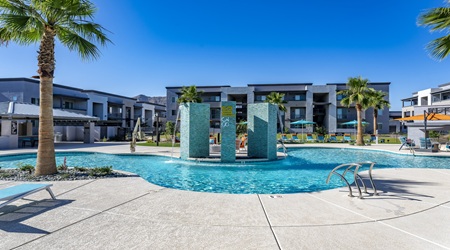
PHOENIX, Ariz. (March 3, 2026) – Liv Communities is pleased to announce the successful recapitalization of Sol38 by Liv, its 360-unit multifamily community located in the rapidly growing Laveen submarket of Metro Phoenix.

The transaction was completed by sourcing a new family office equity partner, positioning the asset for continued long-term growth and performance under a new investment partnership.

Completed in 2024, Sol38 by Liv, 3875 W. Dobbins Road, represents a significant milestone within Liv Communities’ expanding multifamily portfolio in the Phoenix market. The recapitalization strengthens the community’s capital structure and aligns long-term ownership with a strategic partner focused on sustained value creation.

“We are very proud to have recapitalized Sol38 by Liv in a manner that resulted in a strong transition of the asset and positions the community for continued success,” said Kevin Lindquist, CEO of Liv Communities. “This is a great asset in what we believe is one of the fastest-growing submarkets in Phoenix. We are excited to move forward with our new partner who shares our long term vision for the asset and continue delivering an exceptional living experience for our residents.”

The transaction was advised by Steve Gebing and Cliff David of Institutional Property Advisors (IPA) and Peter Benedetto and Michelle Mosier with Berkadia, who brought deep regional and capital markets knowledge and experience to ensure a successful transaction.

Located in one of Metro Phoenix’s fastest-growing submarkets, Sol38 by Liv features 360 studio, one-, two-, and three-bedroom apartment homes and offers a robust amenity package.

Community features include indoor and outdoor gaming areas, community gardens, a playground and splash pad, a sports court, a resort-style pool and spa, a dog park, a state-of-the-art fitness center, and a clubhouse designed to foster connection and engagement among residents.



Jesse Blum and Alex Demeroutis Join CBRE Tucson Office

CBRE Tucson
Alex Demeroutis and Jesse Blum Join CBRE

Tucson, Ariz. – February 25, 2026 – CBRE Tucson announced that industrial real estate brokers Jesse Blum and Alex Demeroutis have joined the firm’s Tucson office, bringing deep market expertise and a strong track record of client service to CBRE in Southern Arizona.

Blum and Demeroutis join CBRE from Cushman & Wakefield | PICOR, where they were key members of the firm’s industrial team. At CBRE, they will focus on industrial leasing, sales, and advisory services.

“Jesse and Alex are highly regarded professionals who bring exceptional insight, integrity and client focus,” said Jeff Casper, CBRE’s first vice president and Tucson Market Leader. “Their experience in the Southern Arizona market and their collaborative approach make them a great fit for our team, and we’re thrilled to welcome them to CBRE.”

A Tucson native, Blum joins CBRE as a Senior Vice President. He has built his career exclusively in industrial real estate brokerage, advising owners and occupiers on large-scale, long-term real estate strategies. Before joining Cushman & Wakefield | PICOR, Blum began his career at Grubb & Ellis and later spent more than seven years with CBRE. He holds a bachelor’s degree from the University of Arizona and is a member of the Society of Industrial and Office Realtors (SIOR).

“CBRE offers an unmatched platform and depth of resources that will allow us to elevate the way we serve our clients,” said Blum. “We’re excited to bring our experience to CBRE.”

Demeroutis joins CBRE as a Senior Associate. In her previous role at Cushman & Wakefield | PICOR, she focused on leasing, acquiring, and disposing of industrial properties in Southern Arizona. Before transitioning into commercial real estate, she spent eight years with the Greater Oro Valley Chamber of Commerce, where she served as Vice President and Events Director. She holds a bachelor’s degree from the University of Arizona.

“Joining CBRE allows us to pair our local market knowledge with a global platform, creating new opportunities for our clients as they navigate an increasingly dynamic marketplace,” added Demeroutis.


Taara “fiber-through-the-air” upgrade: why CRE and data-center corridors should care

Taara
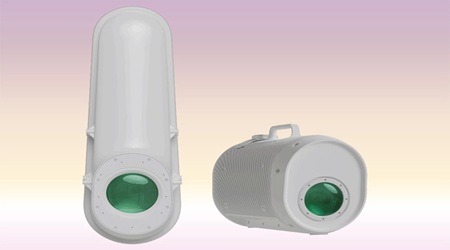
Taara’s Lightbridge (left) and Beam (right) can enable connectivity in remote areas and dense cities without the need for laying fiber between them. (Courtesy Taara)

(March 3, 2026) — Taara, the Alphabet/X spinout best known for using invisible light beams to extend connectivity where fiber is hard to build, just introduced a major redesign that could matter to data centers, campuses, industrial parks, and dense urban rooftops, the places CRE owners and operators increasingly get pulled into as bandwidth becomes a site-selection issue.

The company’s headline move is the Taara Photonics Platform, which shrinks key functions of a high-speed wireless optical link into a silicon-based photonic module roughly the size of a finger. Instead of steering a beam with mechanical components, the new platform uses a solid-state optical phased array with 1,000+ miniature emitters to shape and steer light electronically, no moving parts, and a roadmap that Taara says can improve generation-to-generation like other silicon platforms.

Built on that platform, Taara’s first product is Taara Beam: a shoebox-sized unit designed to mount on rooftops, poles, or existing structures to create line-of-sight links up to 10 kilometers (6.2 miles), delivering up to 25 Gbps bidirectional throughput with ultra-low latency, without trenching streets, pulling permits for right-of-way, or licensing radio spectrum.

For CRE readers, the practical angle is speed-to-connect. Fiber is still the long-term backbone, but in many real projects the schedule bottleneck is civil work: design review, permits, utility conflicts, and construction windows. Taara’s pitch is that a building-to-building or campus-to-campus backhaul link can be stood up in hours if you have clear sightlines useful for:

  • Data center clusters that need fast interconnects across nearby parcels
  • Enterprise and healthcare campuses adding capacity between buildings
  • Industrial and logistics sites where trenching is disruptive or slow
  • Event venues and temporary projects that can’t wait for a fiber buildout

Taara is not new to the category: its earlier Lightbridge systems are already deployed in 20+ countries with major telecom partners, and the company positions Beam as the next step for denser, more flexible networks closer to the edge.

One caveat CRE teams should understand: free-space optical links depend on visibility and can be impacted by fog, heavy rain, or smoke, so reliability planning matters (route diversity, redundancy, or backup paths).

Taara says Beam will make its industry debut at Mobile World Congress in Barcelona, Spain March 2 – March 5, 2026, with CEO Mahesh Krishnaswamy scheduled to appear in the event programming.