Trend Report honors 2025 Best-in-Class Influencers, celebrates deal-makers shaping Southern Arizona CRE

Best-in-Class InfluencersTUCSON, Ariz. (February 27, 2026) — Trend Report recognized the 2025 new members of the Best-in-Class Influencers Circle (BICIC) at a celebratory Happy Hour event, honoring Tucson-based commercial real estate professionals whose influence is measured in results: closing deals, moving projects forward, and setting the standard for the region’s market.

Trend Report sponsors in attendance included Holualoa, Land Advisors Organization, and Red Point Development, with support from the team at the Union Public House, on Wednesday, February 25, 2026.

As part of the program, Trend Report welcomed Dr. John Moffatt, a Tucson native and longtime regional economic development leader, who spoke on the importance of regionalism and competing as a unified Southern Arizona market. Moffatt previously served more than 20 years as Pima County’s Economic Development Director and continues his infrastructure-policy work through the Southern Arizona Leadership Council and Moffatt Consulting. The remarks were followed by a rousing, roundtable-style discussion among attendees.

Trend Report launched the Best-in-Class awards in 2022 to recognize top producers based on sales volume across CRE categories, emphasizing that the honor is earned through real production and sustained performance for the year. The program has evolved in 2025 to formally include “Influencers” in the award title, reflecting the reality that the region’s most effective professionals aren’t only participating in the market, they are shaping it through credibility, problem-solving, truth-telling, and follow-through.

2025 Best-in-Class Influencers to join the Circle past Influencers
Trend Report presented 2025 challenge coins to this year’s honorees:

  • 100+ Units Multifamily: Clint Wadlund and Hamid Panahi of IPA, Institutional Property Advisors
  • Under 100 Units Multifamily: Allan Mendlesberg and Joey Martinez of Cushman & Wakefield | PICOR
  • Industrial Deals: Erik Chapman, CCIM, CPM, and Nick Travassos, CCIM, MRED, of Chapman Management Group
  • Residential Land Sales: Will White and John Carroll of Land Advisors Organization
  • Retail Sales: Jeremy Price of VOLK Company
  • Commercial Land Sales: Brenna Lacey of VOLK Company
  • Office Sales: Rick Kleiner, MBA, of Cushman & Wakefield | PICOR
  • Industrial Land Sales: Steve Cohen of Cushman & Wakefield | PICOR

The 2025 challenge coin theme features a Latin phrase displayed on the coins: “Achievement earns praise. Influence leaves a legacy.”

New initiative: Trend Report Growth Council
Trend Report also announced the launch of the Trend Report Growth Council, inviting this year’s winners to serve as Founding Members and contributors. The council will convene quarterly roundtables to address challenges to regional growth and develop practical solutions. More information on the Growth Council, including the first meeting and focus areas, will be announced soon.

Trend Report and Real Estate Daily News cover Southern Arizona’s commercial real estate market, highlighting transactions, development activity, and the leaders driving investment and regional growth.


Silver Creek Development Buys Rio Yards Office Building in Tempe, Rebrands as Horizon Bay

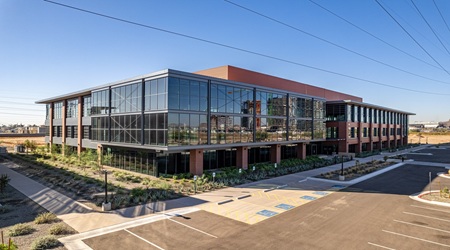
Horizon Bay

Phoenix, AZ  (February 27, 2026) – The recently developed Rio Yards office project in Tempe has been sold and will be renamed Horizon Bay by the new owner, Silver Creek Development of Scottsdale, Arizona. The property is located at 1337-1357 E. Rio Salado Pkwy. adjacent to Arizona State University (ASU).

“Horizon Bay is a standout Class A office property in a top location,” said Brian Ackerman, Executive Vice President at Colliers. “The building’s location near ASU and in the heart of Tempe is extremely appealing for corporate headquarters, institutional tenants, and anyone in between. Quality buildings within a short distance of the ASU ecosystem provide access to skilled talent, both part-time and full-time students, and nearby amenities. This project is well-positioned to benefit from growing demand for modern office space in this dynamic submarket.”

“This acquisition represents a unique opportunity in one of the most desirable submarkets within Greater Phoenix, and more specifically in the country,” said Charles Essig, Principal at Silver Creek Development. “Horizon Bay is ripe for a repositioning and ready for lease.  Our team is excited to work closely with ASU and attract the most strategic tenants. This asset is additive to the Silver Creek portfolio and further supports our investment in the Class A office sector.”

Horizon Bay is a three-story Class A office building containing 147,495 square feet on a 7.75-acre site within the Novus Innovation Corridor. Constructed in 2023, the sale also included a three-story parking garage accommodating 710 vehicles, in addition to 210 surface parking spaces.

The property is directly across from South Pier, a mixed-use multifamily and retail development under construction, and is located just down the street from Tempe Marketplace, one of the region’s premier retail destinations.

The transaction was handled by Brian Ackerman of Colliers, and Pat Boyle, Jim Bayless, and Ashley Brooks of CBRE will manage tenant leasing and build-out initiatives.

Property Management is being handled by the Stream Realty team led by Tiffany Winnie.


U of A considers sale of 88-Acre Al-Marah Equine Center as programs shift closer to campus

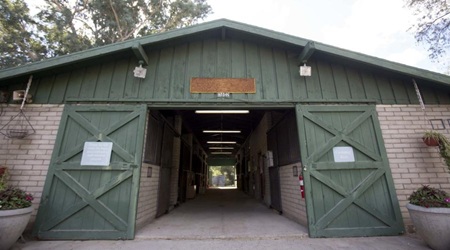
Al-Marah Equine Center

TUCSON, Ariz. (February 27, 2026) — The University of Arizona is preparing to consolidate its equine programs at the university’s Campus Agricultural Center near Campbell Avenue and Roger Road. The move could lead to the sale of the Al Marah Equine Center on Tucson’s Eastside after more than a decade of student instruction and hands-on learning at the ranch.

University leaders said Jan. 15, 2026, that they plan to bring equine teaching, research, animal care, and staffing into one more accessible setting. They argue the shift will improve consistency in daily animal care, reduce operational complexity, and make it easier for students and faculty to participate without relying on carpools or long commutes.

Al Marah is an approximately 88-acre working ranch at 4101 N Bear Canyon Rd. It was originally built to breed, train, and market Al Marah Arabian horses. The property was left to the university after the death of philanthropist and horse breeder Ruth “Bazy” Tankersley in 2013, and the University of Arizona officially acquired it in 2015. In the context of Al-Marah as the name of the Arabian horse ranch (Bazy Tankersley’s program), it’s described as an Arabic word meaning “oasis.”

The university has not formally listed the ranch for sale, but confirmed it is exploring a sale as part of the transition.

The center’s role has extended beyond general equine programming. University materials describe Al Marah as a site that supports instruction and hands-on learning for UA students, and the university has used it to house horses for university departments and academic programs involved in equine education. The Veterinary Science program has also referenced Al Marah as a place where students take equine-related classes, which is one reason some faculty view the facility as part of UA’s broader animal and veterinary education ecosystem. At the same time, the university has framed the Campus Agricultural Center as a long-term hub for integrating equine programs with campus-based resources and staffing.

For some faculty and students, the possible sale feels like more than an administrative decision. It represents the loss of a specialized learning environment that is difficult to replicate. KGUN 9 profiled Laura Miller, a University of Arizona math and engineering professor who incorporates horses into applied coursework, connecting students to biomechanics, measurement, and real-world problem solving through equine-focused projects. Miller told the station she has built a unique classroom in the barn and has relied heavily on volunteers, including those who donate horses and time, because her department does not have a traditional funding source for equine work.

The transition also raises immediate logistical questions. Miller said her program expects to relocate after the spring semester and is working to place and move horses. There are currently about 30 horses at the Al Marah facility. Miller also acknowledged that transportation has long been a barrier for students traveling to the Eastside ranch, where limited transit options often require cars or carpools. The university says the campus-adjacent agricultural center can help address that access challenge while bringing animal care and staffing under a more centralized structure.

University officials emphasized that any proceeds from a future sale would be placed into a dedicated fund honoring Tankersley’s commitment to equine education, framing the move as a restructuring rather than a retreat from equine instruction.

The shift comes at a time when the broader equine sector is increasingly viewed not only as a sport and an agricultural sector but also as a meaningful economic driver. The American Horse Council’s 2023 national economic impact findings estimate that the horse industry added $177 billion to the U.S. economy, supporting industries ranging from veterinary services and tourism to technology and agriculture.

For now, the timeline follows the academic calendar. Programs are expected to relocate after the spring semester, and the ranch’s long-term future will depend on the university’s next steps toward listing and marketing the property, as well as how the university defines Al Marah’s legacy role in hands-on equine education once operations shift to the Campus Agricultural Center.

Next steps:

Information sessions will be held to share more details about the transition and provide an opportunity for CALES faculty, staff, and program users to contribute their input.