 Class A, 2.4 million s.f. project surpasses Lincoln-owned Park303 LEED designation by one point
GLENDALE, Arizona, (February 17, 2026) – The 2.4 million-square-foot Luke Field logistics campus, developed by global, full-service commercial real estate firm Lincoln Property Company (Lincoln) and Goldman Sachs (Goldman) in Glendale, Arizona, has achieved LEED Gold v4 for a Core & Shell and Warehouse Distribution Center.
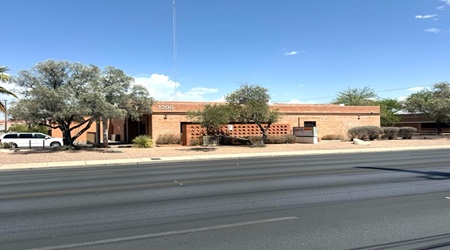
With the certification, Luke Field becomes Arizona’s highest-scoring LEED industrial building, surpassing Lincoln-owned Park303 Phase2, a 2.5 million-square-foot development also located in Glendale, by a single point.
Luke Field achieved LEED certification without relying on renewable energy credits, an uncommon achievement in the region.
“Luke Field – and Park303 before it – prove that we can deliver large-scale industrial development in the Southwest that is both ambitious and sustainable,” said Lincoln Vice President of Development Michael Monroe. “The process requires early integration of LEED objectives and modeling, but the outcome is notable. Luke Field represents a massive effort by our team and our project partners. We are extremely proud of its success as a project that now leads the market and sets new benchmarks for the industry.”
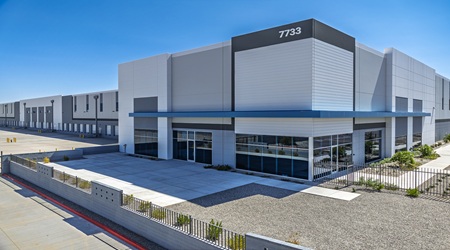
Located at 13543 A and 13543 B Northern Ave., and 7733 Litchfield Rd. in Glendale, Arizona, Luke Field spans three Class A industrial buildings: a 695,750-square-foot Building A, 454,761-square-foot Building B, and 1.27 million-square-foot Building C. It sits on 140 acres at the southeast corner of Litchfield Road and Northern Avenue.
In achieving LEED Gold v4 status, Luke Field was evaluated on categories including energy, water, materials, indoor environmental air quality and innovation. The development exceeded industry standards with:
- 59% energy savings through the integration of high-efficiency LEDs and advanced controls, and building systems with R-38 insulated roofing, daylighting features, insulated overhead doors, and reflective glazing.
- 77% total water savings and 87% outdoor water savings through drought-tolerant landscaping and efficient irrigation. This included optimizing the site to reduce runoff, enhance infiltration and mitigate heat island effects, establishing lasting water resilience in an arid region.
- 61% landfill diversion by recycling construction waste and debris instead of placing usable materials in landfills.
- 20% recycled content through the use of post-consumer and pre-consumer recycled material.
- 20+ products with Environmental Product Declarations (EPDs) or Health Product Declarations (HPDs), encouraging low-impact, responsibly sourced materials and transparency in how a building impacts the environment and human health.
Luke Field secured 45 design credits prior to construction completion, positioning it to achieve full LEED Gold v4 certification without having to purchase renewable energy credits – a distinction among Arizona industrial projects.
The development was also scored on its indoor air quality, which is enhanced by low-emitting materials, such as VOC-compliant paints and formaldehyde-free wood, and state-of-the-art ventilation systems.
“Luke Field’s LEED Gold v4 certification is just one of the ways it delivers beyond traditional industrial expectations. That includes a deep bench of operational and people-focused amenities,” said Lincoln Development Director Anthony Villarreal. “The combination makes Luke Field well-suited for a new generation of clients – owners and tenants who are environmentally and energy conscious, and face increased challenges in attracting and retaining quality employees in a tight labor market.”
Each building at Luke Field features 40’ clear height, 25’ tall glass entries, 3,000 amps of power (expandable), automated dock doors, steel moment frame shear bracing, and 5’ x 10’ clerestory windows providing sky views and natural interior light. The campus is further elevated by Lincoln’s trademark “creative industrial” amenities, such as barbeque stations, a shaded outdoor eating area and employee collaboration spaces.
Those advantages helped to attract Walmart, which purchased the 1.28-million-square-foot Luke Field Building C in late 2025 for $152 million. The deal marked the largest industrial building sale in Arizona this year and the first tenant commitment for the project.
Park303 Phase 2 achieved similar success in late 2025, completing the sale of its 1.25-million-square-foot LEED-certified Building C to Dollar Tree for $147 million and bringing Phase 2 to 83% occupancy.
Luke Field was designed by architect Butler Design Group and constructed by Layton Construction. GAIA served as the project’s sustainability consultant – a relationship that led to Lincoln engaging GAIA to enroll in the LEED Volume Program for Industrial Assets.
Lincoln serves as the property manager and leasing agent for Luke Field, and is actively fielding lease and acquisition interest for Buildings A and B. To discuss Luke Field availability or for general leasing and development opportunities with Lincoln, contact David Krumwiede or John Orsak at (602) 912-8888.