Newmark Brokers $32.25M Sale of Thirty 03, a Class A Midtown Phoenix Office Tower
Thirty 03
Phoenix, AZ (February 6, 2026) — Newmark announces the Company has arranged the $32.25 million sale of Thirty 03, a 26-story, Class A multi-tenant high-rise office building located at 3003 North Central Avenue in Phoenix, Arizona. The 458,047-square-foot property sold to a private Canada-based buyer.
“Thirty 03 is a fully renovated, pride-of-ownership tower in the heart of Midtown Phoenix,” said Osbrink. “With strong leasing momentum and an exceptional mix of walkable amenities, the property is positioned to benefit from continued rent appreciation and deepening tenant demand. As Phoenix demonstrates resilient economic fundamentals and encouraging signs of office-market recovery, this acquisition offers new ownership a compelling platform for long-term value creation.”
Originally constructed as one of Metro Phoenix’s first institutional high-rise office properties, Thirty 03 has undergone nearly $11 million in transformative capital improvements. A comprehensive capital plan was implemented beginning in 2019, encompassing extensive lobby upgrades, full elevator modernization, and speculative suites. At the time of sale, the building was 81% leased to a diverse mix of tenants spanning legal, healthcare, architectural, banking, government, and professional services sectors.
Positioned within the urban core of Midtown Phoenix, Thirty 03 is widely considered one of the “top-tier” office buildings in the submarket, as evidenced by its submarket-leading occupancy. The Midtown submarket continues to undergo major revitalization, anchored by the $1 billion redevelopment of Park Central Mall, Creighton University’s new $80 million medical campus, and complemented by a wide variety of new restaurants, nightlife and residential developments in the immediate area.
The property benefits from being in one of the top transit-oriented, easy-to-access, live-work-play locations in all of Metro Phoenix. This is demonstrated by its high Walk Score rating and the more than 10,000 multifamily units constructed within a three-mile radius over the last five years. Thirty 03 is located steps away from the Valley Metro Rail stop at Central Avenue & Thomas Road, providing immediate access to amenities in Uptown, Downtown, NW Phoenix, and Tempe via a short light rail ride.
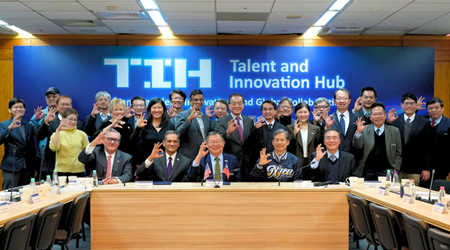
The University of Arizona formalized an agreement with NYCU to redefine workforce development in a high-tech, globally interconnected economy. — Yen-Chien Chance Lai/Office of International Promotion and Outreach, NYCU
TUCSON, AZ (Feb. 6, 2026) — As Arizona’s semiconductor manufacturing surge reshapes the state’s economy, the University of Arizona has formalized a new international workforce partnership aimed at scaling the talent needed to support the industry’s next-gen chip workforce and develop a skilled chip workforce to ensure sustainable growth. This partnership reflects a broader trend in the tech industry where cooperation between educational institutions and global partners is vital for cultivating a workforce that is not only technically proficient but also capable of navigating an increasingly interconnected world.
According to a University of Arizona News report by Stacy Pigott, Office of Research and Partnerships, the University of Arizona, on Jan. 28 in Taiwan, signed an agreement with National Yang Ming Chiao Tung University to establish a training pipeline designed for a globally connected high-tech economy that will enhance the chip workforce. By integrating practical training with theoretical knowledge, this initiative seeks to create a curriculum that will prepare students for the complexities of modern semiconductor manufacturing, addressing both current and future demands.
This initiative is crucial to ensuring a robust chip workforce capable of meeting future demands. It is not just about filling positions; it is about creating a workforce that is innovative, adaptable, and ready to tackle the challenges posed by rapid technological advancements and global market shifts.
This initiative is crucial to ensuring a robust chip workforce that can meet future demands and contribute effectively to the industry. As semiconductor technologies evolve, the skills required will also change, making continuous education and training essential components of workforce development.
The agreement was signed by Suresh Garimella and NYCU President Chi-Hung Lin, and is framed as a strategic move tied directly to Arizona’s growing role in the global semiconductor ecosystem. This partnership not only strengthens academic ties but also positions both institutions at the forefront of semiconductor innovation, necessary for future economic growth in Arizona and Taiwan.
From K-12 to graduate research: building a workforce at scale
The UA News report describes the initiative as spanning the entire talent pathway, from technician training to advanced R&D. One early-stage example highlighted is a collaboration in Chandler with a local high school to launch, according to UA, the nation’s first career and technical education program tailored specifically for semiconductor technician training. This program aims to attract students to the semiconductor industry from a young age, fostering interest and providing foundational skills that will be crucial as they progress through their education.
At the university level, UA and NYCU students will have options that include dual-degree pathways, industry-aligned master’s programs, minors, and certificates, as well as research collaborations. These opportunities are designed to ensure that graduates are not only equipped with theoretical knowledge but also possess hands-on experience, making them highly competitive in the job market.
Technical skills plus cultural fluency
A distinctive feature of the partnership is its emphasis on preparing students for a truly global industry—pairing engineering training with cross-cultural competence. UA’s semiconductor workforce strategy includes “Mandarin for Industry” coursework, while NYCU students will strengthen English skills through exchange programs, internships, and hands-on projects, with student cohorts in Arizona and Taiwan working on shared real-world challenges. By learning each other’s languages and cultural nuances, students will be better prepared to collaborate on international projects, fostering innovation across borders.
The article notes that these “vertically integrated” and capstone-style collaborations are intended to sharpen communication and build the trust required in international teams—skills that can be difficult to teach in a traditional classroom setting. This approach not only enhances technical skills but also emphasizes teamwork and collaboration in achieving common goals in the semiconductor sector.
Embedded in Arizona’s broader economic strategy
UA News also ties the initiative to Arizona’s longer-term economic development positioning, citing the role of the Arizona Commerce Authority and its Arizona–Taiwan Trade & Investment Office in Taipei, as well as investments supported by Pima County Economic Development. This strategic alignment is essential for ensuring that the region remains competitive in the global semiconductor market.
While the program is rooted in semiconductors, the report says plans are already underway to extend the model into adjacent innovation sectors, including photonics, quantum technologies, artificial intelligence, digital health, and smart agriculture. This expansion highlights the training model’s versatility and the potential for synergies across various high-tech industries.
Why it matters for Southern Arizona
For Southern Arizona’s business community, the partnership signals a deliberate attempt to connect education, industry needs, and research commercialization—strengthening the region’s role in the state’s high-tech supply chain and helping employers compete for talent as new investment and production capacity comes online. This initiative not only promises to boost employment but also supports economic diversification, making the region more resilient to market fluctuations.
As industries evolve and the challenges of globalization become more pronounced, the need for a skilled chip workforce becomes ever more critical. The collaboration between UA and NYCU is a forward-thinking approach that recognizes the importance of addressing these challenges head-on, ensuring that the workforce is not only skilled but also adaptable to future changes.
Furthermore, by investing in education and training at all levels—from K-12 to graduate studies—Arizona is positioning itself as a leader in the high-tech workforce landscape. This strategy not only enhances the skill set of its current workforce but also attracts businesses seeking a well-trained talent pool, thereby bolstering the economy and creating job opportunities across sectors.
This partnership signifies a pivotal moment not just for Arizona but for the entire semiconductor industry. As demand for chip manufacturing continues to rise globally, initiatives like this one will play a crucial role in equipping a new generation of workers with the necessary skills. The collaboration between UA and NYCU exemplifies how educational institutions can bridge the gap between academic knowledge and practical industry requirements, ensuring that the chip workforce is ready to meet the challenges of tomorrow.
Source: “More than microchips: Arizona’s blueprint for building a high-tech workforce,” by Stacy Pigott, University of Arizona News.
Taylor Roderick Joins Withey Morris Baugh’s Real Estate Transactions Group
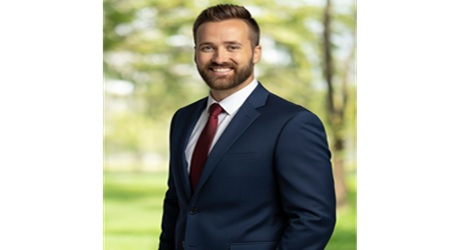
Taylor Roderick
PHOENIX, AZ (February 6, 2026) — Withey Morris Baugh, Arizona’s premier land use and zoning law firm, welcomes Taylor Roderick to its transactional practice, a move that significantly strengthens the firm’s capacity and service offering in real estate law and business transactions. Roderick joins a real estate group already distinguished by long-standing expertise and a full spectrum of transactional services.
Roderick brings hands-on experience across a variety of projects shaping Arizona’s built environment, including solar developments, data centers, and large industrial sites. He has represented clients in every stage of a transaction: acquisition, development, financing, leasing, and disposition. He is known for a meticulous, solutions-focused approach that keeps deals on track, and prides himself on delivering results while mitigating risk.
“Bringing Taylor onto our transactional team aligns with our commitment to deliver practical, client-focused counsel on the complex projects reshaping Arizona,” said founding partner Jason Morris. “His transactional breadth and construction-adjacent experience complement the institutional knowledge already at Withey Morris Baugh, and together we can provide continuity and strategic support from entitlement through closing.”
Roderick’s practice spans development agreements, joint easement instruments, complex financings, purchase and sale agreements, leasing, CC&Rs, construction, and regulatory matters, including environmental compliance. His experience representing developers, purchasers, sellers, investors, and lenders gives him a practical, 360-degree perspective that clients rely on. Roderick describes himself as a “one-stop shop” who shepherds matters from inception to closing, emphasizing clear communication and outcomes.
“Taylor’s deep transactional experience and technical prowess are a potent combination, and he will be of enormous value to our clients,” said Withey Morris Baugh partner Adam Baugh. “He has an exceptional ability to solve complex problems while keeping deals moving forward, exactly the kind of practitioner our clients deserve.”
Enhancing an Already Robust Real Estate Practice
Since its founding more than 25 years ago, Withey Morris Baugh has built a reputation as one of Arizona’s top real estate and land use law firms, offering integrated services that combine land use, zoning, real estate transactions, and government affairs. The firm’s transactional practice routinely handles complex business transactions and provides due diligence and risk mitigation across commercial, residential, and industrial deals.
While earning his law degree from the Sandra Day O’Connor College of Law at Arizona State University, Roderick worked directly with early-stage companies through the Innovation Advancement Program as a senior associate and led the Sports and Entertainment Law Journal’s editorial efforts as an executive editor. Prior to law school, he completed the honors curriculum at Utah Valley University, graduating magna cum laude, majoring in history and political science. He was a founding member of the university’s Center for Constitutional Studies and also pursued coursework in Ancient Greek and Latin.
Complementing Established Leadership
Roderick’s arrival complements veteran transactional attorney Dave R. Baker, Of Counsel at Withey Morris Baugh. Baker has served as a Certified Real Estate Specialist for decades and has a proven track record in representing developers and lenders, negotiating leases and commercial documents, forming homeowner associations, drafting CC&Rs, resolving title and easement issues, and litigating real estate-related disputes.
Together, Baker’s long-standing institutional knowledge and Roderick’s recent and diverse project experience strengthen Withey Morris Baugh’s promise of comprehensive real estate law expertise, giving clients access to a well-rounded, deeply experienced transactional team capable of handling the most complex deals.
A native of Pleasant Grove, Utah, Roderick serves on the board of Lambda Alpha and is a hands-on father of four, spending many Saturdays at youth soccer games. He’s also a committed athlete and lifelong learner — mountain biking, training toward triathlon goals, taking up piano and swimming — hobbies he credits with helping him stay disciplined and curious. Those same habits, he says, feed into his professional focus and drive.
“Withey Morris Baugh is a boutique firm with a strong reputation, and the role here allows me the independence to build and manage work the way I believe is best for clients,” Roderick said. “The team’s combined experience enables us to provide practical, start-to-finish counsel on projects that will define Arizona’s future.”