Steel Peak Acquires First Industrial Outdoor Storage (IOS) Property in Phoenix
Steel PeakFirm looks to continue growth in Phoenix and other Southwest and West Coast markets

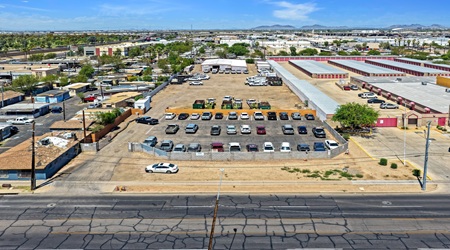
PHOENIX, ARIZ. (September 16, 2026) —Steel Peak, a commercial real estate investment firm focused on industrial outdoor storage (IOS) properties, announced today that it has acquired an industrial outdoor storage (IOS) property located at 2142 W. Van Buren Street in Phoenix from an undisclosed seller for $3.3 million. This is Steel Peak’s first IOS property acquisition in the Phoenix, Arizona area and 18th overall IOS acquisition in the Southwest and West since the company was founded in January 2024.

The 2.18-acre property includes a 6,250-square-foot industrial building. Steel Peak plans to make targeted improvements to the building and site and ultimately lease the property to an essential industrial service user. Max Schumacher with Rein and Grossoehme Commercial Real Estate will oversee leasing at the property.

“Phoenix has emerged as one of the largest and most active industrial markets in the country, with approximately 466 million square feet of industrial inventory and continued strong leasing and absorption activity,” said Blake Rodgers, Principal at Steel Peak. “The property is well suited for contractor yards, equipment rental, fleet maintenance and dispatch, building materials, and other essential industrial service users.”

Steel Peak Co‑Founder Pasha Johnson added, “Steel Peak is bullish on Central Phoenix, where limited industrial land, zoning constraints and competing higher-density uses have created a supply-constrained environment for well-located IOS properties. The market continues to benefit from strong population growth and durable demand from construction, infrastructure, equipment rental, fleet, logistics and manufacturing users. Steel Peak plans to remain active in Phoenix and continue pursuing well-located IOS opportunities throughout the market.”

Steel Peak Director of Acquisitions Aaron Gill led the acquisition.

2142 W. Van Buren Street is strategically located along the Van Buren corridor with immediate access to I-17, I-10 and Loop 202, and is near Phoenix Sky Harbor International Airport.

Steel Peak seeks IOS investment opportunities throughout the Southwestern and Western U.S. with capitalized values ranging from $3 million to $50 million. The firm invests directly and in partnership with institutional and high net-worth investors.

For more information, please visit www.steelpeakproperties.com.


C&W | PICOR Team Welcomes Tucson’s First Child Crisis Center

Picor

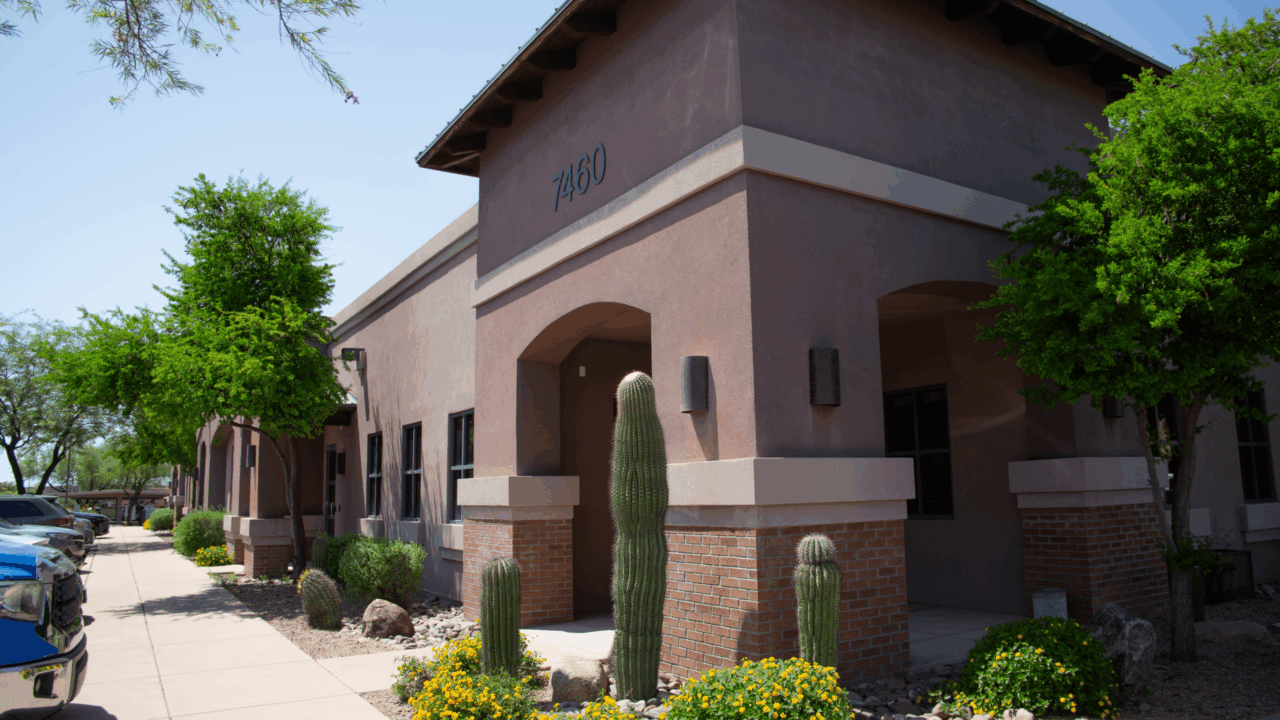
TUCSON, AZ (Sept. 16, 2026) — Tucson just got something it’s never had before: a crisis center built exclusively for kids. Hour Child Crisis Center, located at 7460 N La Cholla Blvd, held its grand opening on Saturday, August 29th, and officially began accepting patients on September 1st. The center serves children and teens ages 6 to 17 who are experiencing a mental health crisis, offering crisis stabilization and assessment, safety planning, parent and guardian guidance, discharge support, and community referrals.

The center was founded by Tabitha Salzer and Isabella Waszkiewicz, two psychiatric nurse practitioners who spent years watching families run out of options. Pima County’s Crisis Response Center serves thousands of children and adults in the same space, under the same protocols, systems built for adults, not kids.

“We have watched families call us in crisis at 2 a.m. with nowhere to go,” Salzer & Waszkiewicz shared. “We have seen firsthand what happens when a child in crisis falls through the cracks, and we decided we could no longer just witness that gap. We had to fill it”.

Local news station KGUN9 covered the opening and spoke directly with the founders.

“We’ve seen a lot where we need a need, and we don’t have this in Tucson,” Salzer told reporter Eddie Celaya. Waszkiewicz, the center’s co-founder and medical director, described the road to opening day: “We’ve been committed to this process from the beginning, and we’ve worked a lot, put a lot of time and effort into this. This is just the next phase”.

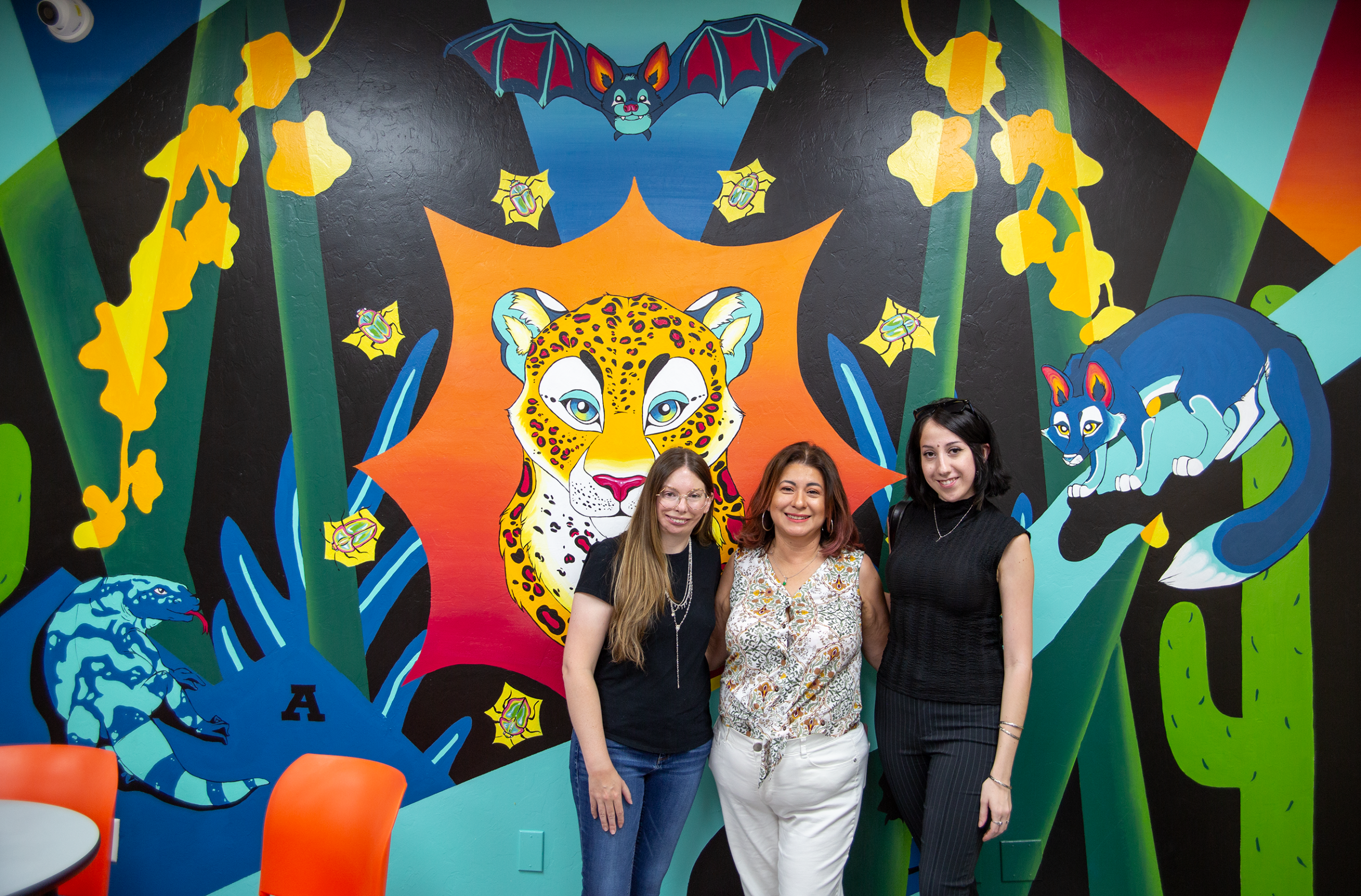
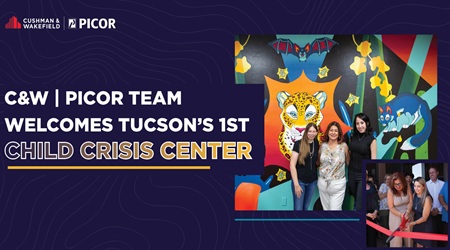
Pictured from left to right: Kate Zimmerman, Mandy Verdugo, & Brittney Ruiz

Cushman & Wakefield | PICOR is proud to have played a small part in helping Hour Child Crisis Center come to life. Our marketing team, Kate Zimmerman, Marketing Manager, and Brittney Ruiz, Marketing Assistant, volunteered their time and talent to design a mural for the center. Salzer and Waszkiewicz handpicked six local artists to transform the building’s blank, sterile walls into bright, colorful murals meant to bring a little comfort during a child’s hardest moments. Zimmerman and Ruiz volunteered around 40 hours to create a vibrant, Tucson inspired scene filled with native animals and hidden details kids can discover again and again during their stay. Mandy Verdugo, property manager at C&W | PICOR also played a key role behind the scenes, overseeing the building itself. All three employees attended Saturday’s grand opening to celebrate alongside the founders and support the center’s first steps.

Hour Child Crisis Center is open 24 hours a day, seven days a week, with no appointment needed. Walk-ins are always welcome.


The Knipp name celebrates 50 years of building trust in construction in Arizona, and the Southwest

Knipp

PHOENIX, Ariz. (September 16, 2026) – For 50 years, the Knipp name has been a recognizable presence in the construction industry, building a reputation grounded in credibility, professionalism, and long-term relationships.

Wally Knipp, CEO and Principal, is precise about what the milestone covers. The 50 years belong to the Knipp name in construction, not to Knipp Contracting, which he started in 2009.

“The Knipp name has been representative in the construction industry for five decades,” Knipp said. “What I want people to take away is that when the Knipp name is on something, somebody is accountable for it.”

The roots trace back to Wally’s father, Michael R. Knipp, who built Knipp Brothers in the 1970s with his brothers Larry and Ed. Over the decades, the Knipp name expanded its services, adapted to changing markets and developed expertise across multiple sectors of the construction industry.

The significance of five decades of the Knipp name in construction? The family kept finding a way through; three brothers started something in the 70s; the Valley grew up around them; they built houses when that’s what the market wanted. Then they found work with investors when the housing market slumped. Now it’s senior living and school renovations. That’s where the need is.

According to Knipp, one of the most significant achievements has been the ability to evolve alongside the industry.

“We’ve adapted to the needs within the construction industry,” he said. “Whether it was production homebuilding, general contracting, or expanding into markets across the country, adaptability has been critical.”

The sharpest test came in 2008. The family business served institutional investors through the housing recession, and in 2009, at the bottom of the market, Wally Knipp started Knipp Contracting at a kitchen table.

“We were conservative when it was boring to be conservative,” he said. “That’s the only reason the name made it through the bad markets in one piece.”

Over the years, the construction industry itself has undergone dramatic changes. Knipp points to labor challenges and global supply chain pressures as among the biggest shifts.

“We’ve gone from having a surplus of experienced labor to a significant shortage,” he said. “At the same time, pricing, availability of materials and global events have had a major impact on construction.”

Throughout those changes, the Knipp name has focused on identifying emerging opportunities and positioning itself for long-term success. Whether entering new geographic markets, serving institutional investors during the housing recession, or expanding into growing sectors such as senior living and commercial tenant improvement, the company has continually looked for ways to evolve.

“We’ve always tried to keep an eye on where the market is going and trust our instincts when it’s time to pivot,” Knipp said.

Central to that success is a set of core values represented by the acronym KNIPP, which serves as the foundation of the company’s culture and decision-making process.

“For us, these aren’t marketing buzzwords,” Knipp explained. “They’re the compass we use to make decisions and evaluate whether we’re moving in the right direction. Those values have been part of who we are for years. They’ve helped shape our culture and contributed to the longevity of the Knipp name in construction.”

Looking ahead, Knipp is optimistic about the future, particularly with growth opportunities in Arizona including senior living developments, retail and restaurant construction, schools and community facilities, clubhouses, and strategic partnerships that continue to expand the company’s reach.

He points to the rapid growth of the Metro Phoenix market and the company’s longstanding relationship with Shea Homes as opportunities that position  it for continued success. While much has changed over the past five decades, Knipp said he believes the foundation remains the same.

“It’s about preserving the reputation, continuing to adapt and creating opportunities for the next generation,” he said. “That’s what the Knipp name has stood for over the last 50 years, and that’s what it will continue to stand for in the future.”