AAED Leadership Retreat Builds Collaboration for a Strong Year Ahead

AAED Leadership
Arizona Association for Economic Development (AAED) Annual Leadership Retreat, in Tucson – June 24–26, 2026

TUCSON, AZ (July 14, 2026) — The Arizona Association for Economic Development (AAED) kicked off its new AAED leadership year with its annual Leadership Retreat, held June 24–26, 2026, at the Omni Tucson National Resort.

The retreat brought together AAED’s Board of Directors, committee chairs and volunteer leaders from across Arizona to strengthen relationships, align priorities and prepare for the year ahead.

The event combined strategic planning with team-building activities, giving participants an opportunity to collaborate and reinforce AAED’s mission of advancing economic development throughout Arizona. Discussions centered on implementing the organization’s newly adopted 2026–2030 Strategic Plan, “Leading With Purpose,” and strengthening coordination among AAED’s statewide volunteer leadership team.

The strategic plan establishes four primary areas of focus: educating economic development professionals, advocating for sound public policy, expanding collaboration across Arizona and sustaining AAED’s organizational capacity.

The plan also calls for stronger professional training, a more visible statewide policy voice and greater participation from Arizona’s urban, rural, tribal and smaller communities. It reflects the increasingly complex responsibilities of economic development professionals, who are now expected to address workforce availability, housing, infrastructure, grant administration, regulatory requirements and project readiness in addition to traditional business attraction and retention.

AAED’s plan recognizes that communities are increasingly competing not only through incentives but also through their ability to provide the workforce, infrastructure, housing and partnerships necessary to support new and expanding businesses.

The retreat also marked the beginning of Pima County Economic Development Director Heath Vescovi-Chiordi’s term as AAED president.

“Hosting the retreat in Southern Arizona highlighted the region’s important role in the state’s economic development efforts while providing a collaborative setting to launch the new leadership year,” Vescovi-Chiordi said.

Vescovi-Chiordi brings more than a decade of economic development experience to the position. In addition to overseeing Pima County’s business attraction, retention and expansion efforts, he teaches economic development and local government administration at the University of Arizona.

He was recognized as AAED’s 2024 Economic Developer of the Year for a large community and has also received the International Economic Development Council’s Future Leader Award.

Joining Vescovi-Chiordi on AAED’s executive committee are

  • President-Elect Kristen Stephenson of the Greater Phoenix Economic Council,
  • Vice President Suzanne Boyles of the City of Buckeye,
  • Secretary-Treasurer Jack Fitchett of the City of Winslow and
  • Immediate Past President Jennifer Lindley of the Town of Queen Creek.
  • Southern Arizona is also represented on the AAED board by Mike Czechowski of the City of Tucson and
  • Carol Stewart of Tech Parks Arizona.

Vescovi-Chiordi thanked AAED staff members Katie Hurst, Juliana Jervis and Madison Leyvas for coordinating the retreat, as well as Laura O’Blenis and Jenna Evans of Stiletto Consulting for their leadership in developing AAED’s new strategic plan.

“Their efforts, combined with the dedication of AAED’s volunteer leaders, have positioned the organization for another successful year of supporting communities, businesses and economic development professionals across Arizona,” Vescovi-Chiordi said.



LevRose CRE facilitates $6.8M sale of Midtown Phoenix office building

LevRose
702 E. Osborn Road, Phoenix

SCOTTSDALE, Ariz. (July 10, 2026) – LevRose Commercial Real Estate announced the successful sale of 702 E. Osborn Road, a ±35,346 SF, two-story office building in the heart of Midtown Phoenix, for $6.8 million.

Jason Reddington, CCIM, and Keri Davies, Partners with LevRose CRE, represented the seller, 702 E. Osborn LLC, in the transaction.

The sale is notable in today’s Valley office market and represents one of the larger recent owner/user office acquisitions in Midtown Phoenix. The property’s acquisition by an owner-user, combined with its existing in-place income stream, makes the transaction a meaningful benchmark for the Midtown Phoenix office sector and a relevant comparable sale for market participants evaluating office assets in the current environment.

Located at the prominent intersection of 7th Street and Osborn Road, directly across from the historic Phoenix Country Club, the property offers exceptional visibility, monument signage, structured parking, and convenient access to SR-51, I-10, and Loop 202. The asset was approximately 83 percent occupied at the time of marketing and featured a strong income profile anchored by long-term tenants.

“While the office market has faced challenges over the last several years, quality assets in exceptional locations continue to attract strong buyer interest,” Reddington said. “This sale, which generated multiple offers, demonstrates that well-positioned office properties offering a combination of occupancy flexibility and stable in-place income remain highly desirable. We believe this transaction will serve as a significant market comp for owner-user office acquisitions in Midtown Phoenix moving forward.”

Built in 1984, the two-story office building and adjacent lot/land includes 138 parking spaces, with a substantial portion consisting of covered and garage parking. The property has benefited from significant capital improvements, including updated common areas and renovated office suites, further enhancing its appeal to both investors and owner-users.

The Midtown Phoenix location places the property within walking distance of numerous restaurants and coffee shops, and business amenities, such as Starbucks, Gadzooks Enchiladas and Soup, and Taco Guild, while its proximity to major transportation corridors continues to make it one of the Valley’s most sought-after office submarkets.

The buyer, Maryam Parman of Avrek Law – AZ E Osborn LLC, was represented by Mike McQuaid and JD Marsh with Newmark.


Costco’s Lesson for Tucson: Good Management Shows

By Craig J. Cantoni

TUCSON, AZ (July 10, 2026) — The July 9th edition of the Wall Street Journal had a story set in Tucson.

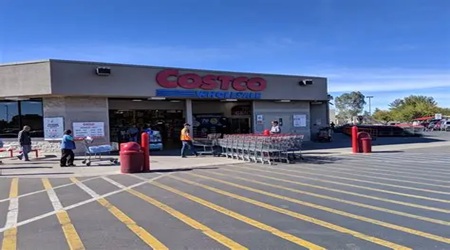
The 1,570-word story featured a long-tenured Costco employee who works on the checkout line at a Costco store in Tucson — specifically, the store I patronize on Grant Road, just west of Tanque Verde Road. The employee earns nearly $33 an hour and has accumulated more than $1 million in his 401(k).

He is an example of the benefits of working for Costco, a company with a management philosophy of treating employees well, which in turn results in them treating customers well—which in turn makes the company successful.

This isn’t as unusual in America as the popular anti-business narrative suggests. I worked for two manufacturing companies that had the same philosophy, which is why I worked for them. Factory workers retired as millionaires.

Both companies were privately-held, family-owned businesses. One of them was the global giant Mars, Inc.

I worked at the headquarters of its US confectionery business in New Jersey. As was Mars’ custom, the office was connected to a plant, so that white-collar managers and employees never forgot what made the company successful.

When one of the two billionaire brothers who ran the far-flung operation would come to town, the first thing he would do was go into the plant and talk with longtime employees he knew personally, asking how they were doing and how they were being treated.

The owners were also fastidious about cleanliness, upkeep, and being good neighbors. The lawn and landscaping in front of the plant looked like a putting green on a championship golf course.

Judging by how the Mars brothers dressed, the mid-priced rental cars they drove, and the mid-tier hotels they stayed at, you wouldn’t know they were billionaires.

On a related note, when I was at the Grant Rd. Costco a few weeks ago, the CEO of the company was at the store. He was unpretentious, affable, and clearly well-liked by employees. Standing in the check-out area, he was applauding employees for their service with the company.

A cautionary note: Treating employees well and paying them well is a surefire way of going out of business unless there is a commensurate level of productivity, efficiency,

and quality. Accomplishing both requires not only investments in people but also investments in maintenance and state-of-the-art technology and equipment. Other essential prerequisites are high expectations and a low tolerance for mediocrity.

This prescription for success applies to nations as well. Unfortunately, the second part of the formula is overlooked by those who believe that a higher minimum wage and/or socialism alone will magically remedy America’s socioeconomic problems.

Masochists who regularly read my essays know that I’m fixated on aesthetics and upkeep. That’s because, as I have learned repeatedly, how a place looks is an indicator of how it is managed. This is true for both businesses and cities.

If, for example, a restaurant doesn’t have enough pride to keep its parking lot and frontage nicely landscaped and maintained, there’s a high probability that its kitchen isn’t clean. And if litter and weeds are in abundance outside of a retail store, there’s a high probability that the place will be badly managed and staffed with surly employees.

Unsurprisingly, the Costco parking lot is spotless. So are the loading docks in the rear of the store.

The same holds for a city. There’s a high likelihood that a city is badly governed if streets aren’t nicely landscaped and paved, if litter isn’t picked up, if illegal signage is allowed to proliferate, if property maintenance codes aren’t enforced, and if seediness and shabbiness are widespread.

By those indicators, Tucson and Pima County do not need another slogan, task force, or vision statement. They need basic management discipline.

_______________________________________

Mr. Cantoni is a freelance writer, author of a management book, former business executive, and advocate for public policy reform. He later founded a management consultancy whose clients included Houston-based Weingarten Realty Investors. He now lives in Tucson.