Stevens-Leinweber Begins Office-to-Industrial Redevelopment the TenSixty Interchange in Tempe, AZ
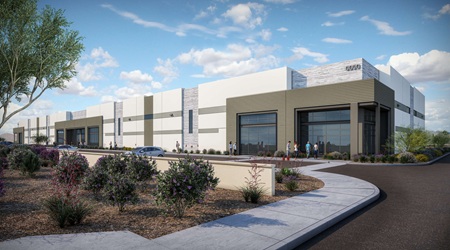
TenSixty InterchangeAlidade Capital, Pine Creek Real Estate Partners are developing the TenSixty Interchange small-bay project

TEMPE, Arizona, (June 10, 2026) – On behalf of Alidade Capital and Pine Creek Real Estate Partners, Phoenix-based general contractor Stevens-Leinweber Construction (SLC) today broke ground on TenSixty Interchange, an office-to-industrial redevelopment that will bring new mid-size, infill industrial product to the Interstate 10/Baseline Road corridor in Tempe, Arizona.

The groundbreaking comes after months of demolition to remove an outmoded two-story office building, creating a shovel-ready development site. When complete, TenSixty Interchange will total 58,250 square feet of Class A, small-bay industrial space.

The project is located on 4.54 acres at 4415 S. Wendler Dr. in Tempe, with direct freeway visibility along I-10, just minutes from the US 60 and Sky Harbor International Airport.

“TenSixty Interchange is a singular opportunity – a state-of-the-art industrial building with heavy power, a rare infill address, and a level of visibility and market access that is hard to replicate,” said Pine Creek Real Estate Partners Managing Partner Dominic Alba. “We look forward to delivering this best-in-class asset to the market.”

The 24’ clear height building will accommodate multiple mid-size tenants or up to six smaller tenants, with divisibility to approximately 9,700 square feet. Building features include full HVAC, LED lighting, 3,000 amps of power, and two 1,985-square-foot office spec suites at each end cap.

TenSixty Interchange will also include 16 dock doors, 8 grade-level doors, and 83 parking spaces (expandable). I-10 frontage will provide freeway signage opportunities and visibility to 200,000 vehicles per day.

SLC serves as the general contractor for TenSixty Interchange. Butler Design Group is the architect. Steve Larsen, Jason Moore, and Katie White of JLL are the project’s exclusive leasing brokers.

“It is exciting to close out our demolition phase at TenSixty Interchange and move into active building construction,” said Stevens-Leinweber Construction Director of Construction Ryan Park. “This combination of location and operational amenities is something that the market has been waiting for. Congratulations to the entire project team on the groundbreaking milestone.”

“This is a size and caliber of building that most developers aren’t building right now. It is purpose-built for manufacturing, with flexibility for a variety of tenants,” said Moore. “It is also available for lease or sale, which is an attractive variable. We expect TenSixty Interchange to resonate well with an underserved tenant segment, and join this corridor’s other mid-size industrial success stories.”

According to JLL research, the combined industrial vacancy in the Tempe/Sky Harbor Airport submarkets was just 7.5% at the end of Q1 2026. Across metro Phoenix, Q1 net absorption reached 6.9 million square feet, marking the fifth-largest quarter for industrial absorption in Phoenix history.

Construction on the TenSixty Interchange is underway, with completion slated for Q1 2027.


Midtown Phoenix Historic Office Building Sells for $1,900,000

Phoenix Historic Office

Phoenix, AZ (June 10, 2026) – JT Taylor and Nick Miner, CCIM, of ORION Investment Real Estate announce the sale of a ±7,700 SF Midtown historic office building located at 335 E. Palm Lane, Phoenix, Arizona 85006. The property sold for $1,900,000 or $247 Sq. Ft.

Originally constructed as a residence in the late 1920s, the property was converted to a law office in the 1980s while retaining many of its original finishes and distinctive Spanish Revival architecture. Over time, the building has more than tripled in size, blending historic character with functional professional office space. The seller purchased the property in 2019, occupying approximately half of the building and leasing the remaining space to other office users.

“This is a great office with good parking, centrally located near downtown Phoenix and right off I-10. I have leased this property for years to a great community of independent lawyers and therapists who office in the area. Since the seller no longer needed so much space, Nick Miner and I were happy to find the next buyer, a law firm, for this building,” JT stated.

“There were several interested groups in the property. It is nice to see that the buyer appreciates the history of the area and the property,” Nick stated.

For more information about this sale or to inquire about other opportunities, please contact JT Taylor or Nick Miner, CCIM, at ORION Investment Real Estate.

The buyer, KAL Holdings Ltd., was represented by Sherry Rampy of Brokers Hub Realty, LLC. The seller, D.P. Assets, LLC, was represented by JT Taylor and Nick Miner, CCIM, of ORION Investment Real Estate.


Southwest Water Agencies Explore Interstate Deals to Stretch Colorado River Supplies

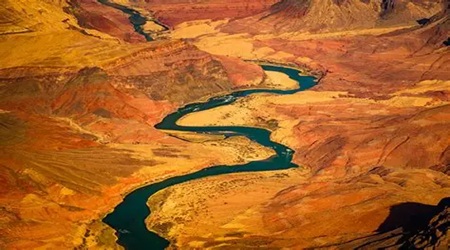
Colorado River

(June 9, 2026) — Water agencies from Arizona, California, and Nevada have signed a new agreement to explore interstate water exchanges across the Colorado River Basin, a step leaders say could help support desalination, water recycling, and other new supply projects without changing existing water rights.

The June 3, 2026, Memorandum of Understanding does not create a new water-sharing agreement. Instead, it establishes a framework for discussions among the Bureau of Reclamation and six major water agencies about how the Lower Basin states might work together on future projects that increase available water supplies.

The agreement was signed at the Claude “Bud” Lewis Carlsbad Desalination Plant in California. Participants include the Bureau of Reclamation, San Diego County Water Authority, Metropolitan Water District of Southern California, Southern Nevada Water Authority, Arizona Department of Water Resources, Central Arizona Project, and Salt River Project.

The effort comes as the Colorado River remains under significant pressure from long-term drought, low reservoir levels, poor snowpack, and record heat. Storage in the Colorado River system is currently about 36 percent of total capacity, according to the participating agencies. The river supplies water to more than 43 million people across the Southwest, making long-term reliability a growing concern for communities, agriculture, industry, and hydropower generation.

Under the concept being explored, agencies across different states could jointly support projects such as desalination, recycled water, and other new water supply initiatives. In return, participating agencies could receive water benefits through exchange arrangements that leverage existing infrastructure and operational flexibility.

For example, a project in one state could potentially create a supply benefit that is exchanged or credited in another location, allowing agencies to stretch limited supplies without building entirely new delivery systems. Any future exchange would have to be negotiated separately, and the MOU makes clear that existing water rights would not be changed, reallocated or impaired. Agencies also would not be obligated to participate in any specific future project.

Water leaders described the agreement as an early but important step toward more flexible regional cooperation.

Dan Denham, general manager of the San Diego County Water Authority, said future strategies will require partnerships that cross state lines.

“Next-generation strategies in the face of climate volatility must include interstate partnerships that deliver water where it’s needed most,” Denham said. “New ideas are challenging to implement, but it’s in everyone’s best interest to make this work.”

Shivaji Deshmukh, general manager of the Metropolitan Water District of Southern California, said many agencies are already developing projects to reduce reliance on the Colorado River, but large-scale water projects often require substantial investment.

“The MOU signed today demonstrates our commitment to discussing how to develop flexible partnerships across borders to pool funding, advance projects, and allow water to be shared when and where it is needed most,” Deshmukh said.

Southern Nevada Water Authority General Manager John Entsminger said regional partnerships will be essential as river conditions become more difficult.

“This agreement allows us to explore forward-thinking, strategic investments that will strengthen water resilience in Southern Nevada and across the Lower Basin,” Entsminger said.

Arizona Department of Water Resources Director Tom Buschatzke said the agreement reflects the kind of innovation Arizona and its Lower Basin partners believe will be needed to stabilize the river system over time.

“It represents the kind of innovation that Arizona and its Lower Basin partners believe is needed from all the Colorado River states to help stabilize the system in the long term,” Buschatzke said.

Central Arizona Project General Manager Brenda Burman emphasized cooperation among basin partners.

“When you have good partners, you can find collaborative opportunities that benefit all,” Burman said.

Leslie Meyers, associate general manager and chief water resources executive for Salt River Project, said the agreement demonstrates a commitment by the Lower Basin states to evaluate new ways to supplement water supplies amid ongoing shortages.

For Arizona, the discussions are especially important. The state relies heavily on Colorado River deliveries through the Central Arizona Project, which serves municipal, tribal, agricultural, and industrial users across central and southern Arizona. Shortages on the river have already reduced Arizona’s supply, and future operating rules for the Colorado River remain a major issue for the basin.

The new MOU is not a final agreement, and it does not identify specific projects. Rather, it begins a process for water managers to determine whether a practical interstate exchange framework can be developed. Desalination, water recycling, groundwater replenishment, and other supply-augmentation projects could all be part of future discussions.

As drought, shrinking reservoirs, and increasing demand continue to challenge the Colorado River Basin, the participating agencies say the goal is to evaluate new tools that could improve long-term water management while staying within existing water rights and infrastructure systems.

The agreement marks a shift toward more regional problem-solving at a time when individual states and water agencies are increasingly recognizing that local supply strategies may not be enough. In a river system shared by seven states, Mexico, tribal nations, farms, cities, and industries, the next generation of water management may depend less on drawing new lines and more on finding workable exchanges across the lines that already exist.