Chamber Business News is reporting, as Arizona’s energy landscape undergoes rapid transformation—driven by surging data center investment, record summer peak demand, and an accelerating shift toward renewable generation—few companies are better positioned to speak to what that transition requires than Strata Clean Energy. A family-owned, fully integrated energy infrastructure firm, Strata has built a portfolio of more than 300 projects across 25 states, with a 5 GW development pipeline and nearly 2 GWh of battery storage either operating or under construction in Arizona alone. Chamber Business News sat down with the Strata team to discuss how the company is helping utilities, large energy users, and the broader grid prepare for what comes next. Reprint of that recent interview is here.
What is Strata Clean Energy, and who are your customers?
Strata Clean Energy is a family-owned, fully integrated energy infrastructure company focused on developing, building, and operating large-scale solar and energy storage solutions across the United States. We also support power-first data center development in key data center markets by enabling faster, integrated power solutions.
What differentiates Strata is our ability to deliver energy projects from concept through long-term operations—all under one platform. Strata has developed and manages a portfolio of over 300 projects constructed and operating across 25 states, representing more than 6 gigawatts in commissioned projects.
We serve three primary customer groups: electric utilities, independent power producers, and increasingly, large energy users such as hyperscale data center operators. Across all of these partnerships, our role is the same—to provide high-quality, dependable energy infrastructure that supports long-term growth and grid reliability.
Can you share an overview of Strata Clean Energy’s footprint and projects in Arizona?
Arizona is one of the most important markets in the country for energy innovation and data center demand, and Strata has established a strong and growing presence in the state. Today, Strata has a 5 GW development pipeline of solar and storage projects in Arizona, in addition to the over 2 GWh of battery storage currently in operation or under construction. Additionally, we have a data center development pipeline approaching 2GW in the State.
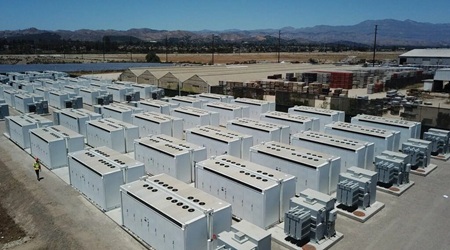
We have been actively developing and constructing utility-scale solar and battery storage projects across Arizona, including multiple long-term partnerships with utilities to bring new capacity online. These energy storage projects are designed to deliver power during peak demand periods—helping stabilize the grid during Arizona’s most energy-intensive hours.
These projects are especially important in a region where summer peak demand continues to set new records and energy needs are increasing rapidly. Our work helps ensure that reliable, dispatchable energy is available when it matters most.
Our commitment to Arizona extends beyond energy delivery—we see our work as supporting the state’s continued economic growth by ensuring reliable, scalable power is available where and when it’s needed.
Can you explain what your vertically integrated model means in practice and how it differentiates your approach?
Strata’s vertically integrated model means we manage every stage of an energy project—from early site identification and permitting through engineering, construction, and long-term operations.
In practice, this approach allows us to move faster, reduce risk, and deliver more predictable outcomes for our partners. Because our teams are aligned across the full lifecycle, we’re able to optimize decision-making early in development—whether that’s interconnection strategy, equipment procurement, or construction sequencing.
This integration helps address today’s environment, where project timing and coordinated execution are increasingly important. While traditional energy projects can take many years to advance, a fully coordinated platform enables projects to move more quickly while maintaining high standards for safety, quality, and long-term performance.
Ultimately, our model is built around certainty, ensuring that projects are not only delivered efficiently, but continue to perform reliably through the life of the facility.
How does Strata Clean Energy collaborate with utility partners, particularly those serving Arizonans?
Collaboration with utilities is at the core of what we do. We work closely with our utility partners from the earliest stages of project development to align on long-term system needs, interconnection planning, and infrastructure investment. Our goal is to complement—not compete with—the utility planning process by advancing well-positioned projects and thoughtful solutions to address emerging challenges. We apply this same collaboration framework whether we are advancing a solar, storage or data center project. We believe that collaboration with utilities and communities is the key to mutually beneficial outcomes.
Today, utilities across Arizona are managing a complex transition that includes rapid load growth and unprecedented demand. In some cases, large-load requests now exceed the system’s current peak demand, requiring creative new approaches to planning and infrastructure development that add resiliency to the electrical system.
Strata supports this effort by developing projects that don’t just generate energy but also contribute to overall grid stability and flexibility. Through the integration of technologies like battery storage, we help utilities manage peak demand, smooth variability, and improve system performance.
At its core, our partnership approach is about alignment: working together to deliver solutions that benefit customers, support long-term planning goals, and maintain the reliability that Arizonans depend on.
What role does Strata Clean Energy play in supporting a strong and reliable power grid in Arizona?
A reliable grid is the foundation for economic growth, especially in a state like Arizona, where demand continues to increase.
Strata plays an important role by developing and delivering energy resources that are not only cost-effective but also designed to enhance reliability. Our projects, particularly those that pair solar generation with battery storage, help ensure that energy is available when it is needed most, including during peak demand and periods of extreme heat.
Energy storage, in particular, is becoming a critical part of the solution, allowing utilities to shift energy from times of high production to times of peak demand.
We are also focused on how energy resources can contribute more broadly to grid performance. Modern energy systems require more than just power generation; they require flexibility, responsiveness, and stability.
In short, our role is to help build the next generation of energy infrastructure. One that supports continued growth while maintaining the high level of reliability that Arizona’s communities and businesses expect.
How is Strata Clean Energy positioning itself to support industries that require significant, reliable energy for years to come, such as AI and data centers?
Industries like AI and data centers are redefining energy demand. They require large amounts of power, delivered quickly, with exceptional reliability. In high-growth regions like Arizona, large-load demand can reach into the tens of gigawatts, creating both opportunity and complexity for the grid.
Strata is addressing this through a combination of long-term planning and innovative delivery models.
One key part of our approach is our “Bring Your Own Power” (BYOP) framework, which allows large energy users to accelerate access to power while still aligning with long-term grid solutions. BYOP is designed so data centers can function as grid assets—contributing new generation and supporting reliability as they scale. These approaches can meaningfully reduce time to initial power availability compared to traditional approaches, while transitioning into fully integrated, utility-supported infrastructure over time.
At the same time, we are developing sites in key data center markets with an emphasis on power planning and increased execution readiness. This approach is intended to improve speed and confidence for customers by helping create a more execution-ready path to long-term power availability.
Equally important is how these large energy users interact with the grid itself. At Strata, we believe the most successful projects are those that are intentionally designed to support the power system—not just add demand. By integrating solutions such as energy storage, coordinated generation, and flexible load strategies, data centers can help strengthen overall system reliability.
This model benefits everyone involved. It enables faster deployment for companies investing in Arizona, supports utilities in managing growth responsibly, and helps ensure that rising demand does not place undue pressure on existing customers.
As Arizona continues to attract large-scale investment, Strata is focused on helping ensure that energy infrastructure keeps pace—supporting innovation, strengthening the grid, and enabling long-term economic development across the state.
Editor’s Note: Strata Clean Energy would be a logical company for Tucson to cultivate as American Battery Factory advances its planned gigafactory for battery cells. ABF represents the manufacturing side of the energy-storage economy, while Strata represents the deployment side through utility-scale battery storage, solar-plus-storage development, and grid reliability projects. Bringing those pieces closer together would help position Southern Arizona not only as a place where batteries are made, but as a region where the broader energy-storage ecosystem can grow.