Need Help Paying Your Electric Bill?  Contact Your Utility Now

Electric Bill

(May 20, 2026) — As Arizona approaches the hottest parts of the year, the Arizona Corporation Commission is reminding customers that electricity bills will likely rise as the temperatures climb into the triple digits.  For households and businesses, that means air conditioners will run nonstop, and electricity bills will be noticeably higher than usual.

Higher summer energy usage driven by extreme heat typically results in significant month-to-month increases in electricity bills beginning in June and lasting for several months.  During this time, households may have experienced affordability challenges.  The ACC is encouraging vulnerable customers who may experience hardships paying their summer utility bills to contact their electric utility now to discuss eligibility for assistance and payment options.  Utilities can assist customers in exploring and identifying assistance programs that may help manage summer energy costs before a monthly bill becomes unmanageable.

“As we head into summer, I encourage ratepayers to explore ways to manage their energy use and to contact their electric utility if they need financial assistance,” said Chairman Nick Myers. “The Commission’s responsibility is to ensure rates are just and reasonable, while ratepayers have the ability to control their monthly bills through their energy usage.”

“It’s important that our regulated utility customers prepare now for the heat of Arizona’s summer months by reaching out to their utility to learn about energy saving tips and programs that can help during financial hardships,” said Commissioner Lea Márquez Peterson. “Remember – the ACC has approved a disconnection moratorium from June 1 – October 15 to ensure customers are not disconnected for non-payment and can work out a payment plan.”

Contact Your Utility Now

Contacting your electric utility is often the fastest way to get connected with available resources, including budget billing plans, customer assistance programs, and payment arrangements.  Utility representatives can also help direct customers to additional state and local resources.

Take Action

With several months of summer ahead of us, the ACC encourages consumers not to wait if they are concerned about affording rising energy bills.  Weather is the biggest driver of summer energy costs, and reaching out early can give households access to support and solutions to help avoid financial hardships.

Here are some practical tips to reduce energy consumption during Arizona’s sweltering summer months:

  • Keep window curtains and blinds closed
  • Use fans for personal cooling
  • Limit use of high-energy appliances during on-peak hours
  • Regularly change HVAC filters
  • If possible, invest in smart thermostats and energy-efficient appliances.

Utility Provider Relief Programs

You may qualify for discounts and/or assistance on your energy bill provided directly by the electric utility.

Call Your Utility Now:

Company Name Phone Number
Ajo Improvement Company 520-387-2001
Arizona Public Service (APS) 602-371-7171
City of Mesa 480-644-4444
City of Williams 928-635-4451
Columbus Electric Co-op 575-546-8838
Dixie Escalante Rural Electric Association 866-673-3297
Duncan Valley Electric Cooperative 928 359-2503
Electrical District 3 520-424-9021
Garkane Power Association 800-747-5403
Graham County Electric Cooperative 928-485-2451
Mohave Electric Cooperative 928-763-1100
Morenci Water & Electric Company 928-865-2229
Navajo Tribal Utility Authority 800-528-5011
Navopache Electric Co-op 928-368-5118
Salt River Project (SRP) 602-236-8888
Sulphur Springs Valley Electric Co-op 800-422-3275
Trico Electric Cooperative 520-744-2944
Tucson Electric Power (TEP) 520-623-7711
UNS Electric, Inc. (UNS) 877-837-4698


Marcus & Millichap Releases New Single-Tenant Retail Reports as Industry Gathers at ICSC Las Vegas

ICSC Las Vegas
ICSC Las Vegas

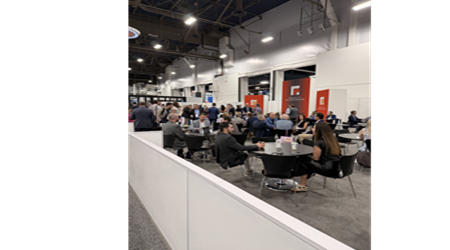
(May 20, 2026) – Marcus & Millichap (NYSE: MMI), a leading commercial real estate brokerage firm specializing in investment sales, financing, research and advisory services has published two new national research reports highlighting continued strength in the U.S. single-tenant net-lease (STNL) retail sector as retail real estate professionals gather at the ICSC Las Vegas conference.

The reports, Single-Tenant Net Lease Retail 1H/26 National Report and the May 2026 U.S. Single-Tenant Net-Lease Retail Investment Report, found that STNL retail transaction activity rose sharply in 2025, with transaction count up 23% year over year and dollar volume increasing 20%. The reports also note that vacancies remain below long-term averages while construction activity is near historic lows.

“Despite ongoing economic uncertainty, investor demand for high-quality net-lease retail assets remains exceptionally strong,” said Gregory A. LaBerge, chief client officer, Marcus & Millichap. “Retailers focused on necessity, convenience and value continue to expand, supporting long-term fundamentals across the sector.”

ICSC Las Vegas

According to the reports, private investors accounted for approximately 75% of buyer dollar volume in STNL retail transactions, while investors continue to favor assets with strong tenant credit and long-term lease structures.

“The reset and recovery in the single-tenant market continues despite macroeconomic headwinds and higher-than-expected interest rates,” said Hessam Nadji, president and chief executive officer, Marcus & Millichap. “Prices have recalibrated while financing conditions have improved, fueling more activity. More buyers see a compelling acquisition window, driven by a meaningful gap to replacement cost and limited new development. As a result, realistically priced assets attract multiple offers.”

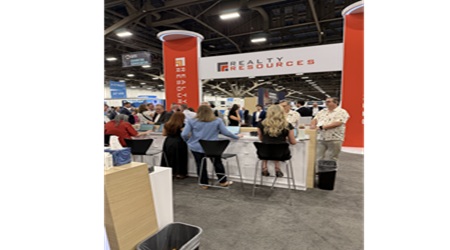
Marcus & Millichap professionals are attending ICSC Las Vegas and are available at Booth #4307Q, Las Vegas Convention Center, to discuss current retail investment trends and opportunities. The full STNL research reports are available here: Single-Tenant Net Lease Retail 1H/26 National Report and May 2026 U.S. Single-Tenant Net-Lease Retail Investment Report.


Colliers: Strong Leasing and Inventory Reductions Fuel Phoenix Office Market Health

ColliersMarket Posted Second Consecutive Quarter of Positive Net Absorption

Phoenix (May 19, 2026) – A recent Colliers report covering the first quarter of 2026 shows positive net absorption for a second consecutive quarter. The Greater Phoenix office market continues its post-pandemic recovery with strong leasing and a decline in total inventory as obsolete buildings are re-purposed.

The Phoenix market is experiencing tremendous economic growth from manufacturing and technology, which is now spilling over into the office market. Strong leasing activity, along with the delivery of Republic Services’  265,525-square-foot new headquarters, helped first quarter post the second strongest net absorption in nearly four years. First quarter net absorption reached 432,379 square feet. The Tempe submarket dominated the leasing activity in the first three months of 2026, accounting for nearly 35 percent of total square footage leased.  Class A assets recorded 498,865 square feet of positive net absorption market-wide, while both Class B and Class C assets posted negative totals.

Direct vacancy dropped 60 basis points over the quarter to 14.5 percent.  This was influenced by the removal of nearly 1 million square feet of inventory.  Class A properties saw a 40 basis point decline in vacancy to 19.1 percent.  For the first time in nine consecutive quarters, sublease space increased.  A modest 33,178 square feet of sublease space was added, yet sublease space has decreased 36.7 percent since its peak of 7.8 million square feet in first quarter of 2024.

Total inventory of office space has been declining, as developers move forward with re-purposing obsolete office buildings to meet market needs.  Three buildings traded in the first quarter 2026 to developers planning new usage.

Construction levels in the office market decreased to the lowest level, with just 184,500 square feet under way within two buildings. Both structures are build-to-suit developments with deliveries expected over the next two quarters.  Limited available capital for speculative office development, coupled with the rental rates required to achieve acceptable investment returns, continues to suppress new construction.

Overall rental rates posted a small increase in first quarter, rising 1.33 percent to $30.52 per square foot.  Class A assets recorded the largest year-over-year gain, rising 1.41 percent to $34.60 per square foot.  The market is highly bifurcated, with Class A significantly outperforming Class B and Class C properties.  Premier submarkets with highly amenitized Class A properties captured the strongest year over year rent growth.  Camelback Corridor rents rose 6.3 percent to $44.79 per square foot, while South Scottsdale rents increased 4.1 percent to $41.16 per square foot.  Two leases signed during first quarter set a new high watermark for the market, with starting rates exceeding $62.00 per square foot.

Sales volume declined 33.3 percent from fourth quarter 2025, but increased 53.7 percent year-over-year, reaching $353 million.  This is still a 53.7 percent better performance than first quarter 2025.  The average price per square foot paid during first quarter 2026 was $207.   Tempe submarket led the quarter in sales activity, experiencing more than 30 percent of the total volume across seven transactions.  The largest transaction of the quarter was the five-property “Rio West” portfolio totaling 296, 663 square feet that sold for $61.5 million.  The largest single-asset sale was Thirty 03 (3003 N. Central Ave.), a 26-story Midtown tower that sold for $32.25 million.  Three buildings sold during first quarter are slated for repurposing, which will remove more than 335,000 square feet from the existing inventory when they are placed under construction.

The Greater Phoenix office market continues its path to rebalancing.  The push for employees to return to the office is more prevalent and is expected to strengthen as 2026 unfolds.  While certain submarkets will continue outperforming others, the environment creates opportunities for tenants to secure space in lower performing areas at discounted rates.  Strong support from economic development groups and general pro-business elements of our market are positioning us to attract out-of-state companies, particularly those seeking business-friendly regulations and partnerships with higher education institutions to sustain a robust labor force.

Full report here.