Buckeye’s Next Growth Wave May Not be Rooftops, but Megawatts
BUCKEYE, AZ (May 28, 2026) — Buckeye is quickly becoming one of Arizona’s most closely watched data center markets, with multiple large-scale projects positioning the West Valley city as a future hub for artificial intelligence, cloud computing, and digital infrastructure.
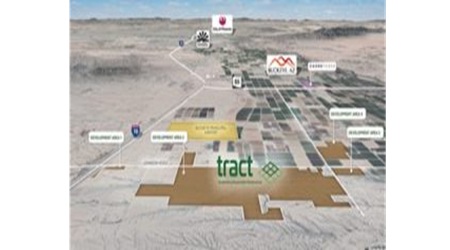
The largest known project is Tract’s Buckeye Technology Park, a master-planned data center campus on the west side of Buckeye near the Palo Verde nuclear power plant and the I-10 corridor. Tract acquired approximately 2,069 acres in 2024 for what the company said could become one of the largest data center parks in the United States. At full buildout, the project could include up to 20 million square feet of data center space across as many as 40 individual data centers. Tract said it is working with the local utility on long-term power infrastructure plans that could support up to 1.8 gigawatts.
The project reflects a major shift in how Arizona’s growth corridors are being evaluated. Buckeye has long been associated with master-planned housing, logistics, and population growth. Now, large land positions, power access, fiber connectivity, and proximity to regional infrastructure are making the West Valley a target for hyperscale technology campuses.
Data Center Dynamics described the Tract project as a 1.8-gigawatt campus, underscoring the planned power demand and the scale of the opportunity for Buckeye. The project is expected to be built in phases over many years, with individual campuses serving cloud, AI, and high-performance computing users.
Buckeye may also see another data center proposal on land once planned for a hydrogen production hub. Fortescue Future Industries, through Phoenix Hydrogen Hub LLC, has sought changes tied to approximately 158 acres near State Route 85 and Patterson Road after canceling plans for a $550 million hydrogen project. The revised direction could allow the site to be used for a future data center campus, according to reporting on the zoning request.
Together, the projects show how quickly the data center market is reshaping land-use conversations in the Phoenix region. What was once primarily a housing and industrial expansion story is now increasingly tied to energy capacity, water policy, cooling technology, and digital infrastructure.
For Buckeye, the upside could be substantial. Large data center campuses can generate long-term property tax base, infrastructure investment, and construction activity while requiring fewer public services than residential development. Buckeye Mayor Eric Orsborn, quoted in Tract’s project announcement, said the city’s work with Tract positioned Buckeye to host one of the country’s largest data center technology parks and replaced an outdated planned community concept with a long-term economic growth plan.
But the scale of the development also raises questions that are increasingly following data center projects across Arizona: how much power will be needed, where that power will come from, how water will be used for cooling, and how cities should balance high-value industrial development with long-term resource planning.
Circle of Blue reported that the former Cipriani Holdings land west of the Buckeye Municipal Airport, now part of the Buckeye Tech Corridor, is expected to shift from a residential community concept to commercial space serving cloud infrastructure, illustrating the broader land-use trade-offs facing fast-growing desert communities.
The bigger takeaway is that Buckeye’s next growth wave may not be measured only in rooftops. Increasingly, it may be measured in megawatts.
As artificial intelligence and cloud computing drive demand for larger campuses, Arizona’s ability to deliver certainty in land, power, water, planning, and permitting will play a larger role in where the next generation of data center investment lands. For Buckeye, that has already placed the city at the center of one of the largest digital infrastructure plays in the state.