ABI Multifamily Brokers $13M+, 96-Unit Apartment Community in Phoenix

La Estrella Vista Apartments, Phoenix, AZ

Phoenix, Ariz. – ABI Multifamily has announced the $13,375,000 / $139,323 per unit / $124.19 PSF closing of La Estrella Vista Apartments in Phoenix, Arizona.

La Estrella Vista is a 96-unit garden-style apartment community near 67th Avenue and Thomas Road. Built in two phases — 2008 and 2014 — the property is separately parceled as 24 four-plexes. All units are three-bedroom/two-bath, and the average size is more than 1,120-square-feet.

ABI Multifamily’s Alon Shnitzer, Doug Lazovick, John Kobierowski, Rue Bax and Eddie Chang represented both parties in the transaction, with Shnitzer serving as lead broker for the Buyer and Lazovick as lead for the Seller.

“La Estrella Vista Apartments marks the formal entry into Phoenix MSA multifamily ownership for the Buyer: Southern California-based Next Wave Investors,” Shnitzer said. “However, the firm is not new to Arizona multifamily, having managed many properties in the past, as well as transacting and owning several multifamily properties in the Tucson market.”

He continued, “La Estrella Vista was a unique opportunity to own an all three-bedroom community built in 2008 and 2014 that’s fewer than 100 units. We consistently have buyers ask us for inventory in this age and size range, and it simply isn’t something that’s common for Phoenix multifamily developers to build.”

“The Seller purchased the property as a REO during the downturn,” Lazovick said. “At that time, only 32 units of the project had been completed. The Seller then developed and leased-up an additional 64 units. La Estrella Vista has maintained consistently high-occupancy throughout the Seller’s hold, as three-bedroom units are in short supply and high demand in the submarket.”

The Buyer, an entity formed through Next Wave Investors, LLC, is a private investment company based in San Clemente, CA. The firm has completed more than $150 million in acquisitions, to date, with the majority of the multifamily transactions being in the Arizona, Utah and Nevada markets.

The Seller is an Arizona-based developer.
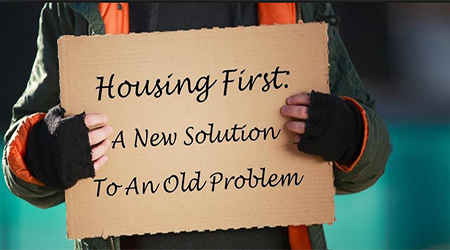


Pima County launching innovative housing strategy for homelessness

Pima County this month will begin testing a “Housing First” model in its approach to homelessness in the community. A two-year pilot project will provide housing for 150 individuals with the goal of improving their physical, mental and social well-being while also reducing criminal justice and healthcare system costs and strain.

The County’s Criminal Justice Reform Unit will collaborate with Old Pueblo Community Services (OPCS) and Intermountain Centers to administer the program and provide medical and mental health assistance. To qualify for the program, participants must be currently homeless, have a substance use or a mental health issue and have been booked into the Pima County Adult jail at least twice in the previous 12 months. The housing will give the new residents privacy and dignity and as well as access to health and social services to help them achieve greater independence and self-sufficiency.

Pima County Administration committed $1.5 million annually to the effort.

“Rather than assuming drug addiction or mental health problems cause homelessness, housing first works from the opposite premise,” Director of Justice Reform Initiatives Terrance Cheung said. “This approach presumes that the stresses of homelessness exacerbate those issues and that by giving people a place to live and rest, we can give them a better chance to receive treatment than they would in a traditional shelter environment.”

The County partnered with the RAND Corporation, a nationally recognized organization with vast experience evaluating similar housing programs, and the Corporation for Supportive Housing to provide technical assistance.

“We want to collect good data and receive a sober and well-informed assessment of whether the Housing First approach works in Pima County,” Cheung said. “We want to know if it’s helping lower the jail population and easing demand of emergency health services. It also will help us partners for sustainable project funding moving forward.”

As many as 560 people would have met the program’s criteria in 2016.

Old Pueblo Community Services expects about 15 people at any one time will live in a residential property it owns in Tucson. Staff members trained in case management and recovery counseling will work on-site. A criminal justice advocate and outreach specialist will also assist clients with navigating the court process and finding social services, job and life-skills training and educational opportunities.

“It’s a great time to be doing this because everyone is aligned,” OPCS Chief Executive Officer Tom Litwicki said. “The County, the City of Tucson, the sheriff and police department, the fire department and the business community all agree this is something we should do and if we work together in this fashion we’ll actually see some progress.”

The City of Tucson contributed Housing Choice Vouchers that will cover the cost of housing 150 people.

“A Housing First approach has been highly successful in other communities, including Salt Lake City, Denver and Santa Clara County, California,” Program Manager Matt Pate said. “All of them saw a drop in their homeless population after implementing Housing First and an increase in the quality of life of people enrolled in the programs.”

Three Housing First clients already moved in to the OPCS complex. Others will be referred to the project by Pretrial Services and law enforcement until it reaches full capacity. Most clients will stay for between 45 and 90 days while staff members find them permanent


ICSC Research: How to Mix Uses for Maximum Convenience

Source: ICSC Research

Incorporating nonretail tenants and other uses into a development takes lots of planning and needs to go beyond simply sticking them wherever there is space. After all, the primary benefit of mixing uses comes from skillfully placing these uses in strategic proximity to each other to maximize their convenience to the people in the community. Being close to everything is the top reason cited by more than half (55 percent) of adults for residing in live, work, shop, play environments.

Rating the importance of proximity between tenant pairs in a shopping center