Tucson’s Global Solar Energy Acquired by China’s Solar Leader

8500 S Rita
8500 S Rita

This article has been archived, please login for access or subscribe now by going to the subscribe tab at the top of page.

China’s Hanergy now owns Tucson-based Global Solar Energy (GSE). Hanergy’s announcement says “it has completed the equity acquisition of Global Solar Energy, Inc., a manufacturer with the world’s leading copper indium gallium diselenide (also known as CIGS) solar technology, the acquisition follows approval from the Committee on Foreign Investment in the United States and the National Development and Reform Commission, the regulators governing cross-border acquisitions in the U.S. and China, respectively. Global Solar is one of just a few producers able to manufacturer flexible CIGS solar cells on a commercial scale in the world.”

Hanergy did not purchase the 117,000 sq. ft. facility at 8500 S Rita Road in Tucson. It was transferred from Global Solar to Mithril Real Property, Inc., a German-based company owned by Jan-Hendrick Stroher, a former director of Global Solar, for[mepr-show rules=”58038”] $7.3 million in a non-arm’s length transaction to be leased back to Global Solar at undisclosed terms. The real property includes 117,000 sq. ft. in two buildings (built 1979 and 1995) on 14 acres in southeast Tucson. Global Solar bought the property in 2007 for $6.44 million.

Global Solar, a privately owned company, founded in 1996 by UniSource Energy and ITN Energy Systems, a subsidiary to Tucson Electric Power. Solon AG bought out UniSource’s stake in the company for $16 million in 2008.

The 750-kilowatt (kW) solar system covering 310,000 sq. ft, built by Global Solar next to the facility was split off and transferred to MMA Rita Power, LLC, a subsidiary of MMA Renewable Ventures and Municipal Mortgage & Equity, LLC.

8500 S Rita Rd Building

California, in December 2012. Tucson Electric Power helped fund the solar project through its agreement to purchase the renewable energy credits generated. These credits were to help TEP pursue its goals under Arizona’s Renewable Energy Standard, which calls on utility companies to secure 15% of their power from renewable resources by 2015. SunEdison will continue to operate the solar system.

For the past several years, Global Solar has concentrated its energies into making flexible solar panels and worked with Dow Chemical to develop a roofing shingle made with CIGS cells.

In December 2012, Global Solar halted production of its portable solar charging equipment, flexible modules and building-integrated PV (BIPV) and laid off about 95 employees.

Global Solar had been selling CIGS products on a flexible substrate for more than eight years and was notable for its small but real production volumes of 11-percent-efficient solar cell product. The plummeting cost of crystalline silicon solar panels from China has eroded the value proposition of CIGS thin-film solar, which so far have not lived up to its promises of low cost and competitive efficiency.

Planning to become the “global leader in flexible thin-film solar,” Hanergy now adds Global Solar Energy to its collection of CIGS companies that include Solibro and MiaSolé, former competitors to Global Solar. In June 2012, Hanergy acquired Solibro, the CIGS operations belonging to Germany’s Q-Cells. MJ Shiao of GTM Research’s Solar Division points out that MiaSolé uses a roll-to-roll sputtering process, while Solibro uses a batch coevaporation process and that’s “pretty much the opposite end of the spectrum, as far as CIGS deposition goes.” Global Solar Energy uses a coevaporation process.

Hanergy America, Inc. a fully owned subsidiary of Hanergy Holding Group Ltd., is responsible for developing solar projects throughout the Americas. It was incorporated in the State of California in 2010 and headquartered near the San Francisco Airport, in the city of Burlingame. Based in Beijing, Hanergy is China’s largest privately owned power generator. It has 6+ GW of generating capacity operating or in construction. One of the operating hydropower stations, Jin’anqiao, has 3GW capacity, which is 1.4 times bigger than Hoover Dam. All of Hanergy’s generating capacity comes from renewable sources, mostly hydro, but also wind and solar.

Solar Power is now Hanergy’s primary focus. It owns and uses some of the world’s most advanced core technology for thin film silicon modules.

A statement adds, “In the past year, Hanergy has acquired Solibro and MiaSolé; both leading players in the CIGS technology field. Those transactions took the conversion rate of Hanergy’s thin-film PV modules to an unrivalled 15.5%. The acquisition of GSE closes the loop of Hanergy’s strategic consolidation of technologies that combine the competitive advantages of flexible thin-film PV modules and large scale production. It also demonstrates Hanergy’s continued leadership and commitment to developing advanced thin-film technology, and is a further step in its investment in leading CIGS technology and efficient alternative cell materials.”

Since it is unlikely that Hanergy is amassing a defensible CIGS PV intellectual property stance, it truly appears that Hanergy is going wide and deep into CIGS thin film just when the U.S. CIGS effort has diminished to a few staunch technologists. Sources have indicated that it’s more than just Hanergy which believes China can win in CIGS. Chinese solar tariffs favoring flexible PV and BIPV won’t hurt Hanergy’s cause, either.

Jeff Britt, Chief Executive Officer of Global Solar, stated, “We are pleased to join with Hanergy, which we believe will best leverage our unique products and technologies to complement Hanergy’s existing ones. Together we are well positioned to implement Hanergy’s strategy of accelerating the growth of the flexible solar market and exploit new market potentials.”

Global Solar will become a wholly owned subsidiary of Hanergy, an 8,000-employee wind and hydropower developer which claims to have entered into solar-power plant construction agreements with a combined capacity of approximately 10 gigawatts.

Currently, Hanergy predominates seven of the world’s leading thin-film technology lines, including amorphous silicon – germanium and copper indium gallium diselenide. The mass production of thin film solar modules conversion rate has reached 15.5% whereas research has reached the maximum conversion rate of 18.1%. According to the data in “Global Renewable Energy Report 2013” published by Hanergy, China’s investment in renewable energy is ranked first in the world. By 2013, China is expected to surpass Germany and become the world’s largest PV application market.

In 2011, Hanergy built two 300 MW/year solar panel production plants. The company will expand its production capacity to 2+ GW by the end of 2012, by adding an additional five plants. Panels from these factories will be used on rooftops and in solar parks throughout the world. In November, 2011, Hanergy acquired a $4.72 billion credit line with China Development Bank for project development and advanced solar technology acquisition. Hanergy’s current development pipeline is 4+ GW, of which 540 MW is already under construction.

Hanergy has also acquired Solyndra, SoloPower, and Nanosolar as well.[/mepr-show]
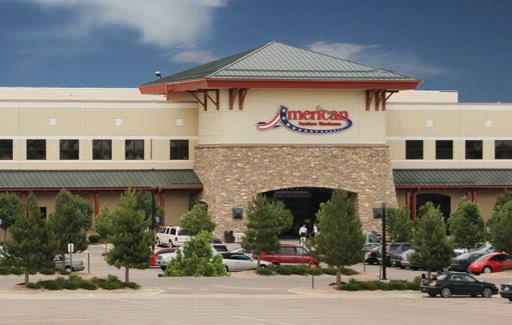


American Furniture Warehouse Purchases 41.5-Acres in Glendale, AZ

american_warehouseAmerican Furniture Warehouse purchased 41.5 acres for $9 million at 9801 W. Bethany Home Road in Glendale, AZ from Stearns Bank of Scottsdale, AZ in an REO sale.

Located on the southeast corner of Bethany Home Road and 99th Avenue, the 41.5-acre site has one-half-mile frontage along the Loop 101, which is initially what drove American Furniture Warehouse to this particular site. Previously, the land was the planned site of the mixed-use Bella Villagio project, but, due to foreclosure, was acquired by Stearns in February 2010.

American Furniture Warehouse has plans to develop its second showroom and warehouse in the Valley at this location. This showroom is expected to be similar in size to the Gilbert location, which is currently under construction with plans to open next month. Much like the Gilbert location, the Glendale site is projected to have roughly 300 employees when it opens in mid-2014.

“The proposed American Furniture Warehouse project will not only be a tremendous asset to the City of Glendale but will also help to further development along the 101 corridor,” said John Werstler of CBRE. “In addition to the completion of the Tanger Mall, the development of the new Dignity Health hospital and Bechtel’s move to the Glendale Corporate Center, this project is demonstrative of increased activity along the Loop 101, which will continue to spur more growth in the area.”

John Werstler, Jerry McCormick and Cooper Fratt of CBRE’s Phoenix office represented the seller, Stearns Bank of Scottsdale, Ariz., American Furniture Warehouse, Englewood, Colo., was represented by Jeff Jennings of ProStar Realty in Phoenix, Ariz.


USA Place Invites USA Basketball & Omni Hotel to $350 Million Tempe Project

tempeThe principals of USA Place, LLC Susan Eastridge, CEO of Concord Eastridge, Michael Hallmark, principal of Future Cities, and Robert Harris, CEO of Harris Sports & Entertainment are in final stages to realize USA Place, a $350 million mixed-use project in Downtown Tempe.

Susan Eastridge
Susan Eastridge

Eastridge’s experience includes the development of more than 7 million-square-feet of commercial space valued in excess of $1.5 billion and the acquisition/disposition of approximately $900 million in commercial property.

Founded by Hallmark and Sean Duncan, Future Cities is a planning and development company that leads in the creation of destination venues, attractions and fan/guest experiences all within the context of better-planned and more sustainable urban communities. Prior to founding Harris Sports & Entertainment, a venue and events management firm, Harris served as VP of the Phoenix Suns where he played an integral role in the franchise’s business operations from 1992 – 20006. Harris will manage the facility and create original programming for the center including tournaments, camps, leagues and clinics.

Michael Hallmark
Michael Hallmark

This is the first of a new breed of these kinds of facilities,” said architect Michael Hallmark, an ASU graduate who has worked on such projects as US Airways Center and Chase Field.

The new 330-room Omni Hotel and 30,000-square-foot conference center on 10.5-acres at the southeast corner of Mill Ave. and University Dr. is subject to final approval by Tempe City Council and Arizona Board of Regents.

In addition to the hotel and conference center, USA Place will include a new national headquarters and training center for USA Basketball, a 4,500-seat event center, 500 luxury apartments, 160,000 sq. ft. of retail space and up to 200,000 sq. ft. of office, including the new home for Arizona Interscholastic Association events.

At a Board meeting on July 25, USA Basketball’s Board of Directors approved the move to Tempe and USA Place as the home of its new national headquarters and training center from its current location in Colorado Springs, CO.

“This is a big-time move for USA Basketball, one that I personally have been dreaming about for some time,” said Jerry Colangelo, USA Basketball chairman and former Phoenix Suns chairman/CEO. “All of amateur basketball will flow through our facility. It’s going to make its mark on the game that I feel so passionate about.”

The complex could draw more than 300,000 people to Tempe annually, developers said. In addition to the Olympic teams, USA Basketball chooses rosters for the world championships and other international competitions and holds tryouts and training camps for national teams of various ages.

The full-service Omni Hotel will be Tempe’s first four-diamond hotel. With 58 distinctive luxury hotels and resorts across North America, Omni Hotels & Resorts is recognized as a market leader for group and transient business as well as with leisure travelers. Omni executives recognize the Tempe site and development concept as important to Omni’s brand.

“USA Place is our first property development in the Valley, which is important to our brand development strategy as well as for our guests,” said Mike Deitemeyer, president of Omni Hotels & Resorts. “The complex presents Tempe with great synergistic opportunities, and we are committed to ensuring that the Omni Tempe Hotel, and our team, is engaged in the Tempe community, Greater Phoenix region and state.”

The adjacent 30,000-square-foot conference center will feature a grand ballroom capable of seating 1,000 for dining, a junior ballroom and meeting space. A new multi-court event center, with seating up to 4,500, will serve as the training site for USA Basketball primarily in the summer months and for regional youth and adult recreational and competitive athletics programming the rest of the year.

“This is an exciting and an incredible opportunity that offers nothing but positives for USA Basketball,” said Colangelo. “USA Place will offer USA Basketball an excellent site for the development of its office headquarters, a training center and event center that will provide the organization with a first-class site for hosting junior level events and will allow USA Basketball to continue to evolve.”

Colangelo continued, “The new USA Basketball headquarters and training center will be first-class, state of art facilities, something I know we will be very proud of.”

In addition to USA Basketball, the Arizona Interscholastic Association (AIA) will also host programming at the event center, which will include post season state high school tournaments for boys and girls basketball, volleyball, wrestling, badminton and spiritline. High schools will also have an opportunity to participate in regular season “Games-of-the-Week” there. AIA is the primary governing body for high school athletics in Arizona.

AIA’s Chuck Schmidt believes the move will create more opportunity for AIA programs. “We’re very excited to have a permanent home where we can host our events. Being able to share a home court with USA Basketball will be a remarkable experience for our kids,” he said.

In June, the Arizona Board of Regents, which oversees the state universities, gave ASU permission to enter into a lease-option agreement for up to 99 years with USA Place LLC. The site is located next to ASU’s Tempe campus on land owned by ASU. ASU and the City of Tempe have formed a partnership to support the creation of the conference center and as a result, the conference center will revert to public ownership after twenty years. The project will be built with private money. Tempe spokeswoman Nikki Ripley said various aspects are still being negotiated.

The way it looks now, ASU would receive revenue from the hotel and rebate a portion of that up to $800,000 annually to the conference center for 20 years. At the end of that time, ownership of the conference center would revert to the university. The city of Tempe will collect bed taxes and other taxes from the hotel and rebate a portion up to $800,000 annually to the conference center during the same time frame.

Construction of the project is planned to begin by year-end with the hotel, conference center, event center and first phase of residential, retail and office scheduled to open during the second half of 2015.

There were no brokers involved in the negotiations.