Dutch Bros and 7 Brew Compete for Former Salad and Go Sites
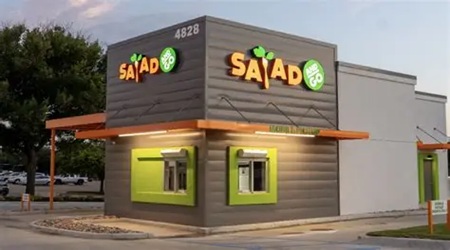 (August 13, 2026) — Salad and Go’s bankruptcy has created an unexpected expansion opportunity for two of the country’s fastest-growing drive-thru beverage operators.
Dutch Bros was initially reported as the buyer for dozens of former Salad and Go locations, with the transaction valued at approximately $105 million. Reports have varied on the number of properties involved, ranging from 51 to as many as 65 locations.
The deal, however, may not be settled.
7 Brew has challenged the proposed transaction in bankruptcy court, arguing that its offer could generate a better financial outcome for creditors. The dispute could potentially result in a broader bidding process for the portfolio.
At stake is something increasingly difficult to assemble in today’s retail market: a large collection of existing drive-thru sites with long-term leases already in place.
Rather than building dozens of locations one at a time, either Dutch Bros or 7 Brew could potentially establish a major block of new stores across Arizona and Nevada in a relatively short period.
That is what makes the Salad and Go portfolio especially valuable.
According to an analysis by Chris Rodriguez of DealGround, 65 Salad and Go locations in Arizona and Nevada carry average annual rents of approximately $120,000. Individual rents reportedly range from about $94,000 to $209,000 annually.
Most of the leases also have substantial term remaining, generally more than 10 years, with many extending another 13 to 14 years before renewal options are exercised.
In a retail market where development costs and land prices have risen sharply, those lease terms could be difficult to replicate today.
The former Salad and Go buildings are generally small, ranging from approximately 650 to 1,000 square feet, but their existing drive-thru configurations make them particularly attractive to beverage operators.
Both Dutch Bros and 7 Brew would likely need to adapt their prototypes to fit some of the locations, but the economics are very different when an operator is evaluating dozens of stores instead of a single property.
A portfolio acquisition could allow either company to accept design compromises that would normally make little sense on an individual site.
The opportunity may be especially important in Arizona, where both brands continue to expand aggressively.
For landlords, the competition could prove beneficial.
A vacant Salad and Go building is not necessarily an easy property to retenant. The small building size and specialized drive-thru format narrow the universe of potential users.
If a location were rejected during the bankruptcy process, an owner could face significant downtime or redevelopment costs before securing another tenant.
The arrival of two competing operators changes that equation.
Instead of negotiating with a single prospective replacement tenant, some landlords could find themselves holding leases that both Dutch Bros and 7 Brew want to assume.
That competition may reduce the pressure on landlords to offer rent concessions or other incentives.
The credit profile of the replacement tenant could also affect property values.
Dutch Bros operates its newer stores corporately rather than through traditional franchising. A 7 Brew transaction could involve franchise operators depending on territorial agreements and how individual leases are ultimately assigned.
For landlords, those differences could influence financing, resale value and investor demand.
Bankruptcy court considerations, however, extend beyond which tenant a landlord might prefer. The court’s primary responsibility is maximizing the value of the bankruptcy estate for creditors.
That means the winning proposal will likely depend on overall economics, certainty of closing and the ability of the acquiring company to perform under the leases.
The process could take time as competing offers, lease assignments and individual property issues are evaluated.
The broader real estate lesson is familiar.
Single-tenant properties are often purchased because of the tenant occupying them, but the long-term value of the investment ultimately depends on the real estate itself.
A strong location can survive the loss of a tenant. A weak location can become a problem the moment the rent stops.
The Salad and Go portfolio provides an unusually clear example.
For some landlords, the bankruptcy could have resulted in vacant specialty buildings with few obvious replacement users. Instead, two expanding national brands are competing for many of the same sites.
That is a far better outcome than most owners could have expected when Salad and Go began closing stores.
Who ultimately wins the portfolio remains to be determined.
For Dutch Bros and 7 Brew, however, the attraction is obvious: dozens of drive-thru locations, established lease terms, and the opportunity to accelerate growth without waiting years to assemble a comparable pipeline through traditional development.