Florence Copper Celebrates Opening as Production Ramps Up
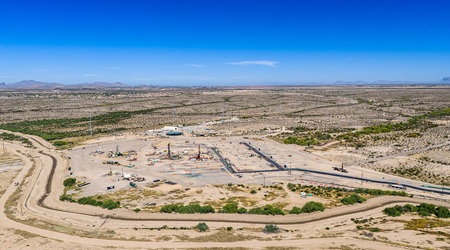
FLORENCE, Arizona (Oct. 9, 2026) — Florence Copper celebrated the opening of its commercial operation October 6, adding a new domestic source of refined copper as manufacturers face rising demand for the metal in power systems, transportation and digital infrastructure.
The Pinal County facility, located between Phoenix and Tucson, is the first new U.S. greenfield copper production facility since 2008, according to parent company Trekor Metals Limited. The company describes Florence as the world’s first greenfield commercial-scale in-situ copper recovery operation.
The celebration marked a milestone in a production ramp-up already underway. Copper production began in February, and the first cathode harvest was announced March 2. U.S. Environmental Protection Agency Administrator Lee Zeldin joined government officials, employees and community partners at the October event.
An October 8 production update provides a more current picture than the figures announced around the opening. Florence produced 7 million pounds of copper cathode during the third quarter, up 36% from the preceding quarter, and sold an equal volume. Trekor now expects Florence to produce 25 million to 28 million pounds in 2026 and reach full production capacity in early 2027.
Trekor President and CEO Stuart McDonald reported that the processing plant had operated at design capacity for several days. However, expansion of the underground wellfield remains about three months behind the original schedule, despite improved drilling rates. The distinction matters: a functioning processing plant still needs sufficient copper-bearing solution from the wellfield to sustain full output.
Florence’s method leaves the ore underground. Injection wells circulate a dilute acidic solution through a naturally fractured copper deposit, dissolving the copper minerals. Recovery wells bring the copper-bearing solution to the surface, where solvent extraction and electrowinning produce finished copper cathode sheets.
The process avoids the excavation, blasting, rock hauling and crushing associated with conventional mining. It also eliminates the need for traditional waste rock piles and tailings impoundments. Trekor estimates that Florence will use 78% less water and 65% less energy per pound of copper, with 75% fewer greenhouse gas emissions, than conventional open-pit copper mines in Arizona. These are company estimates tied to the project’s production method.
Groundwater protection remains central to the operation. The company says pumping rates are managed to maintain hydraulic control, with monitoring and compliance wells used to verify containment of the recovery solution. EPA records show that Arizona assumed administration of the Underground Injection Control program in October 2025 and that the Arizona Department of Environmental Quality reissued Florence’s Class III permit in January 2026.
At full capacity, Florence is designed to produce 85 million pounds of LME Grade A copper cathode annually. The company expects at least 1.5 billion pounds over a 22-year operating life. Producing finished metal on site allows Florence to supply manufacturers without sending copper concentrate elsewhere for smelting. Trekor says all copper produced at Florence will remain in the United States.
The economic benefits extend beyond the facility. A March 2024 study by Arizona State University’s L. William Seidman Research Institute projected $4.3 billion in cumulative Arizona GDP contributions and an annual average of 819 direct, indirect and induced jobs. Its estimates cover a 26-year period encompassing construction, production and reclamation, and are expressed in constant 2024 dollars. They are forecasts rather than measured results.
For Pinal County, the study projected $2.5 billion in cumulative GDP contributions and an annual average of 498 jobs. It also estimated $593.1 million in cumulative state and local tax revenue across Arizona, including $115.4 million for the Town of Florence.
The opening comes as copper’s role in infrastructure is expanding. S&P Global projects global demand will increase about 50% by 2040, driven by electrification, artificial intelligence, data centers and other industrial uses. Its research warns that supply could fall roughly 10 million metric tons short of annual demand without sufficient new investment.
For Arizona, Florence connects an established mining industry with a different production model. Its next milestone is sustaining output at full capacity, turning the opening celebration into a long-term source of domestic copper, employment and economic activity.