How to Launch Your Career in Southwestern Commercial Real Estate Development
By: Suzie Wilson
(May 27, 2026) — For aspiring commercial real estate developers already working in brokerage, construction, lending, or asset management across Arizona, New Mexico, Nevada, Texas, and beyond, the first career launch in property development can feel like stepping into a wide-open field of real estate investment opportunities. Then reality shows up fast: commercial real estate development challenges pile on in the southwestern U.S. real estate market, from shifting tenant demand and cautious capital to local approvals that move on their own timeline. The tension is simple: big upside meets high stakes, and early missteps can get expensive in ways that don’t show up in a pro forma. What follows helps developers build the clarity to move from “interested” to “ready.”
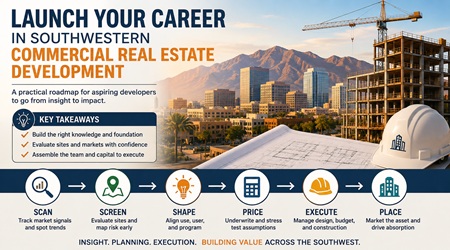
Quick Career Launch Takeaways
- Start by building a strong education foundation tailored to commercial real estate development.
- Learn to evaluate sites using key location and feasibility factors before pursuing a project.
- Get clear on core development roles so you can collaborate effectively and fill skill gaps.
- Explore common project funding sources early to understand what it takes to finance a deal.
Build Your Southwestern CRE Development Launch Plan
This process helps you turn market insights into a real, executable development path, from research through a hire-ready project setup. It matters in the southwestern U.S., where fast-moving demand shifts and zoning differences can make early decisions either de-risk your deal or derail it.
- Start with a market insight dashboard. Start by collecting a small set of signals you can track weekly: absorption, rent trends, new supply, cap rates, and employer or infrastructure announcements. Translate those signals into a simple “what’s winning and why” summary so you can quickly spot property types and submarkets gaining momentum.
- Confirm your site acquisition criteria in writing. Choose 5 to 8 non-negotiables such as target lot size, access, utilities, allowed uses, maximum basis, and required entitlement path. Write them as pass-fail rules so you can screen opportunities consistently and avoid falling in love with a site that cannot pencil.
- Review licensing, permits, and compliance needs early. Make a checklist of what you need to legally operate, bid work, and open accounts: local business licensing, tax registration, and any specialty permits tied to your intended use. Treat this like a pre-flight check so your timeline isn’t caught off guard by lead times or required filings.
- Form your entity and set up operating basics. If you are forming a company, map the LLC steps in order: select ownership structure, file formation documents, request an EIN, and outline an operating agreement that matches how you will raise capital and share decisions. Borrow the discipline of formation paperwork by getting legal, finance, and operations on the same page before you commit to a site.
- Hire architects and contractors with a scope-first approach. Create a one-page scope brief that includes the intended use, target budget range, schedule goals, and your site criteria, then ask for proposals that address those constraints directly. Use a repeatable onboarding routine, similar to an internal launch, so every consultant understands who decides what, when deliverables are due, and how changes are approved.
Scan → Shape → Price → Build → Place
This workflow turns your early research into a repeatable project flow you can practice until it becomes second nature. For professionals tracking southwestern U.S. demand shifts, it creates a steady cadence for trend analysis, site evaluation methods, and clean handoffs from planning into execution.
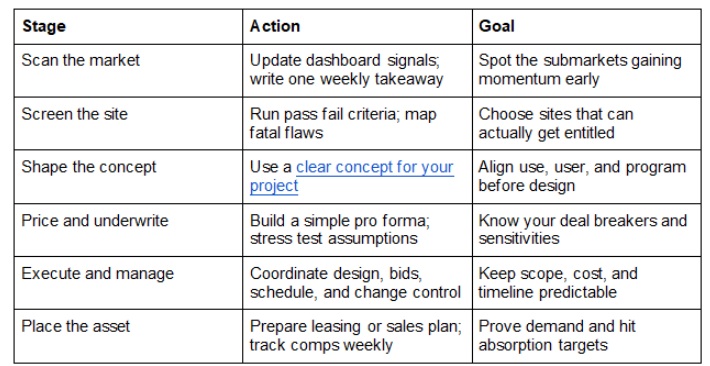
Run these stages in order, then loop back. Each pass gets faster because your screens sharpen, your underwriting improves, and your execution becomes easier to communicate to partners.
Common launch questions, answered
Q: What are the key challenges to expect when selecting a site for commercial real estate development?
A: The biggest challenges are entitlement risk, infrastructure constraints, and mismatched demand, all of which can turn a “great location” into a slow, costly hold. Start with a simple fatal-flaw list: zoning fit, access and utilities, environmental red flags, and realistic rent or sale comps. Because regulatory compliance requirements can stall momentum, confirm the approval path before you fall in love with the parcel.
Q: How can I effectively manage the complexity of coordinating with multiple professionals during a development project?
A: Pick one source of truth for scope, schedule, and budget, then run short, consistent check-ins with clear owners and deadlines. Use a decision log so design, legal, and construction choices do not get re-litigated every week. If you are early in your career, a tight agenda and written next steps can make you look seasoned fast.
Q: What strategies help reduce the stress and uncertainty associated with securing funding for commercial developments?
A: Treat capital like a process, not a pitch: clarify sources (debt, equity, incentives), then tailor one clean package per audience. Stress-test with conservative lease-up and higher-rate scenarios so surprises feel smaller. Ask lenders and investors what they need to see for a “yes,” then work backward from your milestones.
Q: What safety considerations are critical for protecting both workers and future residents on a construction site?
A: Start with a site-specific safety plan that covers access control, fall protection, trenching, and daily housekeeping, then verify it with documented toolbox talks. Build risk reviews into procurement, so subs know expectations before they mobilize. The core idea is real estate risk management, a step-by-step approach that identifies and addresses risks before they become claims or delays.
Q: If I’m feeling overwhelmed by the paperwork and organization needed to start my own real estate development venture, how can I simplify the process and ensure I’m on the right track?
A: Create one master checklist with three folders: entity and banking, deal and compliance, and investor and reporting, then add documents only when they support the next decision. Use templates for repeatables like meeting notes, underwriting assumptions, and consultant scopes to cut cognitive load. If you are comparing formation or planning help, more information is available at zenbusiness.com.
Turn Southwest Deal Know-How Into a Real Development Career
Southwestern development can feel like a constant tug-of-war between opportunity and the reality of permits, capital, and risk. The steadier path is the mindset this guide has emphasized: confidence building for new developers through repeatable success strategies in real estate, realistic underwriting, and long-term career planning that assumes setbacks and keeps moving. Apply it and the noise quiets down, decisions get simpler, relationships deepen, and overcoming development challenges becomes a practiced skill instead of a surprise. Momentum comes from small, disciplined decisions made before you feel ready. Choose your next three moves this week, one learning step, one relationship touchpoint, and one deal-screening action, and put them on the calendar. That consistency is what builds a durable, resilient career that can ride the cycles and still grow.