Industrial & Logistics Sector Market Summary – Global + Tucson | November 2025
TUCSON, AZ (December 5, 2025) — The global industrial and logistics sector in late 2025 is characterized by steady demand, shifting supply dynamics, and a growing divide between modern, high-spec facilities and older, less functional products. Consumer expectations for rapid delivery continue to anchor industrial demand worldwide, particularly for same-day and next-day fulfillment. At the same time, companies are increasingly reshoring or nearshoring manufacturing to strengthen supply-chain resilience, reduce exposure to geopolitical uncertainty, and shorten distribution routes. These strategic adjustments have heightened the importance of labor availability, power capacity, transportation efficiency, and sustainable facility design within occupier decision-making.
Globally, vacancy rates are expected to drift upward despite a slowdown in new construction. Much of this is attributable not to oversupply, but to the mismatch between tenant requirements and the existing inventory of older buildings. As demand shifts toward more technologically advanced and energy-capable properties, investors have become far more selective, paying premiums for modern assets while pricing secondary buildings at deeper discounts. Even so, investment activity is rising as financing conditions improve and confidence returns to the sector. Leasing momentum also remains resilient, driven by tenants with expiring leases who must make long-term occupancy decisions despite broader market uncertainty. Landlords in many regions are responding with increased rent flexibility and concessions.
Against this global backdrop, the Tucson industrial market experienced a softer third quarter of 2025 but remains relatively stable compared to other major Southwest metros. Market-wide vacancy increased to 6.3 percent, up 90 basis points from the prior quarter, largely due to significant move-outs rather than systemic weakness. The departure of Black & Decker from two Southeast submarket locations alone accounted for roughly 330,000 square feet returning to the market, contributing heavily to the quarter’s negative net absorption of 355,839 square feet. Despite these shifts, Tucson’s vacancy rate remains below its 10-year average of 7.1 percent and far below Phoenix’s 11 percent vacancy during the same period.
Availability climbed from 3.3 million to 3.8 million square feet as several submarkets adjusted to the influx of returned space. The Southeast and North Central areas experienced the most pronounced increases, whereas the Airport and East Central submarkets posted modest improvements. Average asking rents continued their upward trajectory, rising to $0.84 per square foot NNN. The Northwest submarket recorded the largest rental escalation, with average asking rates increasing from $0.90 to $1.10 per square foot. Despite negative overall absorption, the market still registered meaningful leasing activity of more than 183,000 square feet, including notable move-ins by Roller Bearing Corp. and Schnitzer Properties in the Airport area, which was the only submarket to record positive net absorption for the quarter.
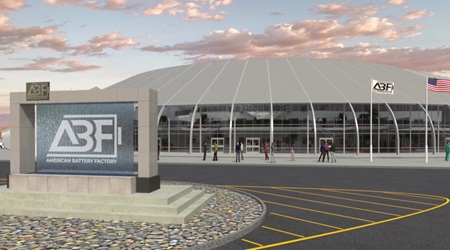
Development activity in Tucson remained steady, with just over one million square feet under construction and no new groundbreaking occurring during the quarter. Nearly 900,000 square feet of that pipeline is speculative, underscoring developer confidence in Tucson’s long-term fundamentals. Several transformative projects remain in the planning phase, including American Battery Factory, Project Blue, and Beale Infrastructure’s proposed 290-acre data center in the Southeast submarket. These developments are expected to generate thousands of jobs and deliver an estimated $3.6 billion in statewide economic impact once fully realized.
From a capital markets perspective, the Federal Reserve’s recent rate cut—from 4.00 to 4.25 percent—has improved investor sentiment heading into year-end. CBRE forecasts that local investment volume could rise from earlier expectations of 10 percent to nearly 15 percent by the close of 2025, bolstered by anticipated additional rate cuts and a more favorable lending environment. If these conditions materialize, Tucson may see accelerated absorption and improved market velocity in the coming quarters, even as vacancy remains elevated in the short term.
Taken together, global industrial logistics trends and the Tucson market’s Q3 performance reflect a sector navigating transition rather than contraction. Demand remains present, capital is returning, and development continues to align with long-term growth drivers. In Tucson, near-term vacancy pressures appear tied to isolated corporate consolidations rather than structural softening. With major projects on the horizon, improving financing conditions, and continued tenant activity, the market remains positioned for renewed momentum as 2026 approaches.
Read the full Tucson Industrial Report here.