Inflation and rising borrowing costs temper commercial real estate momentum
(September 18, 2026) — Inflation remained stubborn in August as rising energy and transportation costs added new pressure to the economy and complicated the outlook for commercial real estate, according to research from Marcus & Millichap.
The Consumer Price Index increased 3.4% from a year earlier and 0.4% from July. Core inflation, which excludes food and energy, rose 2.4% annually and 0.3% for the month. Both monthly readings were the highest since May.
Energy prices were a major contributor to the increase. Gasoline accounted for more than one-third of the monthly rise in headline inflation, while higher airline fares contributed to growth in core services costs. The energy index increased 2.1% in August after declining during the previous two months, and transportation services rose 0.5%, its largest monthly increase since March.
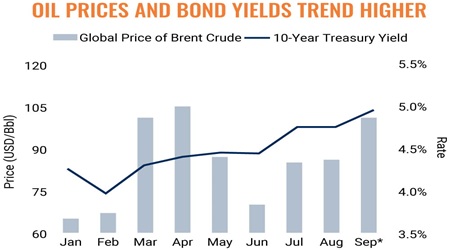
Those pressures have intensified amid hostilities in the Persian Gulf. Brent crude oil recently climbed above $100 per barrel, while the national average price of diesel exceeded $6 per gallon in September for the first time.
Higher energy costs are not the only inflationary concern. Elevated and frequently changing tariffs could further increase the cost of imported consumer goods, construction materials and business equipment. At the same time, substantial federal borrowing requirements are creating additional competition for investor capital.
Together, those factors have placed upward pressure on long-term interest rates. The yield on the 10-year Treasury briefly reached 5% on Sept. 14, returning to a level last touched in 2023 and otherwise unseen since 2007.
For commercial real estate, persistently high long-term rates could delay the recovery in transaction activity. Borrowers continue to face expensive financing, refinancing challenges and reduced leverage. The higher cost of debt also makes it more difficult for buyers and sellers to agree on property values.
Lender liquidity remains relatively strong, according to Marcus & Millichap, providing some support for acquisitions. However, prolonged inflation and elevated Treasury yields could limit the pace of transaction growth as investors adjust their return expectations and underwriting assumptions.
Development is also becoming more difficult to justify. Higher financing, construction material and operating costs are reducing project feasibility across several property sectors. While that could limit new construction in the near term, slower development may eventually benefit existing properties by restricting future supply.
The industrial sector faces additional pressure from rising fuel and transportation expenses. Distribution and logistics tenants operating truck-intensive networks are particularly exposed to higher diesel and freight costs, which could affect margins and decisions about warehouse locations and space requirements.
Industrial net absorption during the first half of the year roughly kept pace with new supply, holding the national vacancy rate at 7.8% in June. Vacancy has remained unchanged since September 2025 but is still at its highest level in more than a decade.
Construction activity is now slowing, which should ease competitive supply pressures and provide some protection against further vacancy increases. Existing industrial properties could benefit over the medium term as fewer new projects reach completion, although softer tenant demand and rising distribution expenses remain near-term concerns.
Overall, the August inflation report points to continued uncertainty for commercial real estate. Higher energy costs, tariffs and federal borrowing needs could keep interest rates above previous norms, prolonging financing challenges and limiting transaction momentum. At the same time, reduced construction could help rebalance property markets once current economic pressures begin to ease.
Sources: Marcus & Millichap Research Services, Bureau of Labor Statistics, Federal Reserve and AAA. Data as of Sept. 14, 2026.