La Rosa Blooms in Tucson: A Historic Monastery Reimagined as a Cultural Landmark
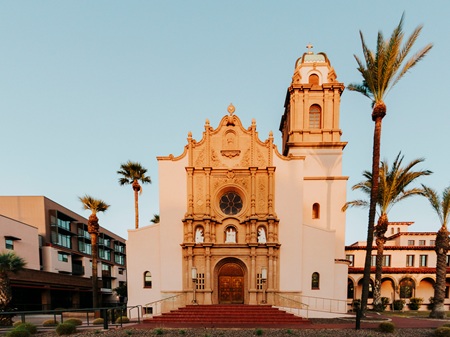
TUCSON, AZ (December 15, 2025) — One of Tucson’s most recognizable historic buildings has begun a remarkable new chapter. The former Benedictine Monastery on Country Club Road, 800 N Country Club Rd, celebrated for its pink stucco exterior, Spanish Revival arches, and distinctive dome, has been thoughtfully reintroduced to the community as La Rosa, a live-music and cultural venue that honors its past while embracing Tucson’s creative future.
From Sacred Sanctuary to Civic Landmark
Completed in 1940 and designed by renowned architect Roy Place, the Benedictine Monastery served as the home of the Benedictine Sisters of Perpetual Adoration for nearly 80 years. For generations of Tucsonans, the monastery stood as a place of quiet devotion and reflection, a serene counterpoint to the city’s steady midtown growth.
Affectionately known as the “Pink Rose of the Desert,” the monastery’s architectural grace made it one of Tucson’s most photographed and cherished landmarks.
In 2017, declining membership led the Sisters to relocate to their motherhouse in Missouri. The property was subsequently sold to local developer Ross Rulney, who committed to preserving the historic heart of the site while integrating it into a broader mixed-use redevelopment.
Preserving History Through Adaptive Reuse
Rather than allowing the structure to deteriorate or be erased, the redevelopment team prioritized the preservation of the monastery’s chapel and primary building, embedding them within a thoughtfully designed modern neighborhood.
That decision laid the groundwork for La Rosa.
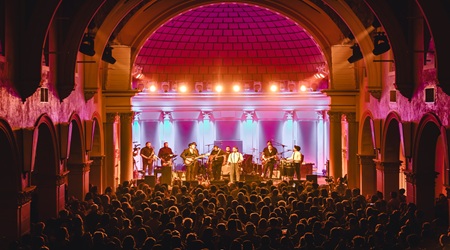
Between 2024 and 2025, the former chapel underwent a careful transformation into an intimate music and arts venue. The space retains its soaring ceilings, ornate arches, and historic character, now complemented by modern lighting, acoustics, and gathering areas.
The operators describe La Rosa as a place where “Tucson’s history meets Tucson’s creative future.” Visitors encounter a familiar façade and a dramatically preserved interior—reimagined to welcome the public in an entirely new way.
A Cultural Anchor for Midtown
La Rosa debuted its first public events in October 2025, quickly drawing residents eager to experience the iconic building in its new role. Today, the venue hosts live music, art exhibitions, community events, and private gatherings—activities far removed from its original purpose yet deeply connected to its spirit.
Surrounded by the mixed-use community now known as The Benedictine, La Rosa serves as the emotional and architectural centerpiece of the redevelopment. Preservation advocates and local leaders have praised the project as a successful model of adaptive reuse, demonstrating that historic stewardship and urban growth need not be mutually exclusive.
Carrying the Legacy Forward
The rebirth of the Benedictine Monastery as La Rosa reflects a broader shift in Tucson’s urban evolution—one that values history as an asset rather than an obstacle. While the building’s function has changed, its essence remains intact.
Every arch, tile, and beam carries the memory of its past. La Rosa invites the public to step inside that legacy, experiencing a treasured Tucson landmark not as a relic, but as a living, vibrant part of the city’s cultural landscape.
For a complete list of events and ticket information, visit the official La Rosa website Calendar | La Rosa Tucson