Lake Mead’s rising water line brings relief — but shortages may not be over
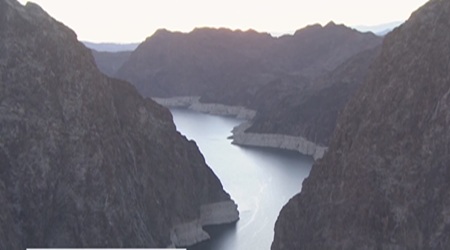
(February 25, 2026) — The Bureau of Reclamation is reporting Lake Mead has climbed to its highest level since May 2021, buoyed by a mix of aggressive conservation and improved hydrology across the Colorado River Basin. The rebound is welcome news for the roughly 40 million people who rely on the river system, but it does not end the region’s water crunch. Federal projections still anticipate shortage conditions in 2026 for Arizona, Nevada, and Mexico — a reminder that the reservoir’s recovery, while real, remains vulnerable.
Where Lake Mead stands now
Bureau of Reclamation end-of-month data shows Lake Mead’s water-surface elevation reached 1,065.37 feet at the close of January 2026, a notable improvement from the crisis lows that prompted emergency conservation measures just a few years ago. Reclamation highlighted that milestone in a news release tied to its final Supplemental Environmental Impact Statement covering near-term Colorado River operations through 2026, crediting the rise to both hydrologic conditions and deliberate policy actions.
State agencies are also tracking the improvement. The Arizona Department of Water Resources has published periodic updates showing a steady upward trend. Still, the reservoir remains far below full pool — 1,221 feet — leaving a sizable deficit that translates into tens of millions of acre-feet of “missing” water. That gap is why water managers continue to emphasize that a few dry years could quickly unwind recent gains.
California conservation played a major role
A dominant factor behind Lake Mead’s rise has been voluntary conservation in California, where agricultural and urban users account for a large share of Colorado River demand. Over a two-year period, agencies and tribes collectively kept more than 1.2 million acre-feet in the system through conservation and storage agreements, according to the Colorado River Board. That amount is roughly equivalent to about 16 feet of elevation in Lake Mead — a striking illustration of how policy choices can materially shift reservoir conditions.
Much of that water was conserved in 2023 and 2024 through temporary, compensated arrangements intended to prevent Lake Mead from approaching critically low levels that would have triggered deeper mandatory cuts. The agreements — which run through the end of 2026 — pay participating users to leave water in the river rather than divert it for farms, cities, or industry. The scale and coordination of these programs set them apart from earlier drought responses: instead of waiting for wet winters, basin partners effectively “banked” conserved water, buying time as states and the federal government negotiate longer-term operating rules for the post-2026 era.
Federal outlook still points to 2026 shortages
Despite the higher reservoir level, Reclamation’s modeling continues to signal ongoing shortage conditions. In an August 2025 release outlining 2026 operating assumptions, the agency projected Lake Mead would remain in a Level 1 shortage tier, with a baseline expected elevation near 1,055.88 feet. That figure sits roughly 10 feet below the end-of-January 2026 reading — underscoring the difference between a single month-end snapshot and an anticipated average after a year of releases, evaporation, withdrawals, and variable inflows.
A Level 1 shortage means reduced allocations again in 2026 for Arizona, Nevada, and Mexico, with Arizona absorbing the largest cuts — primarily affecting agricultural users in central Arizona. Nevada and Mexico face smaller reductions in absolute terms, but those losses still matter in systems already relying heavily on conservation, recycling, groundwater, and demand management. In short, the visible improvement at Lake Mead does not yet translate into a return to pre-drought reliability.
The upstream question: snowpack, Powell, and spring runoff
Lake Mead’s near-term trajectory depends heavily on what happens upstream at Lake Powell and in the Rocky Mountain snowpack that drives Colorado River runoff. Hydrologists watch inflow projections from the Colorado Basin River Forecast Center for early signals of how much water may be available in a given year. For Water Year 2026, those forecasts still span a wide range of possibilities: late-winter storms could reinforce gains, while a warm, dry spring could flatten — or reverse — the trend.
Reclamation folds those inflow expectations into its 24-Month Study, which models potential reservoir elevations under minimum-, most-probable-, and maximum-scenario conditions. Those projections inform annual operating plans, shortage tiers, and release schedules between Powell and Mead. Meanwhile, Reclamation’s reservoir dashboard allows near-real-time tracking of storage in acre-feet and as a percentage of average — giving communities a clearer picture of whether the rebound is holding as the snowmelt season unfolds.
Real progress — and a fragile recovery
Lake Mead’s rise is not just a feel-good headline. The reservoir has climbed dozens of feet above its most perilous lows, and coordinated conservation has demonstrably improved the system’s near-term outlook. But the recovery remains fragile. Mead is still hundreds of feet below full pool, leaving little cushion against a return to extended drought or a string of below-average runoff years. Climate change is also expected to intensify evaporation and reduce the efficiency of snowpack as a natural “water bank,” raising the bar for how much conservation may be needed to maintain stability.
That reality leaves policymakers with a tightrope to walk. Recent programs show that voluntary, compensated cutbacks can move the needle quickly when backed by funding and coordination. Yet the continuation of formal shortage tiers into 2026 signals that those measures are, at best, a bridge. The hard work ahead is turning a short-term, policy-assisted rebound into durable, long-term rules that align Colorado River use with a drier future — and keep Lake Mead safely above crisis thresholds even when hydrology turns less forgiving.