Lion Energy Takes Stake in American Battery Factory, Adding Momentum to Planned Tucson Gigafactory
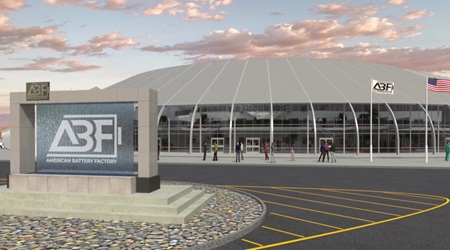
TUCSON, AZ (April 15, 2026) — Lion Energy has announced a strategic partnership with American Battery Factory, taking an equity position in the company and linking the deal to battery cell production planned for ABF’s Tucson gigafactory in Pima County. Lion said the partnership is aligned with ABF’s recently announced offtake agreements tied to the Tucson plant, which the companies say now account for more than 4.5 gigawatt-hours of initial production capacity.
The announcement adds another commercial signal around the long-discussed Tucson battery project, which ABF broke ground on in October 2023. At that time, the company said the Tucson facility would be a two-million-square-foot lithium iron phosphate battery cell gigafactory, serve as its global headquarters, and generate more than 1,000 jobs, with an estimated $1.2 billion in capital investment.
ABF’s Tucson project is planned within Pima County’s Aerospace Research Campus, south of Tucson International Airport and near Raytheon. Pima County describes the campus as a large-scale industrial property intended to support aerospace, supply chain, manufacturing, and export-oriented users.
In its April 8 announcement, Lion said the partnership is intended to strengthen its access to U.S.-made prismatic lithium iron phosphate cells for residential, commercial, and industrial energy storage systems. The company also said new U.S. battery assembly lines are scheduled to come online in June, positioning Lion to integrate domestic cell supply as ABF’s production comes online.
For Tucson, the significance lies less in a finished factory than in continued market validation. While the plant remains a planned project, Lion’s investment and supply alignment suggest ABF is continuing to build commercial relationships around its Arizona manufacturing strategy. That matters in a region that has been pushing to expand its advanced manufacturing and energy-storage footprint.
If completed as envisioned, the project would further position the Tucson area within the domestic battery supply chain at a time when manufacturers and energy-storage companies are increasingly emphasizing U.S.-based production, domestic content, and supply-chain security.