RL Brown, Arizona Housing Market Pioneer with Tucson Ties, Dies at 90

RL Brown
RL Brown

PHOENIX / TUCSON (June 12, 2026) — RL Brown, a pioneer in Arizona housing market analytics whose influence extended from metro Phoenix into Tucson, died peacefully at his Sun City home on May 17. He was 90.

Brown was widely regarded as the first independent housing analyst in metro Phoenix and became a trusted source for builders, developers, land brokers, and real estate professionals across the state. In 1985, he co-founded Home Builders Marketing Inc. with his wife, Joann, creating what became one of Arizona’s most respected sources for housing data and market analysis.

Brown’s company also had a Tucson connection. John Strobeck opened Bright Future Marketing (Orange Reports) in the early 90’s, applying RL’s business model to the Tucson housing market.  In 2019, Home Builders Marketing acquired Bright Future Real Estate Research, LLC, Strobeck’s firm, which was then owned and run by Ginger Kneup, extending Brown’s data-driven housing analysis into Southern Arizona.

Brown’s career began long before his role as a housing analyst. He served as a 1st Lt. tank commander in the U.S. Army from 1957 to 1963 and later worked for several homebuilders before launching his own research company.

Industry leaders described Brown as a pioneer who helped professionalize housing market data in Arizona.

“He was a pioneer in analytics,” said Tom Ruff, who recently retired as a data analyst for The Information Market. “He was the first independent housing analyst in Phoenix.”

Nate Nathan, president and designated broker of Scottsdale-based Nathan & Associates Inc., was among Brown’s earliest clients and said Brown’s work helped shape how the industry understood growth, permits, subdivisions, and housing demand.

“He was the industry leader for years,” Nathan said. “He kept his company relevant through all the changes in the world. He knew the market as good or better than anybody. He had a knack and a talent to convert graphics and numbers to maps that truly told the story. As they say, a picture says a thousand words.”

Brown’s stepson, Jim Daniel, now serves as president of Home Builders Marketing and continues the company’s work. Daniel recalled Brown’s diligence in gathering data, including reviewing property value affidavits and preparing reports by hand, before those efforts evolved into the company’s monthly Phoenix Housing Market Letter.

“We’re very diligent about all the data, which has proven over time that our data is accurate, timely, and affordable,” Daniel said.

Daniel said Brown had an instinctive understanding of the housing market and a rare ability to recognize what was happening before it became obvious to others.

“RL always had his pulse on what was actually happening in the housing market in the Valley,” Daniel said. “I feel he’s been able to pass down a lot of that insight.”

Garth Wieger, founder of Scottsdale-based Montage Holdings, said Brown was among the first to study the housing market in detail and use technology to make that information accessible to builders and developers.

“I go back 40 years to 1981/1982, and he’s always been there,” Wieger said. “Growing up with his data, I’ve remained dedicated to that because it’s something that was easily understood. He had great instincts and great data to help give guidance with. He’ll be missed in the industry for sure.”

For Arizona’s homebuilding industry, Brown’s legacy is not only the company he built, but the standard he helped establish for reliable, timely, and understandable housing data. His work gave builders, developers, and real estate professionals a clearer view of fast-changing markets — including Tucson — at a time when dependable local housing intelligence was becoming increasingly important.

A small group of family and friends gathered on May 26 to celebrate Brown’s life, honoring his request that no extensive arrangements be made.

Redemption Tucson Buys Former Chofetz Chaylm Synagogue Property in Tucson for $1.2 Million

Redemption Tucson

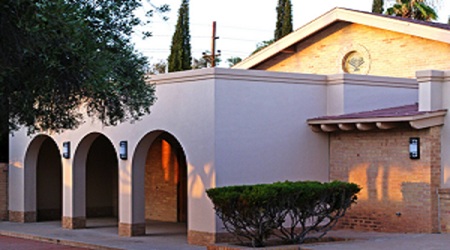
TUCSON, ARIZONA (June 11, 2026) — Redemption Tucson purchased the former Chofetz Chaylm Jewish Synagogue property at 5150 E. 5th Street in Tucson for $1.2 million.

The seller was Chofetz Chaylm Southwest Torah Institute Inc. of Tucson.

Built in 1984, the specialty property includes two masonry buildings totaling 7,429 square feet on 1.96 acres in Tucson’s east submarket. The sale price equates to approximately $161.53 per square foot.

The property includes a main sanctuary and supporting facilities, one building of approximately 6,649 square feet and a second building of approximately 783 square feet. The site is zoned R-1 and was acquired as an owner-user transaction.

Redemption Tucson is currently located at 633 N. 2nd Avenue in Tucson.

Jeramy Price with VOLK Company represented the seller. Danny Roth with Omni Brokerage represented the buyer.

For more information, Price can be reached at 520.441.4771, and Roth at 520.490.4000.

Source: RED Comp #12521


Tucson Returns to National Top 30 for Renter Demand as Phoenix Interest Grows

Renter Demand

TUCSON, ARIZONA (June 11, 2026) — Tucson is drawing more attention from renters as the summer moving season gets underway, breaking back into the top 30 most sought-after cities by renters in the country for the first time in more than a year, reflecting a significant rise in Renter Demand.

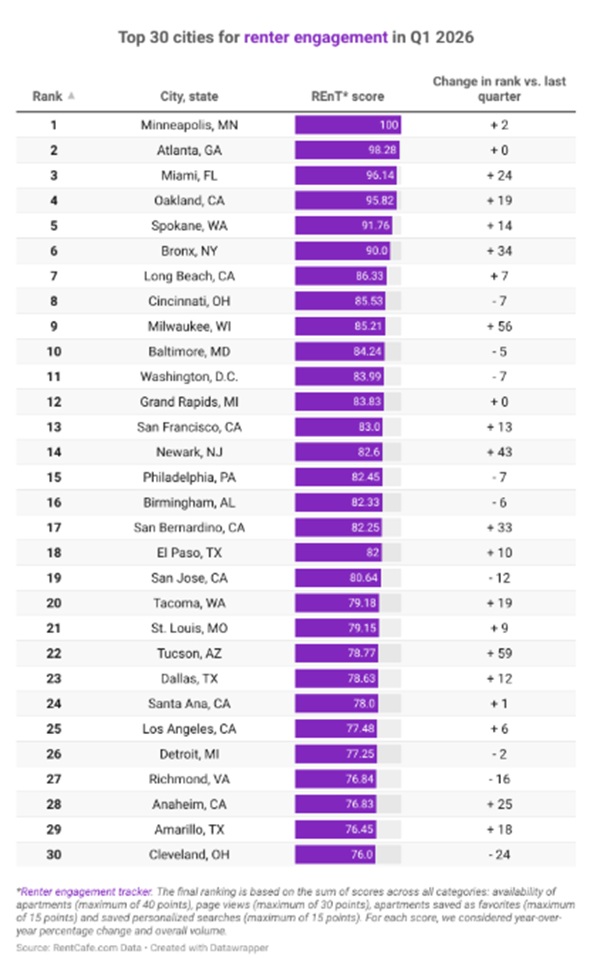
According to the latest RentCafe.com Renter Engagement Tracker, Tucson ranked No. 22 nationally, reflecting stronger renter activity at the apartment-search stage and growing interest from nearby Phoenix.

The increased Renter Demand is largely attributed to the influx of new residents from nearby Phoenix, seeking more affordable living options.

The RentCafe.com Renter Engagement Tracker, known as REnT, is a recurring report built from millions of renter interactions on RentCafe.com. The report tracks behavior such as page views, favorited properties, saved searches, and available listings to measure which cities are gaining momentum among apartment hunters. The latest report ranked Minneapolis as the most sought-after city for renters entering summer 2026, followed by Atlanta and Miami. The West led all regions with 11 cities in the top 30.

For Tucson, the numbers indicate a market with more available inventory and more serious renter engagement.

Available apartment listings in Tucson on RentCafe.com increased by 10% in the first quarter, giving renters more options as interest in the market rises. Favorited properties were up 11%, while saved searches increased 14% heading into summer. Those gains suggest renters are not just casually looking at Tucson; they are actively comparing properties, saving options, and preparing to make decisions.

At the same time, browsing activity was down 2%, which RentCafe interpreted as a sign that renters may be narrowing their choices more quickly rather than continuing to scan the market broadly.

One of the most notable findings is the source of the interest. Phoenix ranked as the second-largest source of inbound searches for Tucson apartments, nearly matching local interest. Tucson also drew renter traffic from larger western markets, including Las Vegas and San Francisco.

That Phoenix-to-Tucson interest is especially significant for Southern Arizona. As housing costs, traffic, and growth pressures continue to shape the Phoenix metro area, Tucson offers a different value proposition: a major university city, a growing employment base, access to health care, defense, logistics, and technology sectors, and a lifestyle that remains distinct from the state’s larger metro.

The data also comes as Tucson continues to see new multifamily development and investment across the region. More available listings can sometimes signal softer conditions, but in Tucson’s case, the increase is being matched by stronger renter engagement. That combination suggests the market is giving renters more choices while still attracting active demand.

For apartment owners, developers, and property managers, RentCafe’s findings indicate an increasingly regional renter pool. Tucson is not only competing for local renters; it is being considered by renters in Phoenix and other western cities who may be looking for affordability, lifestyle, education, employment opportunities, or a lower-density alternative to larger metros.

The timing is also important. Summer is traditionally one of the busiest periods for moving, and renter behavior in the spring often provides an early look at where demand may be headed. Tucson’s return to the national top 30 suggests the city is back on the radar for apartment hunters at a key point in the leasing cycle.

The broader takeaway is positive for Tucson’s rental housing market. After more than a year outside the top tier of RentCafe’s renter engagement ranking, Tucson has re-entered the national conversation. With listings up, saved searches rising, and Phoenix renters showing growing interest, the city appears to be benefiting from both new apartment options and renewed attention from renters across the region.

For Southern Arizona, that is another sign that Tucson’s growth story is not just about population numbers or construction activity. It is also about perception. More renters are looking at Tucson, saving Tucson properties, and considering the city as a place to live.