Lincoln Property Company Closes Largest Arizona Industrial Building Sale of the Year with Luke Field Transaction

Sale brings Lincoln to 2.5M s.f. of new metro Phoenix industrial space sold in the last 30 days

GLENDALE, Arizona, (December 5, 2025) – Full-service commercial real estate firm Lincoln Property Company (Lincoln) and Goldman Sachs have announced the sale of the 1.27 million-square-foot “Building C” industrial building at Luke Field to a Fortune 500 company. The deal marks the largest industrial building sale in Arizona this year. It is the first tenant commitment at Lincoln’s recently completed Luke Field – a 140-acre, 2.4 million-square-foot LEED Gold Certified logistics park in Glendale, Arizona.

Located at 13803 and 13543 Northern Ave., and 7733 Litchfield Rd. in Glendale, Arizona, Luke Field spans three Class A industrial buildings: a 695,750-square-foot Building A, 454,761-square-foot Building B, and 1.27 million-square-foot Building C.

Each building features 40’ clear height, 25’ tall glass entries, 3,000 amps of power (expandable), automated dock doors, steel moment frame shear bracing, and 5’ x 10’ clerestory windows providing sky views and natural light. The project also offers Lincoln’s trademark “creative industrial” amenities, including barbecue stations, a shaded outdoor dining area, and employee collaboration spaces.

Logistically, Luke Field is bordered by Luke Air Force Base, Litchfield Road, Northern Avenue, and the high-capacity Northern Parkway, offering a direct, rapid connection between the Loop 303 and Loop 101/US 60/Grand Avenue.

From a sustainability perspective, Luke Field ranks among a select group of new metro Phoenix Class A industrial projects that are LEED Gold Certified, emphasizing locally sourced materials, operational efficiency, and long-term cost savings.

“Our vision for Luke Field was to create a premier industrial environment for major corporate tenants, offering them sophisticated industrial space with integrated features that promote employee health, well-being, and productivity,” said Lincoln Property Company Executive Vice President John Orsak. “Its prime location also makes Luke Field a logistics powerhouse. We appreciate the trust being placed in this building by our first official tenant, and look forward to ongoing success as we continue to field strong prospect interest in the project’s remaining available buildings.”

“Like all of our industrial deliveries, Luke Field represents the kind of forward-looking investment that strengthens our regional economy and creates meaningful opportunities for our businesses and workforce,” said Lincoln Property Company Senior Executive Vice President David Krumwiede. “We’re proud of this latest delivery and the many ways it will serve tenants and the market at large.”

Luke Field “Building C” is Lincoln’s second major metro Phoenix industrial building sale announcement this quarter. In October, the company announced the sale of a 1.25 million-square-foot building within its Park303 development to Dollar Tree. That project brings the 210-acre, 3.75 million-square-foot Park303 logistics park to 83% leased or sold to Walmart, Dollar Tree and Logisticus Group LLC.

Corporate neighbors to Luke Field include Boeing, Microsoft, White Claw, XPO Logistics, UPS, REI, SubZero, Daimler-Benz, Red Bull, Ball Corporation, Aldi and Williams Sonoma.

Lincoln serves as the property manager and leasing agent for Luke Field. JLL’s Marc Hertzberg and John Lydon represented the buyer in the “Building C” acquisition.

Lincoln is actively fielding lease and acquisition interest for Luke Field Buildings A and B. To discuss Luke Field availability or for general leasing and development opportunities with Lincoln, call Krumwiede or Orsak at (602) 912-8888.


Industrial & Logistics Sector Market Summary – Global + Tucson | November 2025

industrial and logistics sector

TUCSON, AZ (December 5, 2025) — The global industrial and logistics sector in late 2025 is characterized by steady demand, shifting supply dynamics, and a growing divide between modern, high-spec facilities and older, less functional products. Consumer expectations for rapid delivery continue to anchor industrial demand worldwide, particularly for same-day and next-day fulfillment. At the same time, companies are increasingly reshoring or nearshoring manufacturing to strengthen supply-chain resilience, reduce exposure to geopolitical uncertainty, and shorten distribution routes. These strategic adjustments have heightened the importance of labor availability, power capacity, transportation efficiency, and sustainable facility design within occupier decision-making.

Globally, vacancy rates are expected to drift upward despite a slowdown in new construction. Much of this is attributable not to oversupply, but to the mismatch between tenant requirements and the existing inventory of older buildings. As demand shifts toward more technologically advanced and energy-capable properties, investors have become far more selective, paying premiums for modern assets while pricing secondary buildings at deeper discounts. Even so, investment activity is rising as financing conditions improve and confidence returns to the sector. Leasing momentum also remains resilient, driven by tenants with expiring leases who must make long-term occupancy decisions despite broader market uncertainty. Landlords in many regions are responding with increased rent flexibility and concessions.

Against this global backdrop, the Tucson industrial market experienced a softer third quarter of 2025 but remains relatively stable compared to other major Southwest metros. Market-wide vacancy increased to 6.3 percent, up 90 basis points from the prior quarter, largely due to significant move-outs rather than systemic weakness. The departure of Black & Decker from two Southeast submarket locations alone accounted for roughly 330,000 square feet returning to the market, contributing heavily to the quarter’s negative net absorption of 355,839 square feet. Despite these shifts, Tucson’s vacancy rate remains below its 10-year average of 7.1 percent and far below Phoenix’s 11 percent vacancy during the same period.

Availability climbed from 3.3 million to 3.8 million square feet as several submarkets adjusted to the influx of returned space. The Southeast and North Central areas experienced the most pronounced increases, whereas the Airport and East Central submarkets posted modest improvements. Average asking rents continued their upward trajectory, rising to $0.84 per square foot NNN. The Northwest submarket recorded the largest rental escalation, with average asking rates increasing from $0.90 to $1.10 per square foot. Despite negative overall absorption, the market still registered meaningful leasing activity of more than 183,000 square feet, including notable move-ins by Roller Bearing Corp. and Schnitzer Properties in the Airport area, which was the only submarket to record positive net absorption for the quarter.

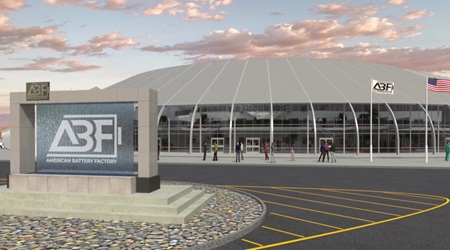
Development activity in Tucson remained steady, with just over one million square feet under construction and no new groundbreaking occurring during the quarter. Nearly 900,000 square feet of that pipeline is speculative, underscoring developer confidence in Tucson’s long-term fundamentals. Several transformative projects remain in the planning phase, including American Battery Factory, Project Blue, and Beale Infrastructure’s proposed 290-acre data center in the Southeast submarket. These developments are expected to generate thousands of jobs and deliver an estimated $3.6 billion in statewide economic impact once fully realized.

From a capital markets perspective, the Federal Reserve’s recent rate cut—from 4.00 to 4.25 percent—has improved investor sentiment heading into year-end. CBRE forecasts that local investment volume could rise from earlier expectations of 10 percent to nearly 15 percent by the close of 2025, bolstered by anticipated additional rate cuts and a more favorable lending environment. If these conditions materialize, Tucson may see accelerated absorption and improved market velocity in the coming quarters, even as vacancy remains elevated in the short term.

Taken together, global industrial logistics trends and the Tucson market’s Q3 performance reflect a sector navigating transition rather than contraction. Demand remains present, capital is returning, and development continues to align with long-term growth drivers. In Tucson, near-term vacancy pressures appear tied to isolated corporate consolidations rather than structural softening. With major projects on the horizon, improving financing conditions, and continued tenant activity, the market remains positioned for renewed momentum as 2026 approaches.

Read the full Tucson Industrial Report here.


Over 374,785 SF of Small-Bay Industrial Real Estate Sold in Arizona

Small-Bay Industrial

Phoenix & Gilbert, Ariz (December 5, 2025) — Commercial Properties, Inc./CORFAC International (CPI), Arizona’s largest locally-owned commercial real estate brokerage, is pleased to announce the sale of 374,785 square feet of Industrial Small-Bay real estate.

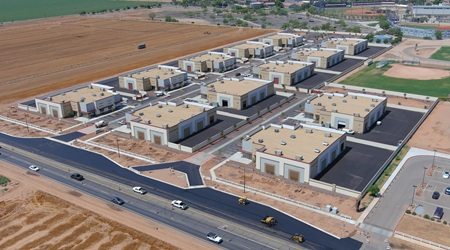
Power Commerce Park – A 146,052 square foot Class A Industrial Small-Bay Complex in the Southeast Valley of Phoenix, Arizona, consists of 12 buildings for 16 tenants. Built in 2023, it was strategically designed and built to be the highest quality industrial buildings with yards, allowing for total flexibility to the tenant’s needs. The site is adjacent to the Elliot Road Tech Corridor and Phoenix-Mesa Gateway Airport, and is just minutes from Arizona State University-Polytechnic Campus. The Loop 202 and US-60 offer exceptional freeway connectivity.

David Bean, of The Leroy Breinholt Team, stated, “We were fortunate to be a trusted partner with Mr. Dale Cavan from the very start of this project, identifying the raw land to develop this project. Power Commerce Park, developed by Cavan Commercial, delivered an exceptional small-bay industrial product that is underserved in the Phoenix marketplace. We advised throughout the construction process, handled pre-leasing, and, once the project was fully leased, CPI promoted the property for sale as a Class A Investment, representing the seller, Dale Cavan of Cavan Commercial.”

The buyer was Richard Scheinfeld of Top Ten Properties. Power Commerce Park sold for $55,000,000 / $376.57 per square foot.

Top Ten Properties portfolio –  A 228,733 square foot portfolio of Industrial properties in Phoenix, Arizona, consists of Carleton Square at 1711-1741 W Rose Garden Lane, Top 10 Business Center located at 4845 & 4855 W McDowell Road, and Valley Commerce Center at 4810 – 4828 S 40th Street. The owner, Richard Scheinfeld, decided to sell off these assets in an off-market deal. Scheinfeld commented, “The Leroy Breinholt Team at Commercial Properties, Inc./CORFAC International, helped me identify an opportunity to trade out some properties to invest in a newer small-bay industrial project and get top dollar for my existing properties located in Phoenix. This enabled me to reinvest in a newer product type for my portfolio that wouldn’t have happened without the Leroy Breinholt Team and David Bean’s help.”

The buyer, SpeedBay, purchased the Top Ten Properties portfolio as their first acquisition in the Phoenix market. KBC Advisors represented the Top Ten Properties portfolio, and it sold for $43,750,000 / $191.27 per square foot.

For additional information, please contact David Bean at [email protected] or (480) 214-1105, or Cory Sposi at [email protected].