Navigating Emotional Support Animal Laws in Arizona’s Rental Market

Emotional Support Animal Laws

By: Dan Miller, Manager,  Fast ESA Letter

(November 12, 2025) –– Emotional Support Animals (ESAs) are the life-changing partners for many Arizonans dealing with anxiety, PTSD, or other mental health conditions. But as their presence grows in apartments and rental communities, ESAs are also reshaping how tenants, landlords, and even the broader housing market operate.

Let’s explore how ESAs influence every side of the housing experience in Arizona, and what both renters and property owners should know to handle these changes with clarity and confidence.

How ESAs Are Changing Rental Policies

Property managers and landlords across Arizona are adapting their policies to comply with federal Fair Housing Act (FHA) regulations. Under the FHA, individuals with valid ESA documentation cannot be denied housing or charged additional pet fees because of their emotional support animal. This protection ensures fair treatment for renters while maintaining balance for property owners.

The Rise of ESA Letter Scams

Unfortunately, the increase in ESA awareness has also given rise to ESA letter scams, websites that promise instant approvals or sell “certifications” and “registrations.” These services have no legal value and often mislead tenants, leaving them vulnerable to housing disputes.

A legitimate ESA letter will always include:

  • The mental health provider’s license details
  • Official letterhead and signature
  • A clear statement of need for an emotional support animal

Tenants should always verify the credibility of their ESA documentation to avoid complications or rejection by landlords.

How to Get a Legitimate ESA Letter Online in Arizona

Getting a legitimate ESA letter online in Arizona is quick and straightforward. Follow these simple steps to ensure your approval is both fast and legally valid.

Step 1: Connect with a Licensed Mental Health Professional

Choose a trusted platform like Fast ESA Letter that connects you directly with an Arizona-licensed therapist or psychologist.

Step 2: Complete a Professional Evaluation

In a brief audio or video consultation, the LMHP will assess your mental health needs and confirm whether an Emotional Support Animal can benefit your well-being.

Step 3: Receive Your ESA Letter 

Once approved, you’ll receive your official ESA letter within 24–48 hours, fully compliant with federal laws and ready for housing use.

ESA Rights and Responsibilities for Tenants and Landlords in Arizona

As Emotional Support Animals become more common in Arizona housing, it’s essential for both tenants and landlords to understand their legal rights and obligations under the Fair Housing Act (FHA).

Tenant Rights

  • Tenants with a valid ESA letter can request to live with their animal even in “no-pet” housing.
  • Landlords cannot charge deposits, pet rent, or added costs for an Emotional Support Animal.
  • Tenants only need to provide legitimate ESA documentation, not personal health details.

Tenant Responsibilities

  • The ESA letter must be issued by a licensed Arizona mental health professional and contain the provider’s information.
  • ESAs should not cause damage or pose health or safety risks to others.
  • General property regulations, such as noise or cleanliness policies, still apply.

Landlord Rights

  • Landlords can verify the authenticity of an ESA letter by confirming the provider’s license and contact details.
  • If an ESA creates a direct threat or causes significant damage, landlords may request removal following proper legal channels.
  • Landlords must apply policies fairly and cannot deny housing based solely on the presence of an ESA.

Landlord Responsibilities

  • Landlords must review ESA accommodation requests promptly and without discrimination.
  • They are required to make reasonable accommodations for tenants with valid ESA documentation, even in “no-pet” properties.
  • Landlords should maintain the confidentiality of any medical or psychological information shared during the verification process.
  • They should establish clear communication with tenants to ensure ESA-related rules are understood and followed.
  • Property owners must also ensure that other tenants’ rights to safety and comfort are respected while honoring ESA protections.

Understanding these ESA rights and responsibilities ensures that both tenants and landlords in Arizona can navigate the housing process smoothly, protecting legitimate emotional support animals while maintaining fairness for everyone involved.

Conclusion

Emotional Support Animals have become an integral part of Arizona’s housing landscape, bridging compassion with compliance. For tenants, ESAs offer emotional stability and the assurance of fair housing access. For landlords, understanding ESA regulations helps maintain legal integrity and a balanced living environment for all residents. As awareness grows, it’s more important than ever for both parties to stay informed, verify documentation carefully, and communicate openly. When handled with mutual respect and clarity, ESAs can enhance not just individual well-being but also create more inclusive and understanding communities across Arizona.

For more information, Miller should be contacted at [email protected]


Tohono O’Odham 69 Lot Home Development Approved on Headley Road

Tohono O'Odham

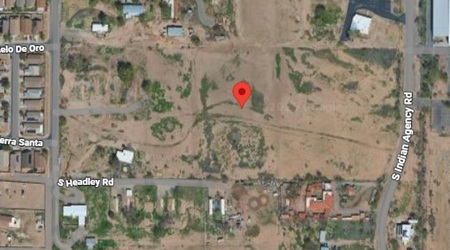
TUCSON, AZ (November 11, 2025) — The Tohono O’odham Ki: Ki Association, the tribally affiliated homebuilding organization that develops and manages housing for members of the Tohono O’odham Nation, has acquired two adjoining parcels at 6725 and 6765 South Headley Road in Pima County for a new residential community. The Nation paid $2.24 million ($3.40 PSF) for the land.

Together, the parcels total approximately 15.1 acres and are identified. The Pima County Board of Supervisors approved a rezoning and development plan for the property in late 2023, paving the way for a 69-lot single-family subdivision that will expand homeownership opportunities for members of the Nation in the Tucson area.

The project site, situated southwest of Valencia and Indian Agency Road, is located within an established residential corridor, offering proximity to schools, retail, and public services. According to county records, the rezoning from SR (Suburban Ranch) to CR-5 (Single Residence) was finalized by ordinance on March 19, 2024, following environmental and infrastructure reviews.

The Tohono O’odham Ki:Ki Association, headquartered in Sells, Arizona, has a long history of building and rehabilitating homes across the Nation’s districts. The Headley Road subdivision will mark one of its most significant off-reservation housing efforts in Pima County, part of a broader strategy to meet rising demand for modern, energy-efficient housing for tribal members living and working in the Tucson metro area.

The development timeline has not yet been announced, but preliminary plans indicate that infrastructure work and lot preparation will begin once engineering permits are secured.

Source: RED Comp #12154.


Lincoln Delivers Phase I of I-10 International Logistics Campus In Emerging Tucson, Arizona Airport Submarket

 I-10 International Logistics CampusCompany’s first-ever Tucson industrial project to total more than 1 million square feet at build-out

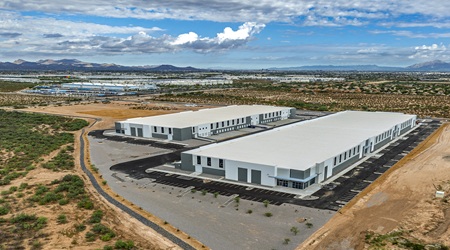
TUCSON, Arizona, (November 11, 2025) – Full-service commercial real estate firm Lincoln Property Company (Lincoln) has announced the completion of I-10 International Phase I, its first-ever ground-up industrial development in Tucson, Arizona, and the newest addition to Southern Arizona’s emerging Sonoran Desert industrial corridor.

Valued at $80 million, I-10 International Phase I sits on 79 acres at the southeast corner of Alvernon Way and Los Reales Road, two miles from a full-diamond interchange at I-10 and Valencia Road, within the Tucson International Airport submarket.

The project totals 373,811 square feet and includes two high-performing warehouse/distribution buildings: a 158,944-square-foot Building B and a 214,867-square-foot Building C. A fully designed, 188,434-square-foot Building A and a 476,000-square-foot Building D will be developed in line with market demand, bringing the project to more than 1 million square feet of prime Class A industrial inventory.

“This project’s strategic location and superior design are a valuable addition to Tucson’s limited pipeline of state-of-the-art industrial space,” said Lincoln Senior Executive Vice President David Krumwiede. “As long-established Arizona developers, we’re excited to bring this resource to the market, in a project that has been embraced by Tucson and its leaders since day one. We’re grateful for that support and very pleased to celebrate the completion of Phase I.”

Buildings at I-10 International Phase I are state-of-the-art, cold-capable structures with a 32’ clear height, 14’ tall glass entrances that create a modern and inviting presence. The buildings feature full concrete truck courts, generous use of clerestory windows to allow abundant natural interior light, and an R-38 insulated roof deck system that supports energy efficiency and long-term performance.

Like all of Lincoln’s new Arizona industrial developments, I-10 International follows a “creative industrial” vision, with unique amenities designed to attract and retain a new era of highly skilled and specialized employees. These enhancements include a best-in-class outdoor amenity space with shaded and landscaped areas, built-in barbecue equipment and seating for outdoor relaxing, dining and games.

“I-10 International’s next-gen features and people-first approach will support the most demanding modern user and set a new standard of quality for Southern Arizona industrial product,” said Lincoln Senior Vice President John Orsak. “We are proud to add it to our Arizona portfolio and confident it will only continue to grow in value and appeal.”

Elevated design details at I-10 International include architectural shade elements on the north and south elevations, shading adjacent landscaped outdoor amenity spaces. Each building is also differentiated in its design flexibility, able to accommodate up to six individual suites and a range of leasing configurations for current and future adaptability.

Brinkmann Constructors is the general contractor for I-10 International Phase I. The project’s design is a collaboration between architects Butler Design Group and Ware Malcomb. Jesse Blum of PICOR/Cushman & Wakefield is the exclusive leasing broker.

“I-10 International is more than a collection of buildings – it’s a catalyst for economic development in Tucson, thoughtfully designed to attract high-quality tenants and support the region’s growth,” said Ware Malcomb Principal and Phoenix Office Lead, Douglas Gullo. “We are honored to have contributed to this important project and look forward to continuing our work with Lincoln Property Company to further shape the industrial future of Southern Arizona.”

The I-10 International campus is situated minutes from Interstates 10 and 19, as well as Tucson International Airport, which is Arizona’s second-largest airport, serving over 4 million passengers annually. Collectively, these networks link I-10 International to more than 46 million people within a 500-mile radius.

I-10 International is situated within a Foreign Trade Zone and an emerging e-commerce market that is already home to companies such as Amazon, HomeGoods, Pepsi, FedEx, DHL, Intuit, and Raytheon.

For leasing information about I-10 International, please contact Blum at (520) 748-7100. To discuss ongoing development, acquisition, property management, or leasing opportunities with Lincoln in Arizona, call Krumwiede or Orsak at (602) 912-8888.