Pollack Snapshot: A quick analysis of important economic data released over the last week
 By: Elliott Pollack, The Monday Morning Quarterback
Higher than expected inflation reports led to a higher than expected rate increase by the Fed. All indications are that the Fed is deeply committed to getting inflation under control with the tools they have at their disposal and continued rate increases are expected over the next 18 months as long as high inflation persists. Last week’s meeting and the vote to increase the Fed Fund’s Rate by 75 basis points instead of the continued 50 basis point increases it had previously signaled sent a ripple effect across the markets and the overall economy. And while there is much of the equation outside of the Fed’s control, most notably the supply chain, all recent indicators point to a cooling economy.
The Fed has explicitly stated that recession is not the goal, but a slowdown is certainly an intended effect of their actions. So, although disappointing, none of the data should come as much of a surprise. Leading indicators declined for the second consecutive month, led by slowing housing construction, lower stock prices, and lower consumer expectations. Retail sales also declined in May, attributed to inflation, high gas prices, and higher borrowing costs for purchases such as cars. U.S. manufacturing grew, but at a slower rate than expected. And homebuilding starts and permits declined again in May. Homebuilder sentiment dropped once again, many pointing to the decrease in new home buyers and persistently high construction costs.
The stock market also fell into bear territory, meaning a 20% or more decline from the previous peak in early January. Stock market prices have historically been terrible predictors of recession. However, bear markets are more correlated to recession compared to the more common “correction” (a 10% or more decline in price).
All of this points to a greater likelihood of recession. The length and severity of recession, however, is still too early to predict. And just like the surprise the Fed gave everyone last week, a course reversal could happen just as quickly if economic stimulus becomes necessary again.
- The Conference Board Leading Economic Index declined 0.4% for the second consecutive month. The LEI level remained near all-time high levels, but the consecutive declines suggest weaker near-term growth, especially as the Fed fights inflation aggressively.
- Retail sales declined 0.3% in May. Consumers were affected by inflation, higher gas prices and interest rates which changed consumers purchasing decisions. May’s decline was the first month-over-month drop since 2022. There were declines in vehicle sales, furniture, online purchases and electronics as low inventory and higher rates (credit cards and car loans) pushed consumers to stop or postpone purchases.
- U.S. manufacturing continued to grow, but at a slower rate than expected. May’s level increased 0.2% to 105.7%. Economists’ expectations were for a 0.4% increase. While growth in the industrial sector is positive, the slowdown is another piece of evidence that the economy is slowing.
- As inflation and interest rates rise, prospective new home buyers have declined, bringing builder sentiment down, according to NAHB’s HMI index. June’s decline was the sixth consecutive monthly decline. Construction material costs continue to be high.
- Housing starts and permits declined again in May, according to the Census Bureau in its latest release. The SAAR for total starts dropped 14.4% from April and 3.5% from a year ago. Total permits increased 0.2% from a year ago, despite the 7.9% decline in single family permits.
- The Arizona Office of Economic Opportunity released non-seasonally adjusted employment figures for May and employment across the state fell by 5,500 jobs. The state averaged a loss of 6,700 jobs in May between 2010-2019. The majority of the losses were in the government super sector, with 6,700 jobs lost. The government sector includes state and local government education, which reported losses as the school year ended.
- Greater Phoenix and Greater Tucson reported job losses in May. Greater Phoenix lost 3,100 jobs and Greater Tucson saw a decline of 2,100 jobs.
- Year-to-date, the state is up 114,400 jobs. While the major metros of Phoenix and Tucson were up 85,400 and 14,700, respectively.
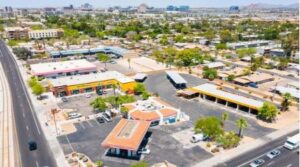 Phoenix, Arizona – ABI Multifamily, the leading multifamily brokerage and advisory services firm in the Western US, is pleased to announce the $4,750,000 / $56.67 Per Land SF sale of Apache & McClintock Development Opportunity, a land deal located at
  Joins executive leadership team, responsible for vision and growth of Scottsdale-based firm