Newmark Completes $6.25 Million Sale of Multi-Tenant Phoenix Shopping Center
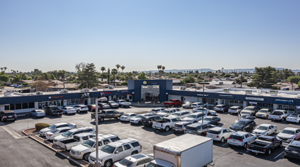
Phoenix, Arizona — Newmark announces it has completed the $6.25 million sale of Plaza 59, a 32,128-square-foot multi-tenant shopping center in Phoenix, Arizona. Newmark Senior Managing Directors Steve Julius and Jesse Goldsmith and Director Chase Dorsett represented the seller, Plaza 59, LLC (a Scottsdale-based private investor) in the trade to buyer 33rd Ave & Indian School Rd Pros RE, LLC. This represents the Newmark team’s second transaction working with the seller on this property.

“We helped our client purchase this property off-market in May 2020, during the thick of the pandemic and government shutdowns,” said Dorsett. “While some investors sat on the sidelines during this time period, our client had a vision to reposition this property and was willing to take on risk during an extremely uncertain time in the retail market.”

In the two years since purchasing Plaza 59, the seller made numerous capital improvements in addition to filling several vacancies.

“Our team was pleased to help successfully capitalize on this value-add opportunity for the client,” said Goldsmith. “The buyer was attracted to the dense, infill location, high traffic counts, and neighborhood-oriented tenant mix.”

At the time of sale, Plaza 59 was 95% leased to 20 seasoned tenants, many of whom have been in place long-term. Tenants at Plaza 59 benefit from a monument sign, lighted intersection, unobstructed visibility, and over 71,000 cars per day at the intersection. The property features a classic, L-shaped building layout with ample parking.

Located just west of downtown Phoenix, Plaza 59 is conveniently positioned between the two major interstate highways that cut through the metro area. The location also offers easy access to Sky Harbor International Airport, which is a 15-minute drive southeast. The intersection of Indian School Road and 59th Avenue is also home to Grand Canyon University Championship Golf Course, and within one mile of the property are several big box retailers, including Walmart Supercenter and Ross Dress For Less; multiple fast food restaurants such as McDonald’s, Wendy’s, and Panda Express; and Maryvale High School with a student population of 2,800.

Across the U.S., retail investment activity recovered substantially during the first quarter of 2022, according to Newmark Research. National retail sales volume increased 102.3% year-over-year to $18.6 billion, the strongest first quarter in five years. In addition to early pandemic favorites such as grocery-anchored retail, other retail segments such as strip centers have attracted investor demand in 2022. Overall consumer willingness to shop in stores has increased as COVID-19 restrictions are lifted across the country and foot traffic is being aided by trends such as “buy-online-pick-up-in-store”.


Want to see a moon rock? There’s one in downtown Tucson

By Kyle Mittan, University Communications
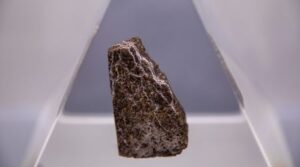
TUCSON, ARIZONA —  A lunar rock, collected during the 1971 Apollo 15 mission, is on loan until mid-August to the UArizona Alfie Norville Gem & Mineral Museum. Having the rock, museum staff say, provides visitors with a unique opportunity to see an “unadulterated” moon rock – the largest one NASA loans out to museums.

The rock can be found in the museum’s Mineral Evolution Gallery, the first gallery that guests enter as they leave the lobby. Kyle Mittan/University Communications

It took six days in space – and more than 18 hours of exploration on the moon’s surface – for NASA astronauts David Scott and James Irwin to collect the 170 pounds of lunar rocks they brought back to Earth as part of NASA’s Apollo 15 mission in 1971.

Anyone in the Tucson area this summer is probably no more than a half-hour car ride from a quarter-pound chunk of that haul.

A moon rock is on display through mid-August at the University of Arizona Alfie Norville Gem & Mineral Museum, thanks to a six-month loan from NASA. It arrived at the museum in early February, as the museum geared up for a grand opening in its new space at the Pima County Historic Courthouse during the annual Tucson Gem, Mineral & Fossil Showcase.

Weighing 4 ounces and measuring about 3 inches long, the rock is the largest sample that NASA loans to museums from its collection at Johnson Space Center in Houston, said Elizabeth Gass, exhibit specialist at the Alfie Norville Gem & Mineral Museum.

The rock can be found in the museum’s Mineral Evolution Gallery, the first gallery that guests enter as they leave the lobby.

“It’s a privilege to have this rock here,” Gass said. “Not every museum qualifies to have one because of the strict security protocols needed to keep the rock safe.”

Mark Kelly, a U.S. senator from Arizona and retired astronaut, was instrumental in helping the museum get the rock, Gass said. During a visit to the museum before its grand opening, Kelly noticed the museum did not have a moon rock and mentioned it to museum staff.

Later, before the museum had even filed an application for a moon rock loan, a NASA official called to ask whether the museum was interested.

Kelly, apparently, had reached out to his colleagues at NASA and “had made a good enough case that they called us,” Gass said with a chuckle. He also helped expedite the application process, she added.

NASA Deputy Administrator Pam Melroy, during a visit to the UArizona campus earlier this month, expressed gratitude to Kelly for his help in getting the rock to the museum.

“I think NASA can afford to give away a slice of that rock. Because we’re going back to get more,” Melroy said, referring to the upcoming Artemis missions, which aim to land the first woman and first person of color on the moon.

Apollo 15 was the first of NASA’s Apollo “J” missions, which provided astronauts more time to explore the lunar surface than previous Apollo trips. Scott, the mission’s commander, and Irwin, the pilot of the lunar module, made the trip to the moon’s surface; Alfred Worden, the mission’s third astronaut, piloted the command module and remained inside the module as it orbited the moon.

The lunar module touched down in the plains near Hadley Rille, a valley on the moon. The area looks like the foothills at the base of many mountain ranges on Earth, Gass said.

Scott and Irwin spent roughly three days exploring the area. The mission marked the first time humans drove a car on the moon, with the pair logging 17.5 miles in the rover.

The rock that now sits in the museum was collected at Station 8, a site roughly 410 feet from where the lunar module landed. Station 8 is also where the astronauts set up the Apollo Lunar Surface Experiments Package, or ALSEP, which NASA used until 1977 to collect data on the lunar surface.

The rock is a piece of mare basalt, a volcanic mineral found on the flat lowlands of the moon, said Gass, who is also a geologist. Those lowlands, she added, can be seen in images of the moon taken from Earth; they appear as darker, shaded areas, contrasted against the brighter areas, which are mountains. According to NASA, lunar basalts can be as old as 3.3 billion years – older than 98% of minerals found on Earth.

The rock is at least the second moon stone that can be found in Tucson. The Pima Air & Space Museum also has a rock, on permanent loan from NASA, on display.

The Alfie Norville Gem & Mineral Museum stands out from other mineralogy museums as a destination to see both gems and minerals; minerals are inorganic solids that occur naturally in Earth’s crust, while gems are minerals that have been combined with something else for aesthetics.

Although the moon rock is grounded in scientific discovery, there’s plenty to admire about it for those who just want to look at something pretty, Gass said.

“Seeing an unaltered, unadulterated moon rock is really special,” Gass said.

The Alfie Norville Gem & Mineral Museum is located at the Pima County Historic Courthouse, 115 N. Church Ave. The museum is open Wednesday through Saturday from 10 a.m. to 4 p.m., with the last tickets sold at 3. More information is available on the museum website.


REIM of Scottsdale Launches New Hybrid Brokerage Specializing in Urban Townhomes Amid Ever-Evolving Phoenix Market Conditions

SCOTTSDALE, ARIZONA – Real Estate Intelligent Marketing (REIM) of Scottsdale is joining forces with Craig Young and Nathan Ottosen of Yg|Ottounosen, also of Scottsdale, to launch a new hybrid brokerage venture with the aim to erase typical real estate silos by connecting commercial and single sale residential real estate services.

REIM brings deep experience and relationships with multifamily investors and developers and Young|Ottosen brings extensive new home sales including off-market transactions. The new hybrid brokerage targets small to medium size developers with a focus on urban townhomes.

Victoria Miachika and Deanne Miachika of REIM along with Young and Ottosen offer clients comprehensive services in residential real estate including single sale, forward purchase and bulk sale for lease or stabilization. Through the new venture, REIM is developing a new type of agent who better understands both the motivations of investors (buyers/sellers) and the mindset of developers. This holistic skill set guides clients to consider the entire spectrum of investment/divestment options for their assets.

Previously, apartments were built to be rented and new homes were built to be sold. With today’s hot market conditions, the limited supply across almost all product sectors has caused old models to shift, Ottosen said. Compressed CAP rates (or acceptable returns on investor capital) alongside unprecedented shortages in homes for sale are challenging what developers build and how, or even IF, they sell, Ottosen said

Approximately 40% of Phoenix’s residential inventory was sold to investors last year, according to the Arizona Republic. REIM and Y|O recognized the need for a brokerage team who understands this fast-changing market dynamic. Traditional residential and commercial brokerages are transaction focused to their product type. According to Victoria Miachika, senior manager of REIM, “There is a growing need for what we call a ‘hybrid broker,’ conversant in market metrics driving all residential real estate products to better guide developers, investors and home owners how to optimize their real estate choices for mutual success.”

Another driver is the growing concern around affordability and access to product and land. Recognizing NIMBY-ism is a challenge for high density rental apartments, REIM specializes in working with developers in evolving townhome product which allows for increased density but with less environmental and traffic impact to neighborhoods.

REIM recognizes townhomes as a key product for developers and investors (MF or SFR) that offers optional housing to high-density apartments or low-density single-family homes.

More than 75% of renters say they are interested in living in a community of single-family homes, according to RentCafe. Built-to-rent homes are expected to hit an all-time high in 2022 and Phoenix is the top metro in the country for the most single-family rentals, according to a recent Builder article. But with the rising cost of land and growing anti-density concerns, developers are starting to look at townhomes as a growing option, according to REIM.

“Townhomes are in high demand and very short supply, smaller supply than conventional single family detached. It satisfies a couple of key demand ‘wants’ – new, reasonable size, lock and leave, more affordable, more efficient, can be infill, good for Boomers and now Gen X’ers downsizing, good for Millennials too who don’t want to be in far edges,” said Mark Stapp, real estate expert and director of the Master of Real Estate Development program at Arizona State University. “As Phoenix has matured, competition for land within urban fringe is high and suitable parcels scarce and expensive. Townhomes are more acceptable to those who hate density.”

The new REIM venture is already proving fruitful for its clients. REIM recently provided a bulk forward purchase strategy to the developer of Arise, a 14-unit single-family townhome in North Central Phoenix, and found a qualified investor group for the purchase. The property was originally slated for single sale but after reviewing the strong rental market, compressed CAP rates, cost of sale and the ease of working with one buyer (vs. 14 individuals), the developer decided to execute a bulk forward purchase strategy.

“We had originally planned our Arise development as a single family attached, individual for sale community, however the REIM team presented an alternative presale bulk purchase option with a highly qualified buyer, which resulted in the sale to a single investor. Their investment analysis and capacity to execute a broad range of disposition options created a new opportunity we had not considered,” said Randy Rochford, the Arise project developer.

As Ottosen further explains, “We are hybrid brokers with a focus on a hybrid product that combines elements of commercial real estate with residential real estate in Phoenix’s new market conditions.”

REIM’s long-time, localized Phoenix market knowledge brings a more sophisticated and data-driven approach to deals. They are keenly focused on long-term relationships and building quality win-win deals over time vs. a more traditional transactional approach.

Young and Ottosen have 30 years of on-site new home sales experience including multiple new townhome community sell-outs in Phoenix. With an accurate pulse on the urban townhome market, they provide an unmatched understanding of what works and what doesn’t in new construction along with the knowhow to develop and execute strategies for sell-out.

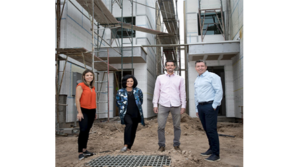
PHOTO: Real Estate Intelligent Marketing (REIM) of Scottsdale is joining forces with Craig Young and Nathan Ottosen of Young|Ottosen, also of Scottsdale, to launch a new hybrid brokerage venture. (L to R) Deanne Miachika and Victoria Miachika, both of REIM, and Nathan Ottosen and Craig Young, both of Young|Ottosen, at a project site. Photo Credit: Rick D’Elia