 Could the tumbling stock market actually have a positive effect on commercial real estate?
Quick takes:
- April retail sales strong
- Labor market remains tight
- Market decline’s silver lining
- Fed maintaining tack
- CRE outlook stays positive
JLL is reporting this week from the International Council of Shopping Centers (ICSC) in Las Vegas, held in person for the first time since before the pandemic. It makes a befitting backdrop to discuss the resilience of the U.S. consumer. For the better part of the last year, we have warned to watch what consumers do and not what they say. Despite all the significant headwinds they have faced and some very dour consumer sentiment readings, consumers continue to power the economy. While the equity markets focused last week on the earnings of retailers, retail sales continue to power ahead providing us with cautious optimism for retail and the broader economy. How do all these factors influence our outlook? Let’s address some key questions.
“… overall advance retail sales remain on track with our expectation of another strong year, even following record-breaking growth in 2021…”
April showers?
Consumers continued to rain spending on the economy in April. Last week’s release showed retail sales coming in just about on par with expectations. Thus far overall advance retail sales remain on track with our expectation of another strong year, even following record-breaking growth in 2021 which also lined up with our forecast. Most subcategories performed well, including the control series that feeds into GDP calculations. We continue to see signs of another projection of ours – consumers should gradually shift back toward services spending and away from goods spending. While the consumer remains so active, the economy should continue to perform well. As we mentioned last week, aggregate earnings growth (coupled with robust consumer balance sheets) continue to enable consumers. What does that practically mean for us? Keep a close eye on the labor market. While the economy continues to create so many net new jobs it provides hundreds of thousands of consumers with greater means to spend money. Any sign of trouble in the economy should almost certainly manifest in the labor market quickly. Thus far the labor market remains strong and incredibly tight. But unemployment claims have ticked up slightly in recent weeks, warranting a closer watch in future periods.
Helpful equity market declines?

The equity market’s decline in recent weeks has added jitters to an already jittery environment. At the time of this writing, the equity market has declined by roughly 18% since the end of 2021, reducing household wealth by roughly $14 trillion. Some see the stock market’s pullback as a sign of worsening trouble: not just as a leading indicator but the idea that reducing household wealth means reducing consumer spending (via the wealth effect) and a negative for the economy. Yet, its impact could prove ambiguous if not positive. How? Declining wealth could incentivize some people (especially older workers) to return to the labor force and earn income again. We have repeatedly noted the increase in labor participation in recent periods, including among older workers. The Fed is almost certainly hoping for such an outcome which would add supply to the labor market, helping to offset some of the excess demand for labor, embodied most clearly by the 11.5 million open jobs in the labor market.
“Declining wealth (from the pullback of the stock market) could incentivize some people (especially older workers) to return to the labor force and earn income again.”
Where does that leave the Fed?
Last week Chair Powell reiterated the Fed’s commitment to raising rates to tamp down the demand side of the economy, particularly in the labor market. With the labor market remaining so strong, the Fed sees some ability to remove some demand without disrupting economic growth. We continue to anticipate the Fed pushing toward our estimate of neutral, about 2.5%. As we have previously mentioned, with inflation still running so hot, the Fed likely has some ability to push past neutral to dampen growth. But it will have to proceed cautiously. Inflation presents a moving target. And higher interest rates are a machete, not a scalpel. Such an instrument typically produces collateral damage during tightening cycles. The Fed would likely accept this to a degree: some increase in, for example, the unemployment rate, if it meant less labor demand, more labor supply, and some cooling in wages. But if it goes too far in tightening, it could result in job losses and a downturn in the economy, the typical post-war recipe for a pullback.
What does it mean for CRE?
With the consumer remaining so active, the outlook for commercial real estate (CRE) remains positive. Retail continues to benefit most directly. While some have posited that a shift back towards services consumption portends trouble for the retail sector, that seems too pessimistic. Consumers should continue to spend in physical spaces, even as they shift back. Yet any such shift should occur gradually, and we continue to believe that some of the increase in goods spending should stick. That would also portend continued strong demand for industrial space. Industrial vacancy rates continue to hover near record lows with supply failing to keep pace with demand in many markets. And the return toward services spending hints at improvement in hotels with consumers returning to both leisure and business travel in a world with less disruption from the pandemic. If the check-in lines at hotels near ICSC this weekend provide any indication (even anecdotally), that shift is already occurring.
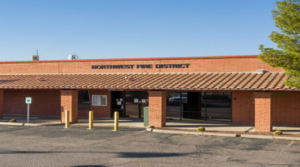 Tucson, AZ — Cadden Community Management Tucson Office to relocate to the old Northwest Fire Administration Building in Marana beginning June 1, 2022. The new office is located at 5225 W Massingale Rd in Marana.
 PHOENIX, ARIZONA – CDC Small Business Finance continues to lead economic development in Arizona, earning recognition as the top U.S. Small Business Administration lender in the state for 7A and 504 firms.