Phoenix-Based Cavco Unveils New Manufactured Home to Address Affordability
Cavco
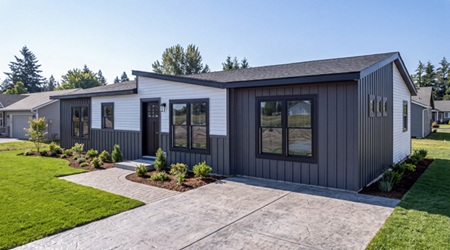
The Cavco Grande Arbor

PHOENIX, ARIZONA (Sept. 25, 2026) — Cavco Industries has introduced what it calls the first home built to federal manufactured housing standards without a permanent steel chassis, a change that could give builders more flexibility in how factory-built homes are designed and placed in neighborhoods.

The Phoenix-based company unveiled the Grande Arbor at the 2026 Innovative Housing Showcase on the National Mall in Washington, D.C. Cavco said a federal law enacted in July removed the requirement that homes built to the U.S. Department of Housing and Urban Development’s manufactured housing code retain a permanent steel chassis. The frame has traditionally remained beneath a manufactured home after it is delivered and installed.

Removing that requirement allows a home to sit lower on its foundation, potentially giving it an appearance closer to a site-built house. Cavco says the change also creates more design options and could help manufactured homes fit into urban and suburban developments. Whether a particular home can be placed on a property will still depend on applicable local rules.

The Grande Arbor is designed for households that want separate living areas under one roof. Its floor plan places a primary suite at each end of the home, with a shared kitchen, dining area and living room between them. Cavco is positioning the design for multigenerational households, including families with aging parents or adult children living at home.

“Addressing the affordable housing crisis remains a top priority for our company,” Cavco President and CEO Bill Boor said in the announcement. He said the showcase gives policymakers and the public an opportunity to see how the company is adapting its homes to buyers’ needs.

The Grande Arbor was built by Cavco’s team in Rocky Mount, Virginia, and displayed in partnership with UMH Properties. The same Cavco operation introduced the Anthem in 2023, which the company described as the first nationally available manufactured duplex approved by HUD.

For the housing industry, the significance of the Grande Arbor extends beyond one floor plan. The removal of the permanent chassis requirement gives manufacturers another way to build homes under the federal HUD code while addressing a feature that has long distinguished manufactured housing from other residential construction. Cavco has not announced a price or a timetable for broader availability of the Grande Arbor.



Pima County breaks ground on $30.3 million Middle Mile project

Middle Mile project
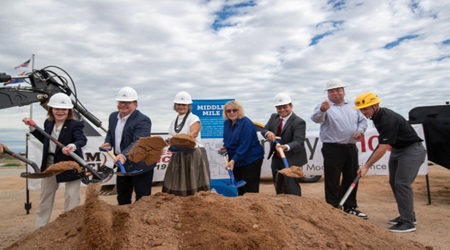
Middle Mile project Groundbreaking Sept. 24

PIMA COUNTY, (Sept. 25, 2026) — Pima County officials and partners broke ground Sept. 24 on the Middle Mile project, a 134-mile open-access fiber optic network designed to expand digital connectivity, support economic development and strengthen community resilience.

The groundbreaking at Three Points Fire Station, 7400 S. Sandario Road, marks the first segment of the project’s two-year construction schedule. The fire station, located along the route, serves as an important community anchor institution.

The Middle Mile project is coordinated by the Office of Digital Inclusion (ODI), whose mission is closing the digital divide by linking communities to affordable, high-speed internet access, increasing access to devices and tools, and providing opportunities for digital skill building. ODI’s work is directed by the Connect Pima action plan, which aims to improve broadband, digital skill-building opportunities, and access to devices.

“I’m thrilled to see us finally breaking ground on this project, and I can think of no better place to do it than Three Points,” said Pima County Board of Supervisors Chair Jennifer Allen, whose district includes Three Points. “Access to high-speed internet is not a privilege, it’s a right. It’s imperative that we close the digital divide for our rural residents so that internet service providers can focus on expanding service, speed and reliability.”

The National Telecommunications Information Administration (NTIA) in 2023 awarded Pima County a five-year $30.3 million grant through the Infrastructure Investment and Jobs Act to create a 134-mile open-access fiber optic ring around Pima County’s urban core.

The Middle Mile network will provide infrastructure internet service providers can use to expand high-speed internet access to underserved areas of Pima County. The “Middle Mile” is the fiberoptic bridge between Internet Service Providers and local internet service connections.

“Today’s groundbreaking represents a major milestone in advancing Arizona’s Middle Mile Strategic Plan and reflects years of collaboration between the ACA, ADOT, and Pima County,” said Sandra Watson, President and CEO of the Arizona Commerce Authority. “This final segment of conduit completes a critical connection from Nogales to Tucson, leading to increased opportunities for families, students, and businesses to access fast, reliable internet. We’re grateful to Governor Hobbs, ADOT, and Pima County, and we look forward to building on this momentum to expand broadband access and economic opportunity throughout Southern Arizona.”

“The Middle Mile Project is going to truly ‘Connect Pima’ by increasing access to affordable and reliable high-speed internet for everyone, particularly our rural neighbors,” said County Administrator Jan Lesher. “Ensuring access to the internet levels the playing field and equips our residents with the skills, tools and resources they need for economic stability, which is a key tenet of the County’s Prosperity Initiative.”

The Office of Digital Inclusion serves as the authorized representative for federal agencies involved with the project. Pima County’s IT, Project Design & Construction, and Conservation Lands & Resources departments are responsible for significant activities including coordination with contractors and engagement of state, federal, and tribal governments in the adherence to policies, procedures, and state/federal regulations.

“Our mission is to close the technological divide and ensure every member of the public has access to our digital world,” said ODI Director Michelle Simon. “Whether you’re on a tablet, laptop or phone, the whole world is now at your fingertips. We shouldn’t let a ZIP code determine who has access.”


The Hispanic Chamber partners with the County for One Pima small business safety grants

Hispanic ChamberPIMA COUNTY (Sept. 25, 2026) – The Southern Arizona Hispanic Chamber of Commerce will oversee a Business Safety and Beautification Grant Program in partnership with Pima County after the Board of Supervisors unanimously approved providing an initial $250,000 to fund the program at its regular meeting Sept. 22.

The small grant program is part of the One Pima Initiative championed by District 5 Supervisor Andrés Cano, who brought the multi-pronged initiative to the Board in 2025 that seeks to address public safety concerns, housing, addiction, and other issues through invigoration of existing County programs.

Qualifying small businesses will be able to apply for two types of grants, Community Improvement and Community Investment, for projects that seek to make safety and visual appeal improvements to the business. Grant awards will be up to $10,000. To be considered, grant proposals must include one or more of the following:

  • Safety Improvements, such as security cameras or exterior lighting;
  • Beautification Projects, such as murals, exterior painting or façade improvements;
  • Clean-Up and Restoration, such as graffiti removal, power washing, or exterior repair;
  • Placemaking Projects, such as improved landscaping, shade structures, or community-facing art.

“Pima County’s partnership with the Southern Arizona Hispanic Chamber of Commerce is a direct investment in the small businesses that anchor our neighborhoods. One Pima is our countywide effort to improve public safety, prevent homelessness, strengthen neighborhoods and support the small businesses that keep our local economy moving. This partnership puts that work into action by helping businesses become safer, stronger and more welcoming for the communities they serve,” Cano said.

The grants will be available to for-profit and nonprofit businesses, which must have 50 or fewer employees, have a physical, licensed business in Pima County that is in good standing with all regulatory agencies. Businesses that are members of a local chamber will get bonus points in the application evaluation scoring.

“Small businesses do much more than provide goods and services,” said Rob Elias, President & CEO of the Southern Arizona Hispanic Chamber of Commerce. “They create opportunity, employ our neighbors, support families, and help define the character of every community. When we invest in local businesses, we’re investing in the future of Southern Arizona.”

Interested businesses can begin applying for the grants Oct. 30 by visiting the Chamber’s website. 

Supporting small business is one of the priority areas of One Pima, especially aiding businesses in their safety and security needs. In the proposal submitted to the Board, the Economic Development Department outlined the intended benefits of the grant program:

  • Support small-business stability and growth;
  • Direct resources to underserved and rural communities;
  • Improve neighborhood safety and quality of life;
  • Encourage investment in shared commercial environments;
  • Enhance safety and security by helping small businesses make visible improvements;
  • Create safer and more welcoming neighborhoods;
  • Create vibrant commercial corridors that enhance connectivity;
  • Support and increase long-term economic prosperity and community resilience.

Funding for the project came from land sale proceeds realized from a large development project in the southeast valley commonly referred to as Project Blue.