Phoenix ranks #2 in U.S. for tech office leasing as sector outpaces all other industries nationwide

Accelerated adoption and investment propels tech as leading force in economic recovery

PHOENIX, ARIZONA – Phoenix ranks #2 in the nation for average annual growth rate in tech office leasing – a sector that is now the primary driver of the U.S. economic recovery, according to JLL’s latest research.

At the beginning of the pandemic, tech employment numbers declined, however losses were minimal by comparison to other industries. The sector has since made solid job gains with the largest technology companies leading the way. The top 25 technology companies by market capitalization added more than 600,000 workers from 2020 to 2021. Venture capital flows also reached record levels with $121 billion in funding nationwide from January through September 2021, and IPO activity achieved all-time highs during the same period.

Between 2010 and 2020, Phoenix experienced a 27 percent average annual growth rate in U.S. tech office leasing – second only to Raleigh-Durham, which achieved a 33 percent growth rate.

“Most tech tenants want the absolute nicest projects in town. This has placed metro Phoenix’s newest and best Class A office spaces in high demand, with tech tenants often competing for occupancy,” said JLL Managing Director Ryan Bartos. “When it comes to tech, however, one size does not fit all. Companies who need flexibility can also lean on Phoenix’s large inventory of high-quality sublease space and spec office product. The breadth of options here is a characteristic that sets Phoenix apart, allowing companies to deal with return-to-work office scenarios in their own way as they expand to meet what seems like unending demand for their products.”

“COVID-19 has been an accelerant for trends we were seeing prior to the pandemic, leading to increased use and dependence on all things digital,” said JLL Research Director Alexander Quinn. “What’s interesting is that, despite society’s increased appetite for digital solutions and even their own statements on when they’ll return to the office, big tech has increased its physical office share, indicating that even the most digitally native companies see a value for physical collaboration opportunities.”

In fact, major tech companies secured a record 15.3-million-square-feet of office space since early 2020.

Over half of the leases signed in the U.S. since Q1 2020 are expansions or new to market transactions. The larger leases occurred primarily at locations with higher quality amenities and modern, efficient and sustainable work environments, which major tech companies hope will attract workers back to the office.

In Phoenix, Bartos points to new build projects like The Grove on the Camelback Corridor and 100 Mill and Watermark in downtown Tempe, as well as heavily amenitized renovated spaces like CASA in North Phoenix or The Alexander in downtown Chandler as projects attracting significant tech leasing interest.

Phoenix also remains a center of gravity for talent, generating from its strong educational institutions, high quality of life and creative environment, leading to growth opportunities for companies of all sizes

Read full report here.


Board approves federal grants to aid tourism and hospitality industries with marketing, event assistance

PIMA COUNTY, ARIZONA – The Pima County Department of Attractions and Tourism was awarded $1 million in federal grant funding to assist the regional tourism and hospitality industries as they continue to struggle through the pandemic.

A portion of the funding will be used to support Tucson City of Gastronomy, which will receive $250,000 to use in creating new events that promote southern Arizona’s culinary culture, food festivals, and the designation of Tucson as a UNESCO City of Gastronomy.

“We know that culinary interests impact travel decisions and that since Tucson was named the first UNESCO Creative City of Gastronomy in the U.S., we have experienced significant local, national and international media attention, all helping grow our local economy through increased bed tax revenue, and growing food-related businesses and the industry as a whole,” said Diane Frisch, Director of Pima County Attractions and Tourism.  “The pandemic was devastating for so many of our local restaurants and food businesses, which represent a large part of our culinary identity and attraction to visitors. The development and promotion of new, successful events will be critical to the local industry’s recovery.”

The grant will require the creation of a new culinary festival that would offer a bilingual celebration of the history and culture of maize cultivation in southern Arizona. The Pueblos del Maiz Fiesta will be a month-long event that coincides with related events in three other cities.

The Pueblos del Maiz Fiesta will include street food, cooking demonstrations, film screenings, music and other live performances, and additional events to promote southern Arizona attractions, with the intention of growing the annual celebration into a destination event.

The grant also requires hiring of event planners to organize the events and collaborate with Visit Tucson on promotions and advertising.

“Tucson and southern Arizona’s creative food scene, based in our deep food history and multicultural food heritage, is no longer a secret,” said Jonathan Mabry, archaeologist and Executive Director of Tucson City of Gastronomy. “These new annual events and marketing campaign will amplify the benefits of the UNESCO designation for our tourism and hospitality sectors and make us even prouder of our community.”

Tucson City of Gastronomy is a nonprofit organization formed in 2016 to manage the UNESCO City of Gastronomy designation of Tucson and its southern Arizona foodshed.

Tucson was designated a UNESCO Creative City of Gastronomy in 2015, the first such designation in the United States. The designation celebrates the region’s more than 4,000 years of continuous habitation and cultivation. The designation also recognizes the unique culinary culture of the region that maintains gastronomic connections with the past.

In addition, $750,000 in grant funding will be used for Visit Tucson to help promote tourism in the southern Arizona region. Tourism-related businesses were hit especially hard during the pandemic as many people greatly reduced their travel and leisure spending.

The grant will assist in marketing the region to support the tourism and hospitality sectors. Visit Tucson will be charged with creating digital marketing campaigns in travel, tourism, leisure, and meetings publications with the purpose of generating travel interest in southern Arizona and Pima County.

These campaigns will focus on area attractions, major events, the climate, open space, gastronomy, outdoor adventure recreation, dining, and lodging deals.

The campaigns will target the region’s top peak-season markets, in particular cities with non-stop routes to Tucson International Airport. Dates of placement of the campaigns will be timed to maximize attention during the region’s peak months for travel and tourism.

The Pima County Board of Supervisors at its Tuesday, Feb. 1 meeting approved the two grants, funding for which come from the Coronavirus State and Local Fiscal Recovery Funds (CSLFRF), which the federal government established through the American Rescue Plan Act for state and local governments to help local economies recover during the COVID-19 pandemic.

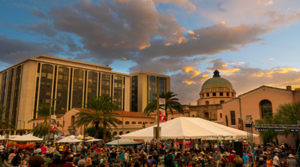
PHOTO: Tucson Meet Yourself


Industry expert Andrea Davis rebrands her successful Scottsdale brokerage firm Davis Commercial AZ; celebrates 10th anniversary

SCOTTSDALE, Arizona – Beginning a new chapter for her company and celebrating its 10th anniversary, Andrea Davis is pleased to announce a rebranded full-service commercial real estate firm, Davis Commercial AZ.

Formerly Andrea Davis CRE, the rebrand also includes a new website and move to a new office at 8160 E. Butherus Drive, in Scottsdale.

“While our brand identity has changed, our mission to help clients realize their commercial real estate vision, remains the same,” said Andrea Davis, CCIM, Principal of Davis Commercial AZ. “As we move into our next chapter, we will continue to develop strong relationships built on trust and communication while working on our clients’ behalf to secure all possible incentives in the marketplace.

“As we make our way into 2022, the rebrand allows us to better communicate the breadth of expertise our company truly represents,” Davis said.

Founded in 2002, Davis Commercial AZ is also celebrating its 10th anniversary. The office has grown to three full-time brokers and is looking to expand, Davis said.

During the past 10 years, Davis Commercial AZ has worked with owners, buyers, and tenants at The Venue in Scottsdale; Sundance Medical Center in Buckeye; Fountain Hills Medical Center; Buckeye Surgery Center; Sunrise Preschool; Value Truck; Mattress & Furniture Gallery; Meineke; Dutch Brothers; multiple office condo parks throughout Metro Phoenix; and a variety of warehouse and distribution centers.

“We doubled in size in the last two years, brought in new clients, outgrew our office, and added brokers to accommodate the growth,” Davis said.

The expansion of the team and client base inspired a rebrand and Davis Commercial AZ emerged from that vision, Davis said. The increased business volume compelled her to open an office in the Scottsdale Airpark. Davis has discovered what her clients go through when they purchase a commercial building and remodel. It was a humbling experience taking almost a year to move in.

Davis Commercial AZ closed more than 80 transactions totaling more than 625,000 in the past two years. The most notable transaction — a redevelopment deal in Old Town Scottsdale, The Venue — closed after two years in escrow. In addition, Davis closed a variety of other deals throughout the Valley and its expertise expanded to out-of-state locations like Nevada, Colorado, Oregon, Illinois, New Hampshire, and Tennessee.

“Arizona continues to be a hotspot for out-of-state companies, and we helped enthusiastic businesses relocate to the Valley from major cities like Seattle, Portland, and Chicago,” Davis said. “We anticipate continued steady growth in 2022.

“Despite current challenges, the commercial real estate outlook for 2022 is still bright. With cautious optimism, there will be new opportunities in urban and suburban markets, and Phoenix is one those Sun Belt metros leading the way,” she said.