Chamber of Southern Arizona Endorses Plan Tucson 2025 / Prop 417: A Roadmap for Growth, Housing, and Resilience

Plan Tucson 2025TUCSON, AZ (October 15, 2025) — The Chamber of Southern Arizona has formally endorsed Plan Tucson 2025, the City of Tucson’s updated General Plan, appearing on the November 4 ballot as Proposition 417. The Chamber’s Board of Directors voted unanimously in support of the measure, describing the plan as a forward-looking framework to guide the city’s next decade of growth, infrastructure, and economic development.

“We commend Mayor and Council for their vision in shaping Plan Tucson 2025,” said Joe Snell, President & CEO of The Chamber of Southern Arizona. “This plan lays the foundation for housing, transportation, water resiliency, climate preparedness, and economic growth. The Chamber supports this plan because it represents a roadmap to a more competitive and prosperous Southern Arizona.”

A Blueprint for Tucson’s Next Decade

Plan Tucson 2025 serves as the City of Tucson’s comprehensive general plan, outlining how the city will grow and invest over the next 20 years, with a ten-year review cycle. The update integrates dozens of area and departmental plans created since the last voter-approved plan in 2013, uniting them under a shared community vision centered on resiliency, equity, and innovation.

The plan is built around 14 goals and 190 policies, addressing everything from land use and housing affordability to transportation, climate adaptation, and workforce development. Key cross-cutting priorities—Governance, Equity, and Climate Resiliency—are embedded across all sections to ensure decision-making remains transparent, inclusive, and environmentally conscious.

Housing, Jobs, and Infrastructure at the Core

Among its most significant updates is a Future Growth Scenario Map, which identifies where Tucson should grow to meet projected population increases of roughly 24,500 residents by 2035. The map emphasizes housing near job centers, improved transportation corridors, and mixed-use development to promote accessibility and affordability.

Plan Tucson 2025’s focus on expanding workforce housing, protecting industrial corridors, and investing in infrastructure reflects a shift toward smart growth and economic stability.

“Plan Tucson 2025 sets priorities for the next decade of city growth and development—including land use, housing affordability, infrastructure improvements, workforce stability, and transparent governance,” the Chamber stated in a press release. “The plan’s focus on expanding housing near job centers will help stabilize Tucson’s workforce, and protecting industrial corridors will ensure the region remains competitive in attracting and retaining employers.”

A Collaborative Community Effort

The updated plan was developed over a three-year public engagement process that included more than 13,000 public comments, 18 working groups, and a series of community forums and surveys. That outreach helped refine the plan’s goals and identify areas for improvement—such as merging safety and wellness goals, clarifying economic priorities, and improving accessibility and implementation tracking.

Laying the Groundwork for a Resilient Tucson

The plan positions Tucson as a leader in sustainable urban growth, emphasizing water conservation, renewable energy, and climate adaptation while maintaining the city’s economic competitiveness. Implementation will be guided by performance indicators, budget alignment, and ongoing public participation to ensure accountability.

Business Leaders Urge a “Yes” Vote

“While Plan Tucson 2025 is a forward-looking blueprint for our city, The Chamber will be active in making sure the policies that stem from this align with business growth,” said Michael Guymon, Chief Advocacy Officer of The Chamber of Southern Arizona. “We urge voters to join the Chamber in saying YES on November 4 so that together we can deliver the housing, jobs, and infrastructure needed for Southern Arizona’s continued growth.”

If approved by voters, Plan Tucson 2025 will replace the current 2013 plan, providing a new roadmap for land use, housing, infrastructure investment, and economic opportunity—ensuring Tucson’s next decade of growth is both equitable and sustainable.

For more information about Plan Tucson, click here.



Christopher Todd Communities CEO Todd Wood Selected by GlobeSt. as a 2025 Influencer in Multifamily

Todd Wood

MESA, Arizona (October 15, 2025) – Todd Wood, CEO of Christopher Todd Communities, has been named a GlobeSt. 2025 Influencer in Multifamily Real Estate.

This recognition celebrates the top talent within the multifamily real estate sector. Recognized for their outstanding successes, the chosen Influencers stand out among their counterparts through solid track records, innovative approaches, and significant contributions to their company and/or the industry as a whole.

This honor shines a spotlight on the influential professionals who help shape the multifamily industry and create lasting impacts on the industry. A panel of industry experts selected the 2025 Influencers in Multifamily based on their professional accomplishments; how impactful their work has been; how dedicated they have been to furthering the industry; and how committed they have been to high ethical standards, service, and excellence.

“This year’s Multifamily Influencers reflect the dynamic forces reshaping the current housing market,” said Natalie Dolce, editor-in-chief of GlobeSt.com. “These honorees are pushing the industry forward; spearheading ambitious developments, advancing innovative housing solutions, and elevating standards for community-focused investment. The caliber of nominations underscores the sector’s remarkable depth of talent, and GlobeSt.com is proud to recognize those setting the pace for multifamily real estate now and into the future.”

Wood is being recognized not only for his trailblazing contributions as a developer in the build-to-rent (BTR) space, but also for his foresight in navigating the evolving real estate market through the strategic acquisition and turnaround of underperforming BTR communities across the country.

In a landscape shaped by changing capital flows, rising interest rates, and shifting renter preferences, Wood has demonstrated rare agility. Over the past two years, he has led Christopher Todd Capital in acquiring, rebranding, and repositioning distressed or overlooked BTR assets, improving both asset quality and the resident experience while protecting investor returns. Wood will be a speaker on a BTR panel this summer in New Orleans at Apartmentalize 2026, sponsored by the National Apartment Association (NAA).

The transition from purely ground-up development to opportunistic acquisition showcases his deep understanding of macroeconomic cycles and commitment to delivering smart growth without sacrificing the company’s operational or brand integrity.

“It’s an honor to be recognized by GlobeSt. at this pivotal time in our industry,” Wood said. “We’ve spent the past few years focused on turning around undervalued communities and proving that quality and consistency still win. I look forward to reentering the development side of the business soon – with new, innovative communities that reflect what we’ve learned – when the market is right.”

Christopher Todd Communities remains the only branded BTR cottage-style developments, known for its distinctive single-story homes with smart technology, private backyards, and a strong emphasis on lifestyle, security, and resident experience.

The 2025 Influencers in Multifamily Real Estate will be profiled in a feature article on GlobeSt.com on October 14. The chosen Influencers will also be recognized in a slide rotation
at GlobeSt.’s annual Multifamily Fall conference in Los Angeles on October 20, 2025.

For more information about Christopher Todd Communities, visit christophertodd.com.


Updated Pima Prospers plan puts County on track for next decade

Pima Prospers
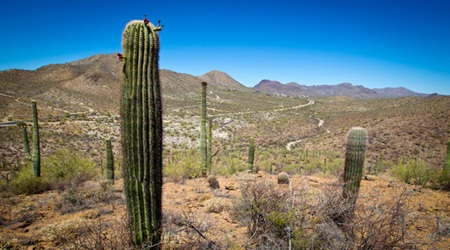
Painted Hills parcel near Speedway and Anklam, June 25, 2014 — slated for Pima County’s Open Space purchase.

PIMA COUNTY, (Oct. 15, 2025)Pima Prospers is aptly named. The latest version of Pima County’s comprehensive land use plan provides the County with a blueprint for the next decade, one that anticipates growth, addresses urgent challenges and promotes prosperity for all residents.

The Pima County Board of Supervisors voted 4-1 Oct. 14 to approve Pima Prospers 2025, a wide-ranging plan that embraces elements as varied as increasing housing, shoring up local water resources, attracting new businesses to the area, and protecting the pristine mountain trails and desert lands cherished by residents and visitors alike.

The plan covers the entire unincorporated County and is required by state statute. This is the third time the plan has been updated since 1992.

“This plan has been more than two years in the making,” said Chris Poirier, director of the Pima County Development Services Department.

“The County has worked hard to build on the successes of the previous plan, from 2015, by identifying and addressing the most critical issues facing our community, such as a continued economic downturn, reduced housing supply and choice, climate uncertainty, and the need for alternate modes of travel. We look forward to implementing the plan over the next 10 years.”

While preparing the latest update, the County sought feedback from its different departments as well as federal, state, tribal and regional agencies; neighborhood associations; and stakeholder groups such as Pima Association of GovernmentsMetropolitan Pima Alliance and the Pima County Regional Affordable Housing Commission.

Feedback was also sought from the general public, which submitted more than 150 comments during a 60-day review period earlier this year.

The plan draws on research by the University of Arizona’s Drachman Institute and other important County reports, such as the Prosperity Initiative, whose goals are reflected in the plan’s focus on affordable housing.

Among other goals, the new plan calls for increasing housing supply and diversity in the community, particularly starter homes, workforce housing, and “missing-middle” (duplexes, triplexes, etc.) housing in areas that have been identified as having the most expected growth – and thus the greatest subsequent housing needs – in the unincorporated County.

“Expanding the number of housing options available where people need them means lower costs, more choices, and a better quality of life for residents,” Poirier said.

Pima Prospers also commits the County to continuing to manage its open space lands and coordinating with other land management agencies to improve community health, preserve the County’s historic heritage, and help combat climate change.

Much of the plan builds on the County’s award-winning Sonoran Desert Conservation Plan and specifically the Plan’s Conservation Lands System (CLS), which balances the need for innovative land use and fiscal responsibility to preserve the County’s natural and cultural resources.

“Over the last quarter-century, the County has preserved over 3,000 acres of natural open space lands through the CLS,” Poirier said. “This updated plan reinforces the County’s commitment to serving as a responsible steward of our environment.”

The updated plan introduces a CLS goal that at least 70% of all lands set aside for conservation should be located closer to new development, rather than in other parts of the County, which helps to protect high-quality habitat.

“The Sonoran Desert Conservation Plan remains one of the most forward-thinking local conservation frameworks in the country,” said Kate Hotten of the Coalition for Sonoran Desert Protection in a letter of support for Pima Prospers. “We are proud to have played a foundational role in its development and ongoing implementation.”

The plan also incorporates the Multi-species Conservation Plan, which streamlines the protection of threatened and endangered species; the Pima County Department of Environmental Quality’s monitoring of air pollutants; and the mitigation of threats such as wildfires, flood risk, and encroachment of non-native species.

“This new policy reinforces Pima County’s balanced approach to accommodating growth while also prioritizing conservation,” Karen Howe of Tucson Bird Alliance wrote in a letter of support for the updated plan.

“As a local organization deeply involved in habitat restoration, we believe it’s crucial to maintain the County’s strong record with the Conservation Lands System by protecting land with high biological value in the areas most affected by development.”

Pima Prospers emphasizes the need to retain local businesses – not only major employers such as Raytheon and the University of Arizona, but also specialized local industries that thrive here, such as aerospace, astronomy, renewable energy, and optics manufacturing.

Thus, the plan commits the County to supporting those businesses by protecting them from nuisances such as noise, smoke, and dust, safeguarding the region’s night skies, and working with airports to preserve nearby areas for future job growth.

Comprehensive Plan can be found here: Pima Prospers 2025 | Pima County, AZ