Four Reasons CRE Deal Flow is Poised to Accelerate
(October 14, 2025) — After two years of tightened lending, pricing uncertainty, and transaction fatigue, commercial real estate investors may finally be approaching a turning point. In its new research video, Four Reasons CRE Deal Flow Is Poised to Accelerate, Marcus & Millichap outlines why 2025 could mark the beginning of a renewed wave of investment activity across U.S. markets.
The brokerage giant’s analysis points to four key dynamics now converging to improve liquidity, restore confidence, and set the stage for a more active transaction environment.
1. Capital Liquidity Is Returning
The first factor, according to Marcus & Millichap’s research team, is the visible increase in available capital. Institutional and private investors that sat on the sidelines during the peak-rate environment of 2023-24 are beginning to re-engage. The weight of unplaced equity—estimated at more than $200 billion globally—is now seeking opportunities as pricing expectations between buyers and sellers narrow.
“Investors are recognizing that waiting for perfect clarity has an opportunity cost,” the firm notes. With inflation easing and rate-cut expectations firming, the spread between cap rates and borrowing costs is stabilizing. That stability alone is enough to restore confidence for value-add, 1031-exchange, and income-focused buyers who had paused their activities.
2. Regional and Local Banks Are Lending Again
The second driver is credit availability. Local and regional banks—critical lenders for small- to mid-market deals—are cautiously returning to the market after a prolonged retreat. Throughout 2024, many community banks reduced exposure to office and multifamily debt amid regulatory scrutiny and deposit outflows. Now, as balance sheets strengthen and loan-to-value ratios reset, lenders are competing again for well-underwritten deals, particularly in stabilized retail, industrial, and single-tenant net-lease sectors.
This renewed lending appetite could prove decisive. Smaller banks account for nearly 70 percent of CRE loan originations nationwide, and their participation often determines whether deals in secondary markets—such as Tucson, Phoenix, and Albuquerque—actually close.
3. Positive Leverage Is Back on the Table
Perhaps the most encouraging trend is the return of “positive leverage.” As interest rates drift lower and price adjustments flow through, investors are once again finding opportunities where property yields exceed borrowing costs. During much of 2023, this relationship inverted, forcing buyers to accept negative leverage or raise additional equity.
With 10-year Treasury yields now trending below prior peaks and some lenders quoting sub-6 percent fixed-rate debt, many buyers can again structure acquisitions that generate immediate cash-on-cash returns. That dynamic, Marcus & Millichap argues, will expand the buyer pool and stimulate broader market liquidity.
4. Improving Fundamentals and Sector Rotation
The final reason for optimism lies in fundamentals. Despite the headlines, core property sectors have shown surprising resilience. Industrial vacancy remains historically low; neighborhood and service-oriented retail have rebounded; and well-located multifamily assets continue to demonstrate strong rent collections and absorption.
Meanwhile, developers have sharply curtailed new construction, limiting future supply. “As demand normalizes and new deliveries slow, fundamentals will tighten,” the firm concludes. This environment favors long-term investors seeking durable income rather than short-term speculative appreciation.
Implications for Arizona and the Southwest
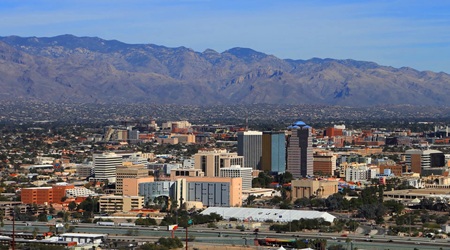
For markets like Tucson and Phoenix, these national forces could translate into renewed local velocity. Rising confidence among lenders and investors benefits regional developers, owner-users, and exchange buyers who depend on liquidity to reposition assets. Tucson’s industrial and retail segments—both supported by limited supply and steady in-migration—are well-positioned to capture early deal momentum.
Still, analysts caution that this recovery will be uneven. Distressed office assets, overleveraged multifamily projects, and properties with short-term rollover risk will remain challenged. Yet the broader message is clear: transaction conditions are improving, and patient capital is beginning to move.
Marcus & Millichap’s latest research suggests that 2025 may be remembered as the year the commercial real estate market found its footing again—not through exuberance, but through fundamentals, discipline, and a renewed flow of capital.
Source: Marcus & Millichap Research Services, Four Reasons CRE Deal Flow Is Poised to Accelerate (October 2025).
Watch the full discussion: marcusmillichap.com/research/videos/four-reasons-cre-deal-flow-is-poised-to-accelerat