What a $1.6B All-Cash Deal Tells Us About the Future of Multifamily Investing
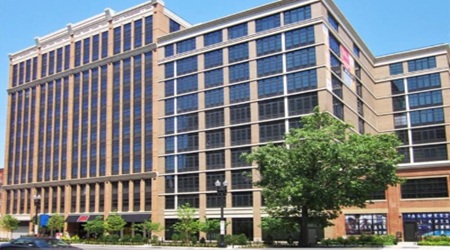
(August 18, 2025) — Cortland’s recent $1.6B acquisition of nearly 6,000 units from Elme Communities is more than just an institutional M&A headline. It gives us a detailed look at how major players are navigating today’s market and how passive investors can benefit by paying attention to these multifamily investing moves.

1. Institutions Are Buying With Discipline

Cortland paid a cap rate of about 5.6%, according to analyst estimates. That compares to Equity Residential’s 5% cap rate on a Sunbelt portfolio acquisition from Blackstone and KKR’s low-4% rate on premium assets from Quarterra. Cortland’s pricing reflects a desire for better yields and conservative underwriting in a higher-rate market.

What This Means for You
Institutional investors are no longer chasing low-yield deals. They are targeting stabilized assets at stronger returns. As a passive investor, you can follow this playbook by focusing on sponsors offering cash-flowing properties with a clear value-add path priced for today’s market, not yesterday’s.

2. All-Cash Offers Provide Strategic Advantages

Cortland paid all cash for this $1.6B deal. In a market where many buyers are struggling to secure financing or getting locked into expensive short-term loans, that kind of liquidity signals strength, but it is also strategic.

By acquiring the assets without debt, Cortland gained maximum control over timing and execution. There were no financing contingencies to slow the close, and they likely secured a more favorable price from Elme as a result. In this interest rate environment, that is a competitive advantage.

But perhaps more importantly, all-cash today does not mean no financing ever.

Owning the asset free and clear gives Cortland the option to refinance later on their terms. If interest rates drop, or if the properties perform better post-renovation, they can structure a favorable loan in the future. This could include a cash-out refinance, allowing them to return equity to investors without selling the asset.

What This Means for You
Sponsors with liquidity are not just writing big checks. They are setting themselves up for more control and lower risk. As a passive investor, this approach is a strong signal that the sponsor is prioritizing strategic execution over fast leverage. If your sponsor has the ability to delay financing until terms are more favorable, that is a level of prudence you want to align with.

3. Scale and Liquidity Create Optionality

This deal pushes Cortland to 80,000 units. Yet, they are also selling about 4,000 units from another portfolio to family offices and global capital partners. Buying in one area and selling in another allows them to refine their portfolio strategically.

What This Means for You
Invest with operators who think long term. Scale enables sponsors to adapt, exit poor performers, and double down where they see upside. Passive investors benefit from that flexibility by investing in funds or deals that are not locked into a single market or strategy.

4. Core Plus and Value-Add Are Back in Focus

Cortland is known for acquiring assets with room for improvement. This is not a trophy asset play. It is a Core Plus approach with post-acquisition upgrades baked into the business plan.

What This Means for You
If institutional firms are leaning into modest renovations and operational improvements to drive returns, that is a model worth paying attention to. You do not need ground-up construction or major rehabs to succeed. In fact, those might carry more risk right now.

5. Public-to-Private Deals Create Opportunity

This is not Cortland’s first REIT acquisition. In 2019, they acquired Pure Multifamily REIT and took it private. Elme, meanwhile, is planning to fully liquidate after this sale. Their challenge was scale. They were big but not big enough and could not thrive in today’s tougher capital environment.

What This Means for You
Assets from public REITs can trickle into private offerings. If your sponsor is buying from institutional sources or recapitalizing previously public deals, you might be gaining access to well-managed, professionally operated properties often at better valuations.

6. Capital is Flowing but Only Where There is Strategy

Evercore, Citi, Morgan Stanley, Goldman Sachs. These are the names involved in this transaction. Cortland did not need traditional brokers because they brought in high-level advisory teams and raised funds directly. The capital is out there, but only for groups that can execute at scale.

What This Means for You
Look for sponsors with strong capital relationships, proven track records, and conservative underwriting. These teams will continue to get deals done, even in a constrained capital environment.

7. Market Fundamentals Are Holding Steady

According to CBRE’s Q2 2025 report:

  • Cap rates on value-add deals averaged 5.2%
  • Net absorption hit a record 188,200 units
  • Vacancy fell to 4.1%
  • Annual rent growth held at 1.2%

Despite macro uncertainty, the fundamentals of multifamily remain resilient.

What This Means for You
Passive investing is not about market timing. It is about alignment with fundamentals. When occupancy is strong, demand remains steady, and operators are choosing deals with strong cap rates and clear upside, you can still find excellent opportunities.

Final Thought

The market is not frozen. It is focused. Capital is flowing where there is strategy, execution, and vision. Cortland’s acquisition is a perfect example. It is not about chasing deals. It is about executing when others hesitate.

As a passive investor, do not sit on the sidelines. Look for the signs of institutional conviction. Strong markets, fair pricing, experienced sponsors, and value-creating strategies. Then move with intention.

 

Ellie Perlman is the founder and CEO of Blue Lake Capital, a woman-owned multifamily real estate investment firm focused on partnering with family offices and accredited investors to build and preserve generational wealth. Since its founding in 2017, Blue Lake has successfully acquired and operated multifamily assets across high-growth U.S. markets, completing $1B+ in transactions. Ellie holds a Master’s in Law from Bar-Ilan University in Israel and an MBA from MIT Sloan School of Management.
You can learn more about Blue Lake Capital and Ellie Perlman at www.bluelake-capital.com.  

*The content provided on this website, including all downloadable resources, is for informational purposes only and should not be interpreted as financial advice. Furthermore, this material does not constitute an offer to sell or a solicitation of an offer to buy any securities.  


IPM Investments Enters Tucson Market with $16M Multifamily Portfolio Acquisition

IPM Investments

Top left: Villa El Con Casitas, right: Royal El Con Apartments; bottom: Royal Palms Apartments.

TUCSON, Ariz. (August 15, 2025) – CBRE has arranged the $16 million ($54,237 per unit) sale of a three-property multifamily portfolio in Tucson totaling 295 units, along with a 2.8-acre multifamily development site. CBRE’s Jeff Casper, first vice president, represented the seller, Desert Ventures LLC. Seattle-based IPM Investments acquired the portfolio, marking its first multifamily purchase in the Tucson market.

The Desert Ventures Portfolio included:

  • Royal Palms Apartments – 136 units built in two phases (1963 & 1965) on 4.13 acres with seven two-story masonry buildings. Recent upgrades include individual roof-mounted heat pumps, upgraded electrical panels, new steel entry doors with keyless entry, and pool renovations in 2017 and 2021.

  • Royal El Con Apartments – 150 units built in 1966 in the Miramonte neighborhood, featuring a mix of one- and two-bedroom units across one-, two-, and four-story buildings.

  • Villa El Con Casitas – 9 casita-style units.

  • Development Site – 2.793 acres zoned for multifamily.

The portfolio is strategically located near the University of Arizona and Banner University Medical Center, two of Tucson’s largest employers. Amenities include two swimming pools and two self-service laundry facilities.

“The portfolio’s strategic infill location and great bones perfectly position the communities for a transformational repositioning,” said Casper.

IPM Investments specializes in identifying, acquiring, and repositioning multifamily communities in the western U.S.

“We are excited to acquire these opportunistic multifamily communities for our expanding portfolio, and we look forward to adding value to the properties for our residents and investors alike,” said IPM Investments founder Frank Hornung. “Tucson has excellent underlying multifamily fundamentals, and we are bullish on the region’s future growth.”

Source: RED Comp #12038.

Photo: Top left: Villa El Con Casitas, right: Royal El Con Apartments; bottom: Royal Palms Apartments.


Low-Income Housing Tax Credit: Lifeline or Liability for Affordable Housing?

Low-Income Housing Tax Credit
Bisnow, Special Report, August 12, 2025 

(August 15, 2025) — In May, Chris Edwards, a fiscal studies expert at the conservative Cato Institute, testified before a House committee urging Congress to phase out the Low-Income Housing Tax Credit (LIHTC) program. He called it a “complex and inefficient solution to housing affordability” that drives up construction costs. A month later, The Wall Street Journal editorial board labeled the program a “boondoggle” that “has failed to stimulate more construction while increasing building costs.”

Despite such criticism, the program has recently received a significant boost. On July 4, former President Donald Trump signed tax legislation that increased LIHTC allocations by 12.5% annually, a move celebrated by elected officials and affordable housing industry leaders who see LIHTC as critical to housing low-income Americans.

Another win for the industry came on August 5, when the Federal Housing Finance Agency doubled the cap on LIHTC investments for Fannie Mae and Freddie Mac to $2 billion each. The Affordable Housing Tax Credit Coalition estimates this expansion will help produce an additional 1.2 million affordable housing units.

Emily Cadik, CEO of the coalition, told Bisnow that LIHTC “is essentially the only way we build any new affordable housing at any meaningful scale anymore.”

The Program’s Origins and Alternatives

The LIHTC program was created partly in response to the well-documented failures of mid-20th-century public housing projects. One of the most infamous examples was the Pruitt-Igoe complex in St. Louis, demolished just two decades after construction. Similar fates befell public housing in Newark, Philadelphia, and Chicago, where large developments became concentrated pockets of poverty and crime.

A key turning point came with the 1998 passage of the Faircloth Amendment, which capped the number of public housing units a housing authority could operate at 1999 levels. This effectively halted the development of new public housing. While progressive policymakers have tried in recent years to repeal the amendment, it remains in place.

Craig, a real estate law professor, believes public housing authorities could build units at a lower cost than developers working within the LIHTC framework.

“Investing in deeply affordable public housing, or mixed-income housing more broadly, run by a government entity that can afford to keep it at a low price, is a more sustainable long-term approach,” Craig said.

However, he also warned that eliminating or scaling back LIHTC without an adequate replacement would be “catastrophic” for both the affordable housing sector and the residents who depend on it. Without LIHTC, few affordable projects would be built at all.

Reform vs. Replacement

Craig sees room for significant reform rather than outright repeal. The current process, he said, is overly complex, requiring developers to hire expensive teams of attorneys and consultants to navigate paperwork and compliance. “Many of those kinds of reforms are necessary to make LIHTC work,” he said. Streamlining requirements could reduce costs without sacrificing oversight.

Cadik, representing LIHTC developers, rejects the idea that returning to government-built public housing would be cheaper. She argues that history shows public housing has often fallen into disrepair under government management. Private-sector development with public oversight, she says, has proven “a more accountable and successful model.”

Still, Cadik acknowledges there’s room for improvement. She points to “burdensome” environmental reviews as an example of regulations that add time and cost to affordable housing projects but don’t apply to market-rate developments.

“During this political moment where there’s a lot of interest in reducing regulations and reducing barriers,” Cadik said, “we do hope there’s an opportunity to address some of the challenges that affordable housing developments need to take into account as they’re putting together the financing that market-rate developments simply don’t have to.”

The Stakes

For supporters, LIHTC is the country’s most important tool for producing affordable housing. Since its inception in 1986, the program has financed millions of rental units for low-income households. It works by giving developers federal tax credits in exchange for building or rehabilitating housing with rent restrictions. Those credits are then sold to investors to raise equity for the project, reducing the debt burden and allowing for lower rents.

Critics, however, say this system adds unnecessary layers of cost and complexity. Deals often involve multiple funding sources, each with its own rules, and the application process is competitive and time-consuming. Legal, accounting, and compliance costs can consume significant portions of a project’s budget—resources that could otherwise go directly into construction.

Edwards and the Wall Street Journal editorial board argue that LIHTC inflates building costs by funneling money through multiple intermediaries and subsidizing projects that would be built anyway in some markets. They advocate for more direct, less bureaucratic solutions to housing affordability, such as zoning reform, deregulation, and expanding housing supply through market mechanisms.

Cadik and other proponents counter that while zoning and regulatory reforms are important, they do not replace the need for dedicated funding to house the poorest households—those who cannot afford even reduced market rents. They also note that LIHTC is one of the few housing programs with bipartisan support, in part because it relies on private-sector participation.

Looking Ahead

The recent legislative and regulatory boosts to LIHTC—the 12.5% annual increase in allocations and the expanded investment caps for Fannie Mae and Freddie Mac—signal continued political support for the program, at least in the near term. For the affordable housing industry, these moves could mean a significant increase in new construction over the next decade.

Yet the fundamental debate remains unresolved: Should the U.S. continue relying primarily on private developers, incentivized through tax credits, to build affordable housing? Or should it invest more directly in public or nonprofit-led housing models that could, in theory, deliver units at lower cost and maintain affordability for the long term?

For now, industry leaders are focused on making LIHTC more efficient. Streamlining regulations, reducing duplicative reviews, and cutting administrative costs are seen as key steps toward ensuring more of each dollar goes into bricks and mortar rather than paperwork and fees.

As Craig put it, “If we’re going to keep LIHTC—and right now, it’s the only game in town—we should make it work better. That means simpler, cheaper, and faster, so more people can get into safe, affordable homes.”

Go to Special Report to read the full report.