Inflation and rising borrowing costs temper commercial real estate momentum
Inflation

(September 18, 2026) — Inflation remained stubborn in August as rising energy and transportation costs added new pressure to the economy and complicated the outlook for commercial real estate, according to research from Marcus & Millichap.

The Consumer Price Index increased 3.4% from a year earlier and 0.4% from July. Core inflation, which excludes food and energy, rose 2.4% annually and 0.3% for the month. Both monthly readings were the highest since May.

Energy prices were a major contributor to the increase. Gasoline accounted for more than one-third of the monthly rise in headline inflation, while higher airline fares contributed to growth in core services costs. The energy index increased 2.1% in August after declining during the previous two months, and transportation services rose 0.5%, its largest monthly increase since March.

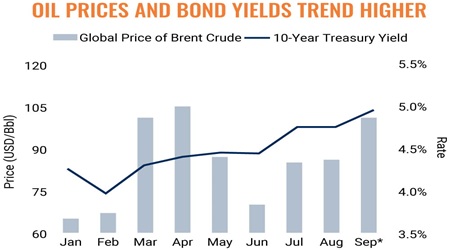
Those pressures have intensified amid hostilities in the Persian Gulf. Brent crude oil recently climbed above $100 per barrel, while the national average price of diesel exceeded $6 per gallon in September for the first time.

Higher energy costs are not the only inflationary concern. Elevated and frequently changing tariffs could further increase the cost of imported consumer goods, construction materials and business equipment. At the same time, substantial federal borrowing requirements are creating additional competition for investor capital.

Together, those factors have placed upward pressure on long-term interest rates. The yield on the 10-year Treasury briefly reached 5% on Sept. 14, returning to a level last touched in 2023 and otherwise unseen since 2007.

For commercial real estate, persistently high long-term rates could delay the recovery in transaction activity. Borrowers continue to face expensive financing, refinancing challenges and reduced leverage. The higher cost of debt also makes it more difficult for buyers and sellers to agree on property values.

Lender liquidity remains relatively strong, according to Marcus & Millichap, providing some support for acquisitions. However, prolonged inflation and elevated Treasury yields could limit the pace of transaction growth as investors adjust their return expectations and underwriting assumptions.

Development is also becoming more difficult to justify. Higher financing, construction material and operating costs are reducing project feasibility across several property sectors. While that could limit new construction in the near term, slower development may eventually benefit existing properties by restricting future supply.

The industrial sector faces additional pressure from rising fuel and transportation expenses. Distribution and logistics tenants operating truck-intensive networks are particularly exposed to higher diesel and freight costs, which could affect margins and decisions about warehouse locations and space requirements.

Industrial net absorption during the first half of the year roughly kept pace with new supply, holding the national vacancy rate at 7.8% in June. Vacancy has remained unchanged since September 2025 but is still at its highest level in more than a decade.

Construction activity is now slowing, which should ease competitive supply pressures and provide some protection against further vacancy increases. Existing industrial properties could benefit over the medium term as fewer new projects reach completion, although softer tenant demand and rising distribution expenses remain near-term concerns.

Overall, the August inflation report points to continued uncertainty for commercial real estate. Higher energy costs, tariffs and federal borrowing needs could keep interest rates above previous norms, prolonging financing challenges and limiting transaction momentum. At the same time, reduced construction could help rebalance property markets once current economic pressures begin to ease.

Sources: Marcus & Millichap Research Services, Bureau of Labor Statistics, Federal Reserve and AAA. Data as of Sept. 14, 2026.
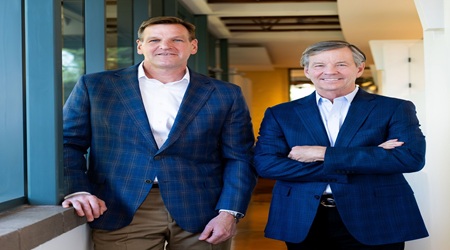


Harvard Investments announces next phase of growth with Tim Brislin as CEO and President, Craig Krumwiede as Executive Chairman

Harvard InvestmentsThe transition reflects a  succession strategy ensuring continuity, stability, and ongoing development across the Southwest.
SCOTTSDALE, Ariz. (Sept. 18, 2026) — Harvard Investments today announced a planned leadership transition that reflects the company’s long-term commitment to thoughtful succession, organizational stability, and continued growth. Tim Brislin today assumed the role of Chief Executive Officer and President; Craig Krumwiede, who has led the company as CEO and President since 1994, transitions to Executive Chairman.

As CEO and President, Brislin leads the company’s operations, investment activities, and development initiatives throughout the Southwestern U.S. As Executive Chairman, Krumwiede remains actively involved in shaping the company’s long-term vision, mentoring its leadership team, and providing strategic guidance on major initiatives and opportunities.

“This transition is the result of an intentional process that has been years in the making,” Krumwiede said. “I had the privilege of working alongside Tim for nearly two decades and watched him develop into an exceptional leader. He understands our culture, our passion for placemaking, and our responsibility to the communities we serve. I have complete confidence in his ability to lead Harvard Investments into its next chapter while remaining true to the values that have defined this company for generations.”

Krumwiede also expressed his gratitude to the Hill family, owners of Harvard Investments through the Hill Companies, for their support throughout his tenure. He credited their long-term vision, trust, and commitment to the organization as instrumental to Harvard’s growth and success.

“One of the greatest privileges of my career has been the opportunity to work alongside the Hill family. I had the honor of working with three generations of Hill leaders.  Throughout that time, they have consistently demonstrated their commitment to Harvard Investments, its people, and its mission. I am deeply grateful for those relationships and confident that their stewardship and support will continue to serve Harvard well for generations to come,” Krumwiede said.

Brislin joined Harvard in 2007 and was promoted to President in 2023. During his tenure he oversaw acquisitions, development strategy, funding, entitlements, construction, and growth initiatives across the company’s expanding portfolio.

Brislin played a key leadership role in the development of Harvard’s master-planned communities throughout Arizona, Texas, and New Mexico, the launch and growth of the company’s FirstStreet build-to-rent platform, and numerous strategic acquisitions. Most recently, he helped guide project teams in major master plans including Estrella and Solstice Foothills in Goodyear, Arizona.

“It is an incredible honor to assume the role of CEO of Harvard Investments. Much of what I know about leadership, vision, and stewardship comes from learning alongside Craig and Senior Vice President Chris Cacheris, and the exceptional team we built together. Harvard Investments is about more than real estate,” Brislin said. “We create places where families thrive, businesses grow, and communities endure.”

Brislin’s real estate career spans over 25 years, including nearly 20 with Harvard Investments. He is active in numerous industry and community organizations, including the Urban Land Institute, Valley Partnership as a Board Member and former Chair, Pinal Partnership, the National Association of Home Builders, the American Heart Association, and the Luke Air Force Base Honorary Commanders Program.

Krumwiede’s legacy at the firm spans more than four decades and includes overseeing the company’s transformation into one of the Southwest’s most respected real estate investment and development organizations. He has guided the company through multiple economic cycles while establishing a culture focused on long-term value creation, responsible development, and community building.

“What has always made Harvard special is our belief that great development begins with unique places and exceptional people,” Krumwiede said. “We don’t measure success by short-term results. We focus on creating enduring value for residents, businesses, partners, and communities. Looking back, I am incredibly proud of what our team has accomplished, and looking ahead, I am even more excited about what the next generation of leadership will achieve.”

Widely respected throughout the local and national industry, Krumwiede serves as an Urban Land Institute Governor, a mentor to emerging industry leaders, and a dedicated supporter of the Arizona State University’s W. P. Carey School of Business. Krumwiede is deeply involved in numerous civic and philanthropic organizations, including the C4 Foundation which provides resources and support uniquely tailored to active-duty Navy SEALs and their families.

Krumwiede also played a leading role in advancing Arizona’s recently enacted “Ag to Urban” groundwater legislation, SB 1611, which established a framework for converting agricultural land to residential development while conserving water resources.

“I look forward to focusing on the long-term strategy of the company, supporting our leadership team, and advancing initiatives that strengthen Harvard, our industry, and the communities we serve,” Krumwiede added. “Arizona and the Southwest have provided tremendous opportunities for our company and our families over the years, and I remain deeply committed to helping ensure that the region’s future is every bit as strong as its past.”

“Every generation has the opportunity to build on the work of those who came before it. The foundation Craig and the Hill family built is extraordinary. The future of Harvard Investments is incredibly bright, and I am humbled and energized to help lead that journey,” Brislin said.


Tucson Medical Dental Complex Sells for $5.825 Million

Medical Dental Complex

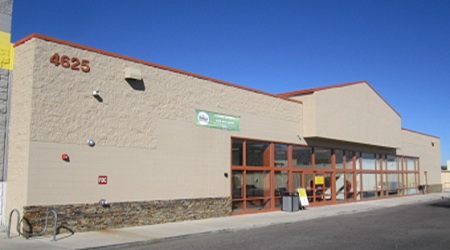
TUCSON, ARIZONA (Sept. 17, 2026) — ACE Oracle-AZ, LLC, an Alpharetta, Georgia-based investment entity, purchased the Tucson Medical Dental Complex at 4625–4627 N. Oracle Road in Tucson for $5.825 million.

Health Wealth Fund One Series 1, LLC of Colorado Springs sold the 13,860-square-foot medical office property in an investment sale that closed Sept. 4. The purchase price equates to approximately $420.27 per square foot.

The one-acre property is located along the Oracle Road commercial corridor across from Tucson Mall. Constructed in 1999, the building contains three dental-related tenants and 45 parking spaces.

Bella Vida Dental occupies approximately 2,854 square feet in Suite 102. The practice, which has operated at the property since 2023, provides general, restorative, implant and cosmetic dentistry.

JetSet Dental Implants occupies approximately 4,531 square feet, while JetSet Training Institute occupies the remaining 6,475 square feet. The three tenants collectively occupy the entire building.

The property operates under a 15-year absolute triple-net master lease with JetSet Surgeon Founders, LLC. The lease includes 3 percent annual rent increases and is supported by guarantees from affiliated dental practices.

The September transaction marks the property’s second sale in approximately 16 months. Health Wealth Fund One Series 1 acquired the complex for $5,013,333 in April 2025 and 7.95% cap rate. Matt Hardke, Brenton Baskin and Julius Swolsky with Graystone Capital Advisors handled that earlier transaction.

The latest sale price represents an increase of $811,667, or approximately 16.2 percent, over the property’s April 2025 purchase price.

The building is positioned near several national retailers and restaurants, including In-N-Out Burger, Chick-fil-A and Chuze Fitness. Its Oracle Road frontage, proximity to Tucson Mall and long-term healthcare tenancy make it a well-located medical investment within Tucson’s Central submarket.

Source: RED Comp #12708