Tech Parks Arizona Recognized Among Nation’s Top Innovation Districts  
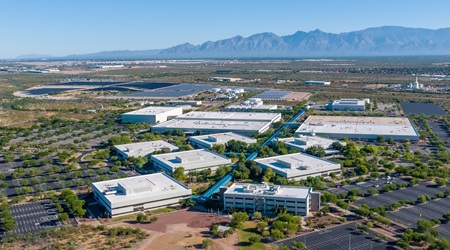
Tech Parks Arizona
Tech Parks Arizona

TUCSON, Ariz. (Oct. 6, 2026) – Tech Parks Arizona has been recognized as one of the nation’s leading innovation districts in a new national report from the George W. Bush Institute-SMU Economic Growth Initiative. The analysis highlights the nation’s strongest innovation districts as powerful economic engines where higher education institutions and leading-edge companies cluster to spur innovative collaborations that significantly contribute to community prosperity and regional growth.

The report, Advancing in the Face of Headwinds: How America’s Innovation Districts are Promoting Prosperity and Opportunity, examined 42 innovation districts and research parks across the United States and identified standout districts in two categories: prosperity metrics and housing and neighborhood stability. Tech Parks Arizona was one of only six innovation districts nationwide recognized for strong performance in housing and neighborhood stability, alongside Research Triangle Park, Pegasus Park, Cleveland Health-Tech Corridor, St. Pete Innovation District, and Winston-Salem Innovation Quarter.

Researchers found that neighborhoods surrounding innovation districts continue to outperform their broader regions in population growth, educational attainment, income growth, and housing development. The study also found that innovation districts across the country experience increased demand for housing and quality-of-life amenities as they grow.

In a press release announcing the findings of the report, author Dr. J.H. Cullum Clark, Fellow at the George W. Bush Institute-SMU Economic Growth Initiative, shared “Almost half the district leaders in our survey say that housing availability and price are constraining the growth and success of their innovation districts.”

Tech Parks Arizona’s recognition in the housing and neighborhood stability category underscores the region’s ability to support innovation-driven growth while maintaining strong community outcomes.

Innovation districts have been one of the nation’s most effective economic development strategies, generating large concentrations of knowledge-based jobs nearby and delivering higher incomes than comparable places elsewhere.

“As innovation districts continue to drive economic growth across the nation, Southern Arizona is uniquely positioned to compete and grow,” said Carol Stewart, CEO & President of Tech Parks Arizona. “This recognition affirms that our region has the talent, partnerships, and infrastructure needed for businesses to scale while creating opportunities that benefit both industry and the broader community.”

As a major employment hub, Tech Parks Arizona creates pathways from education to employment by connecting University of Arizona students and graduates with internships and high-quality jobs, helping keep skilled talent in the region and strengthening brain remain. Tech Parks Arizona hosts approximately 100 companies, ranging from startups to tech giants. As a major employment hub, the parks are home to 9,205 knowledge workers whose average annual wage of $75,600 exceeds that of the Tucson metro area. With an annual economic impact of $2.6 billion, it plays a vital role in building a future-focused economy by attracting new businesses, supporting the growth of businesses, launching new companies, and creating high-paying jobs.




Beyond the Horizon: The stories behind Phoenix’s 5 tallest giants

The Chase Tower

By Keith Pomonis 

PHOENIX (Oct. 6, 2026) — When people think of Metro Phoenix, they usually picture a sprawling desert valley that goes on forever. But if you look toward downtown, you’ll find a unique architectural skyline shaped by a surprising rule.

Even though Phoenix is the fifth-largest city in the U.S., it technically doesn’t have a single official “skyscraper.” According to the Council on Tall Buildings, a skyscraper must stand at least 492 feet tall. Because Phoenix Sky Harbor International Airport sits right next to the urban core, strict FAA height restrictions have kept the skyline beautifully capped.

Despite these limits, the Valley has some incredible high-rises. Here are the top five tall buildings defining the Phoenix skyline, along with the history and quirks that make them special.

  1. Chase Tower: Oh, so close (483 feet)

Since 1972, Chase Tower has held the title of the tallest building in Arizona. Originally built as the Valley Bank Center, its distinct cloverleaf shape occupies an entire city block.

  • The History: It was built during a major 1970s downtown corporate boom. For decades, locals and tourists could ride up to the 39th floor to view the entire Valley from its public observation deck.
  • Fun Fact: The tower sits on a massive underground pedestrian concourse that once bustled with shops. While the building has been entirely vacant since 2021, plans are currently underway to breathe new life into the giant by converting it into a mix of apartments and hotel rooms.
  1. The Maeve Central Station: The new kid on the block (424 feet)

The newest addition to the upper limits of the skyline is The Maeve Central Station, which officially wrapped up construction in 2025.

  • The History: This 33-story tower completely reshaped the former transit hub at Central Avenue and Polk Street.
  • Fun Fact: It represents a massive cultural shift in Phoenix. For decades, the city grew outward; this tower proves the city is now aggressively growing upward, packing a vibrant mix of residential apartments and retail spaces right into the urban core.
  1. U.S. Bank Center: The trailblazer (407 feet)

Completed in 1976, the 31-story U.S. Bank Center stands as a testament to late-70s corporate ambition.

  • The History: It was built during a time when high-rise safety laws were still evolving across the country.
  • Fun Fact: It secured a permanent spot in local history by becoming the very first high-rise building in Arizona to feature an automatic fire sprinkler system.
  1. CenturyLink Tower: The neon crown (397 feet)

Finished in 1989 and known natively to many locals as the Qwest Tower, this Midtown landmark brings a bit of artistic flair to the desert.

  • The History: Built right at the tail end of the 80s boom, it was designed to anchor the commercial stretch of Central Avenue north of downtown.
  • Fun Fact: It is easily the most recognizable building at night. Its roof features a decorative, pyramid-shaped crown lit with turquoise neon that illuminates the desert sky.
  1. Alliance Bank Tower: The modern landmark (385 feet)

Part of the bustling, modern CityScape development, the Alliance Bank Tower was completed in 2010.

  • The History: It was built to revitalize downtown Phoenix, successfully bringing street-level energy, dining, and nightlife back to the city center.
  • Fun Fact: Wrapped in sleek blue glass, its highly reflective exterior mirrors the intense Arizona sun, making it look completely different depending on the hour of the day.

While these five hold the records today, Phoenix’s horizontal legacy is about to meet a massive vertical shift. Developers have broken ground on the upcoming Arro project, a stunning mixed-use development. Its north tower is slated to reach 541 feet. Once it is finished, it will officially break the FAA glass ceiling and become Phoenix’s very first true skyscraper.

Keith Pomonis is the President of Mesa-based EHS Restoration. For more information call (480) 306-5777 or visit ehsrestoration.com.


Kidder Mathews expands its Phoenix Healthcare Services Group with 3 strategic hires

PHOENIX, Ariz. (Oct. 6, 2026) – Kidder Mathews has expanded its Phoenix Healthcare Services Group with the addition of three professionals: Amita Sall, Shannon Hamer, and Makai Rich, underscoring the firm’s continued growth and commitment to serving Arizona’s evolving healthcare real estate market.

The new team members bring diverse experience in healthcare advisory services, transaction management, financial analysis, development, and site selection, strengthening one of the region’s leading healthcare-focused commercial real estate practices.

“Healthcare providers continue to face complex real estate decisions as they grow, relocate, and adapt to changing patient needs,” said Rachael Thompson, Senior Vice

President at Kidder Mathews. “Amita, Shannon, and Makai each bring unique strengths that enhance our ability to deliver strategic solutions for healthcare clients throughout Arizona. Their expertise, energy, and commitment to client service make them exceptional additions to our team, and we’re excited about the opportunities ahead.”

Sall joins the Healthcare Services Group as an Associate, where she primarily focuses on tenant representation for healthcare providers across the Valley.

Born and raised in Seattle, Washington, Sall attended Seattle University and earned an INSEAD Social Entrepreneurship Certificate. With a previous background in healthcare recruitment at many of the major hospital systems in the Puget Sound, she now holds an Arizona Department of Real Estate Salesperson’s License and is active in numerous industry organizations, including the Association of Medical Facilities Professionals (AMFP), Asian Real Estate Association of America (AREAA), AZCREW, and Women in Healthcare.

Sall’s diverse background and client-centered approach have helped establish her as a trusted advisor in healthcare real estate. She assists clients with property acquisitions, leasing strategies, and long-term real estate planning, combining market expertise with a strong commitment to service and relationship building.

Outside of work, Sall enjoys international travel, exploring world cuisine, and watching international films. She is also active in community service through organizations including AFS International Exchange, Water1st International, and Global Ties Arizona.

Hamer joins Kidder Mathews as a Healthcare Real Estate Specialist and will provide transaction management services while supporting leasing efforts for the team’s medical office portfolio.

Originally from Toronto and raised in Phoenix, Hamer attended Arizona State University’s W. P. Carey School of Business. She previously worked within an occupier services group, where she managed multi-market real estate portfolios and provided transaction management, site selection, and lease negotiation services.

Her commercial real estate background spans office, retail, and residential development, giving her a broad perspective that benefits healthcare clients navigating today’s increasingly competitive real estate environment.

Hamer lives in Phoenix with her husband and two children and is involved with the Southwest Autism Resource & Research Center (SARRC), serving on the organization’s annual fundraiser planning committee.

Rich joins the team as Brokerage Team Coordinator with a primary focus on tenant representation. Born and raised in Orange County, California, Rich earned a bachelor’s degree in finance with a minor in real estate from ASU’s W. P. Carey School of Business. He also attended the University of Hawaii at Hilo, where he played collegiate baseball.

In his role, Rich helps healthcare practices evaluate potential locations, compare real estate options, and navigate the leasing process. He also supports the team with property tours, lease negotiations, and transaction coordination.

Prior to joining Kidder Mathews, Rich gained experience in real estate development, financial analysis, and sales. During internships with Trammell Crow Residential, he researched development opportunities, analyzed acquisition prospects, and supported construction projects. His sales experience further sharpened his relationship-building and client service skills, complementing his analytical real estate background.

As demand for healthcare services continues to grow across Arizona, the expanded team positions Kidder Mathews to provide even greater support to medical practices, healthcare systems, investors, and property owners throughout the region.