Marcus & Millichap Brokers $2.04 Million Sale of 20-Year Net-Leased Filiberto’s Near Grand Canyon Gateway
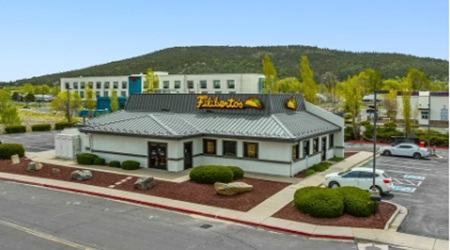
Filiberto’s near Grand Canyon Gateway. Williams, AZ
WILLIAMS, Ariz., (Oct. 2, 2026) — Marcus & Millichap (NYSE: MMI), a leading commercial real estate brokerage firm specializing in investment sales, financing, research and advisory services, announced today the sale of a 3,407-square-foot Filiberto’s restaurant property near Interstate 40 and historic Route 66 for $2.04 million.
“After decades of hands-on apartment ownership in California, this buyer wanted durable income without the day-to-day management,” said Sean Rosenzweig, senior managing director investments.
Mark Ruble, Chris Lind and Zack House, investment specialists in Marcus & Millichap’s Phoenix office, represented the seller, an Arizona limited liability company. Rosenzweig, based in the firm’s Los Angeles office, represented the buyer, a decedent’s trust. The buyer completed a 1031 exchange after exiting a long-term apartment investment in California.
The property is located at 888 N. Grand Canyon Blvd. The restaurant is leased to Filiberto’s under a 20-year absolute triple-net lease with 10% rent increases every five years and a personal guaranty from one of the restaurant chain’s original founders. Filiberto’s operates approximately 130 locations across Arizona, California and New Mexico.
Terracon expands Arizona operations with 3 new hires in Tucson, Tempe
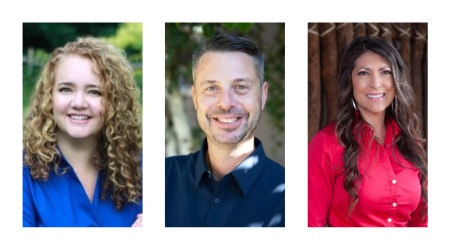
Laura Miner, Grahan Craig and Lisa Cuestas
TEMPE, Ariz. (Oct. 2, 2026) – Terracon is pleased to announce the addition of three experienced professionals to its Arizona operations, strengthening the firm’s environmental and project delivery capabilities across the region.
Lisa Cuestas and Laura Miner, QEP, have joined the Tucson office; Graham Craig has joined the firm’s Tempe office.
“Lisa, Laura, and Graham each bring exceptional expertise, leadership, and a deep commitment to client service,” said Brent Borchers, Director of Regional Operations for Terracon’s Desert Southwest operation. “Their combined experience across environmental compliance, project coordination, and environmental planning strengthens our ability to serve clients throughout Arizona and the Desert Southwest. We are excited to welcome them to the Terracon team.”
As Supervisor of Project Coordination, Cuestas brings more than 30 years of professional experience to her role. She provides oversight and supervision for Terracon’s team of project assistants and coordinators, helping ensure the successful delivery of projects through effective document control, compliance management, quality assurance, scheduling, and contract administration.
Cuestas serves as a liaison among clients, project managers, and company leadership, facilitating clear communication regarding project status, deliverables, and client concerns.
Prior to joining Terracon, she provided strategic leadership in urban planning, development, public and private administration, environmental compliance, and Brownfields redevelopment programs. Her experience includes management of Phase I and Phase II Environmental Site Assessments, remediation projects, EPA Brownfields grants, compliance programs, and health and safety planning.
She has also managed environmental projects associated with major regional initiatives, including the Grant Road widening project, Downtown Links, Downtown redevelopment, and the Rio Nuevo Congress and Nearmont landfills.
A Tucson native, Cuestas attended Pima Community College, the University of Phoenix, and the University of Arizona Eller Executive Education program. She is a member of the Southern Arizona Environmental Management Society (SAEMS) and has served as an officer of the organization.
Outside of work, she enjoys trail hiking, gardening, spending time with family and friends, and attending sporting events.
Joining Terracon as Regional Regulatory Compliance Leader for Environmental Services Miner returns to the Desert Southwest, bringing 34 years of environmental consulting and regulatory compliance experience. In her role, she will help grow the firm’s environmental services practice by providing subject matter expertise in air quality permitting and compliance, environmental compliance auditing, sustainability programs, greenhouse gas reporting, stormwater and wastewater permitting, contingency planning, and environmental management systems.
Miner was raised in Forkston, Pennsylvania. She earned a bachelor’s degree in chemistry with a minor in environmental science from Franklin & Marshall College and later completed a degree in sustainability management and policy from Penn State University. She is a member of the Air & Waste Management Association (A&WMA) and the American Chemical Society (ACS).
Miner is also active in community service, volunteering as an educator with Heritage Conservancy and supporting Wish Them Well Togo through fundraising and social media outreach efforts that help provide access to clean drinking water. In her free time, she enjoys plein air painting.
Graham Craig has joined Terracon in its Tempe office as a Senior NEPA Practitioner. With 21 years of industry experience, Craig prepares and manages a wide variety of environmental projects, helping clients successfully navigate environmental review and planning requirements.
A native of Houston, Craig earned a bachelor’s degree in geography and urban planning from The University of Texas at Austin. He brings extensive experience supporting infrastructure and development projects through environmental analysis and regulatory compliance. Outside of work, he is a car restoration enthusiast.
Shallow Bay Industrial Portfolio Sold in Tucson for $165.75 Million
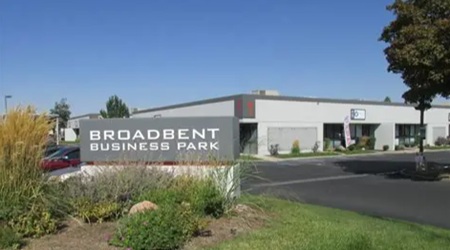
Broadbent Industrial Center, 2015, 2045, 2155 and 2165 N. Forbes Blvd., Tucson
TUCSON, ARIZONA (October 1, 2026) — A 14-property industrial portfolio spanning approximately 1.25 million square feet across Tucson has sold for $165.75 million to separate buyer LLCs associated with New York-based Everview Partners, L.P. Pegasus Tucson Owner LLC of Newtown Square, PA was the seller.
The transaction encompasses the Tucson Shallow Bay Industrial Portfolio, comprising 85 buildings in established business parks. The purchase price equates to approximately $133 per square foot.
Will Strong, Michael Matchett, Madeline Warren, Molly Miller and Jack Stamets with Cushman & Wakefield’s National Industrial Advisory Group, together with Paul Hooker, SIOR, of Cushman & Wakefield | PICOR in Tucson, represented both the buyer and seller.
The portfolio comprises the following properties. Individual recorded sale prices are added below.
Property
Address
Recorded sale price
Broadbent Industrial Center
2015, 2045, 2155 and 2165 N. Forbes Blvd.
$17,100,000
Butterfield Center
4555, 4565, 4575, 4585, 4595 and 4605 S. Palo Verde Rd.; 4520 S. Coach Dr.
$10,700,000
Clairemont Plaza
1660, 1664, 1668, 1674 and
1684 S. Research Loop
$9,350,000
Coach Drive Industrial Building
4650 S. Coach Dr.
$4,300,000
Commerce Plaza
245 S. Plumer Ave.
$6,800,000
Dodge Business Center
3601, 3621, 3631 and 3641–3681 E. 44th St.; 3200–3320 S. Dodge Blvd.
$18,300,000
Eastpoint Business Plaza
1601–1607 S. Pantano Rd.; 1603 S. Eastside Loop; 1635 S. Research Loop
$4,700,000
Exchange Place
1870 W. Prince Rd.
$15,050,000
Midpoint Business Plaza
1801–1875 S. Alvernon Way;
3921–3949 E. 29th St.
$9,100,000
Midway Business Park
4500 E. Speedway Blvd.
$26,000,000
North Tucson Business Center
3845–3895 N. Business Center Dr.;
3850 N. Commerce Dr.
$7,800,000
Palo Verde Industrial
3820–3880 S. Palo Verde Rd.
$11,500,000
Ruthrauff Commerce Center
2410–2480 W. Ruthrauff Rd.
$16,450,000
Town Central Business Park
4901–5069 E. 29th St.
$8,600,000
Total
$165,750,000
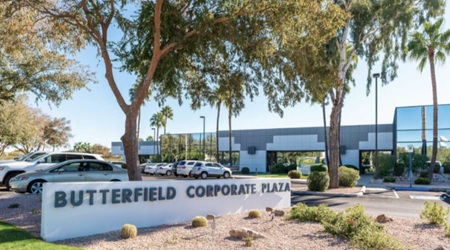
Butterfield Center, 4555, 4565, 4575, 4585, 4595 and 4605 S. Palo Verde Rd.; 4520 S. Coach Dr., Tucson
The properties provide a mix of warehouse, office and flex space for businesses throughout the Tucson market. Their locations span several established industrial and employment corridors, including Forbes Boulevard, Prince Road, Ruthrauff Road, Palo Verde Road, Research Loop, Dodge Boulevard, Speedway Boulevard and East 29th Street.
The portfolio was approximately 90% leased to 452 tenants at the time of sale.
The properties are in established infill locations and concentration within business parks also offered opportunities for coordinated management and tenant expansion.
Shallow bay industrial properties generally accommodate smaller business users in multi-tenant buildings. Their combination of warehouse and office space serves a range of operational needs, giving investors exposure to numerous tenants rather than relying on a single large occupant.
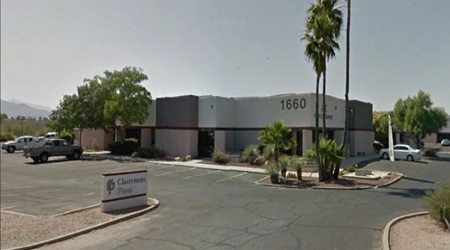
Clairemont Plaza, 1660, 1664, 1668, 1674 and 1684 S. Research Loop, Tucson
The sale marks another ownership transition for a portfolio previously acquired through Equus-sponsored funds and investment partners in October 2021. As reported by Real Estate Daily News at the time, the 14 Tucson industrial parks traded for approximately $150 million as part of Equus Capital Partners’ larger $1.15 billion acquisition of industrial properties in Tucson and Phoenix.
The current sale total is approximately $15.75 million, or 10.5%, above the reported Tucson acquisition price in 2021. That comparison reflects the change in purchase price and does not account for capital improvements, operating income or transaction expenses during the intervening ownership period.
Everview Partners is a private investment management firm founded in 2024 by Billy Rahm and publicly launched in February 2025. The firm invests in real asset companies and properties across North America, combining real estate, private equity and credit investment strategies. Industrial and logistics properties are among its investment sectors.
Before founding Everview, Rahm served as senior managing director and head of real estate at Centerbridge, where he spent 18 years and built the firm’s global real estate investment business. He began his career at Blackstone.
The acquisition gives Everview-associated entities an established presence across Tucson’s industrial market, with a diversified tenant base and properties serving businesses in several of the city’s principal employment corridors.
For more information, Paul Hooker with Cushman & Wakefield | PICOR can be reached at (520) 546-2704.