Freedom Runs the Salt: Arizona’s Wild Horses Are a Living Tourism Treasure Worth Protecting
(July 3, 2026) — This Independence Day season, as Arizonans reflect on the meaning of freedom, the sentiment surrounding Arizona’s Wild Horses and the Salt River wild horses may be captured best in verse:
Freedom Runs the Salt
On this Fourth of July, as our flags proudly fly,
And fireworks illuminate the desert sky,
Let us remember freedom wears many forms—
From soaring eagles to wild horses in storms.
Along the Salt River, beneath canyon walls,
A timeless spirit still answers freedom’s call.
Hooves drum the earth where their ancestors ran,
Untamed and unbroken by the hand of man.
They ask for no riches, no comfort, no fame,
Only to remain wild, exactly the same.
To drink from the river, to graze and to roam,
In the desert they know and have long called home.
As we celebrate liberty and the birth of our nation,
May we honor these symbols with equal dedication.
For freedom is precious, whether human or horse—
And once it is taken, it cannot be restored.
So this Independence Day, let our voices ring clear:
Keep the Salt River horses wild, treasured, and near.
For a nation that cherishes freedom in every way,
Must protect those who embody it each and every day.
That spirit is not merely symbolic. Along the lower Salt River, it moves in bands through the mesquite and cottonwoods. It flies above front porches. It lights the desert sky. And along the lower Salt River, it moves in bands through the mesquite and cottonwoods, drawing photographers, kayakers, hikers, families and visitors who come hoping to see one of Arizona’s most iconic living symbols: the Salt River wild horses.
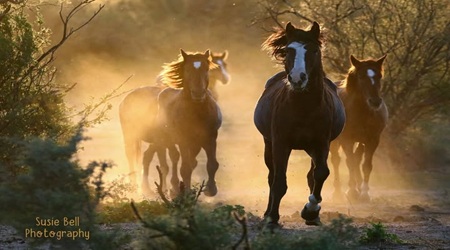
The beauty of Arizona’s Wild Horses captures the hearts of many who visit the Salt River. These majestic animals roam freely, embodying the spirit of the American West.
For many visitors, seeing the horses in the wild is not a side note to the Arizona experience. It is the experience.
The Salt River corridor is already one of the state’s most beloved outdoor recreation destinations, offering tubing, kayaking, paddleboarding, hiking, birding, photography and scenic desert views within easy reach of metro Phoenix. The wild horses add something no marketing campaign can manufacture: authenticity.
For those seeking an authentic Arizona experience, spotting Arizona’s Wild Horses is a highlight that cannot be missed.
They are part of the emotional landscape of the place.
That connection is captured in the poem Freedom Runs the Salt:
Arizona’s Wild Horses are not just part of the landscape; they are woven into the very identity of Arizona’s tourism narrative.
“Along the Salt River, beneath canyon walls,
A timeless spirit still answers freedom’s call.
Hooves drum the earth where their ancestors ran,
Untamed and unbroken by the hand of man.”
For Arizona’s tourism industry, that image matters. Destinations are not built only on hotels, restaurants, and attractions. They are built on identity. The Salt River horses help define Arizona’s outdoor identity in a way that is distinctly local, highly visual and deeply shareable.
Tourists travel far and wide to witness Arizona’s Wild Horses, making them a significant element of local culture.
They are also a draw at a time when travelers increasingly seek nature-based, authentic, and place-specific experiences. A visitor can see desert scenery across the Southwest. But the chance to see wild horses moving freely along the riverbanks and desert foothills of the lower Salt River is rare.
Seeing Arizona’s Wild Horses in their natural habitat adds to the region’s allure and enhances the traveler’s experience.
That rarity creates value.
The current debate over reducing the herd from approximately 272 horses to about 120 over the next five years is therefore not only an animal management issue. It is also a tourism, heritage, public trust, and economic development issue. Nor is the question whether the herd should be managed. It is already being managed through birth control and natural attrition, with an expected 40 percent reduction over five years. That makes it a true model for other herds across the country. At that rate, in another five years, the herd would be near 165 horses, within the range associated with long-term genetic viability, according to renowned equine geneticist Dr. E. Gus Cothran.
The urgency has increased because SB1199, the bill intended to require scientific review before any reduction of the herd, died in the Senate last month without even receiving a hearing on the House amendments. The measure passed the Senate earlier in the year and later passed the House, but did not receive a final Senate action after being transmitted back.
That leaves only one immediate path before removals begin in September: Governor Katie Hobbs can commission an independent, peer-reviewed scientific assessment and direct a pause until Arizona knows whether reducing the herd to 120 would jeopardize its genetic health, visibility and long-term sustainability. Such a study should examine the herd’s demographics, genetic diversity, mortality rates, fertility control impacts, carrying capacity, habitat conditions and long-term viability.
Understanding the dynamics of Arizona’s Wild Horses is crucial for preserving their legacy and sustaining tourism in the area.
Research associated with Dr. Cothran has generally indicated that total herd sizes of roughly 150 to 200 animals are needed to maintain genetic diversity in free-roaming horse populations. A forced reduction to 120 raises questions about whether the herd would remain genetically sustainable over time, especially when fertility control is already moving the population toward a more sustainable number without the disruption of removals.
That question should matter to Arizona’s tourism industry, and it should matter to the Governor’s Office.
A herd managed below viability is not a long-term attraction. A herd that loses genetic strength, family structure or visibility along the river could diminish one of the state’s most recognizable wildlife-viewing experiences. The issue is whether the horses will be managed in a way that protects the very qualities that make them valuable to Arizona.
Consequently, ensuring the preservation of Arizona’s Wild Horses is vital for maintaining the state’s unique tourism appeal.
Other states offer examples. Colorado’s Sand Wash Basin has used fertility control, partner involvement and smaller-scale management tools as part of an approach intended to reduce reliance on large removals. North Carolina’s Corolla wild horses are treated as a heritage tourism asset, supported by monitoring, education, emergency response and public stewardship.
Arizona should be able to do the same. The Salt River horses are supposed to be protected under Arizona’s Salt River Horse Act, A.R.S. § 3-1491, yet the law is being interpreted in a way that could allow the very action many Arizonans believed it was meant to prevent. The next step is ensuring that protection is guided by science, transparency, and recognition of its broader value to the state.
Advocates also say Governor Hobbs has refused to meet with wild horse supporters and has been unresponsive to repeated emails, phone calls, and protests. That silence has deepened the concern that decisions are being made before the public, the science and the horses have been given a fair hearing. The question is larger than a population target: What does Arizona lose if one of its most beloved tourism symbols is reduced too far?
Arizona’s wild horses represent freedom, yes. But they also represent a promise: that the state can protect its natural and cultural assets while welcoming the visitors who come to experience them.
Ultimately, Arizona’s Wild Horses serve as a reminder of the balance between environmental preservation and tourism growth.
As Freedom Runs the Salt concludes:
“So this Independence Day, let our voices ring clear:
Keep the Salt River horses wild, treasured, and near.
For a nation that cherishes freedom in every way,
Must protect those who embody it each and every day.”
For Arizona’s tourism economy, the Salt River horses are more than beautiful. They are part of the brand, part of the visitor experience, and part of the story that makes this place unlike anywhere else.
For many visitors, the encounter with Arizona’s Wild Horses becomes a cherished memory, making their trip unforgettable.
Before that story is diminished, Governor Hobbs should commission an independent scientific study and pause removals until Arizona knows whether reducing the Salt River herd to 120 horses can be done without jeopardizing its genetic health, visibility and long-term future.
As the debate continues, the future of Arizona’s Wild Horses hangs in the balance, impacting the tourism landscape.
Governor Hobbs faces an important decision. She can allow removals to begin before an independent scientific review is completed, or she can insist that management decisions be guided by that science and help protect the Salt River horses for generations to come.
Protecting the Salt River wild horses is not only an act of compassion. It is responsible stewardship.
Final Note and Call to Action:
Advocates are asking Governor Katie Hobbs to commission an independent scientific study of the Salt River wild horse herd and pause removals before they begin in September. Those who wish to support that request may sign the petition here: Save The Salt River Wild Horses